
Related videos:
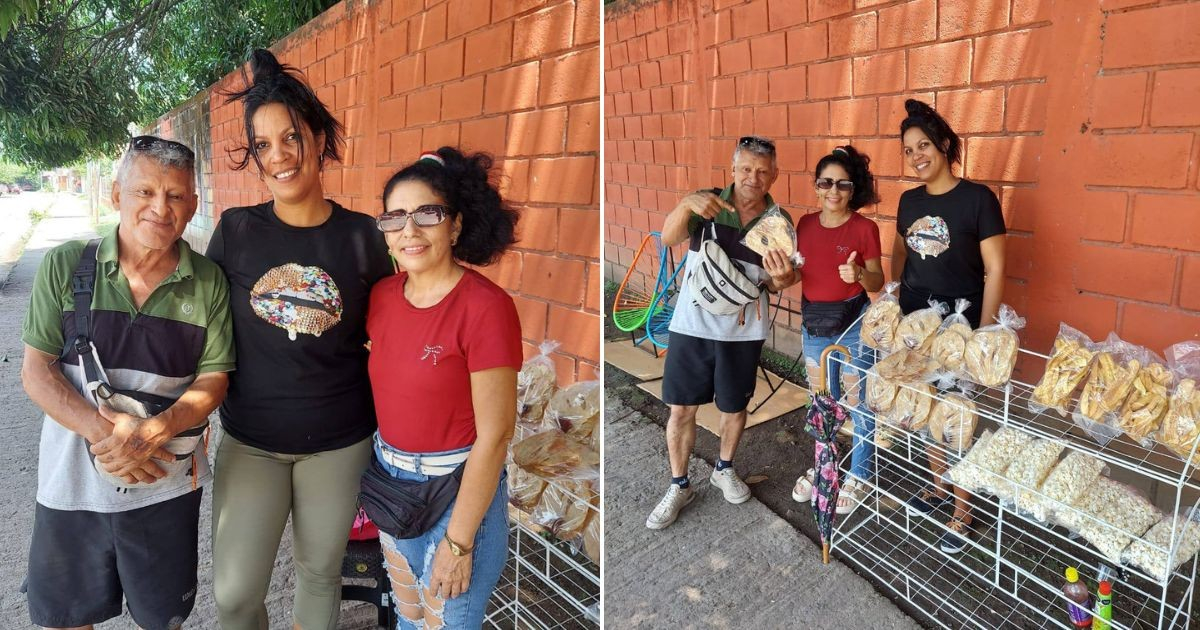
Yenisey Moreno, a young Cuban woman selling plantain chips, wafers, and popcorn at a small street stall in Tapachula, Mexico, received a visit that, in her own words, left her "with a full heart": a couple consisting of a Cuban and a Mexican came to her business motivated by following her on social media.
"I never imagined that people would come to our little stall just to follow and support me," she wrote on her Facebook profile, where she shares her experience as a migrant entrepreneur.
The young woman described the encounter with visible emotion: "Today this beautiful couple came: a Cuban and a Mexican, and I was honestly very excited to meet them."
Yenisey prepares her products at home and sells them at her stall on the street, where the chicharritas de plátano—thin slices of green plantain fried until golden and crispy—have become her flagship item.
"Here in Tapachula, one of the ventures that has brought me the most satisfaction has been the banana chicharritas," he noted in another post, encouraging other migrants to invest in simple and accessible business ideas.
His message has a clear motivational tone aimed at compatriots in similar situations: "Many times we think that to generate income we need something huge, when in fact, we can also start from home."
The case of Yenisey reflects a widespread reality among Cubans who settle in Tapachula and carve out their lives.
Some, while processing their immigration status with the Mexican Commission for Refugee Assistance (COMAR), are "struggling" under sometimes extreme conditions.
Due to the delays in processing and the inability to work formally, many turn to informal self-employment as a survival strategy, selling food and snacks on the street or from their homes.
It is not the first case that illustrates this phenomenon.
In February 2024, Cuban Tania Anaya, 53, set up a food stall in front of COMAR selling chicken sandwiches and Cuban coffee while waiting for a response to her asylum application.
Tapachula accounts for over 60% of all asylum requests in Mexico, resulting in chronic saturation of the system and long wait times for applicants, according to data from La Jornada.
In that context of uncertainty, social media has become a key tool for entrepreneurs like Yenisey to build an audience and receive support from their fellow countrymen and locals.
"Sometimes you start on social media without imagining the reach it can have, and seeing how people connect with you in such a real way... it's priceless," the young woman reflected.
The Cuban community in Tapachula tends to group by provinces of origin and builds daily networks of solidarity, a phenomenon expressed in gestures like the one Yenisey experienced: compatriots who seek out and support the businesses of other Cubans.
"Every great beginning starts with a decision," concluded Yenisey, summarizing in one sentence the philosophy that guides her venture in Mexican territory.
Filed under: