
Related videos:
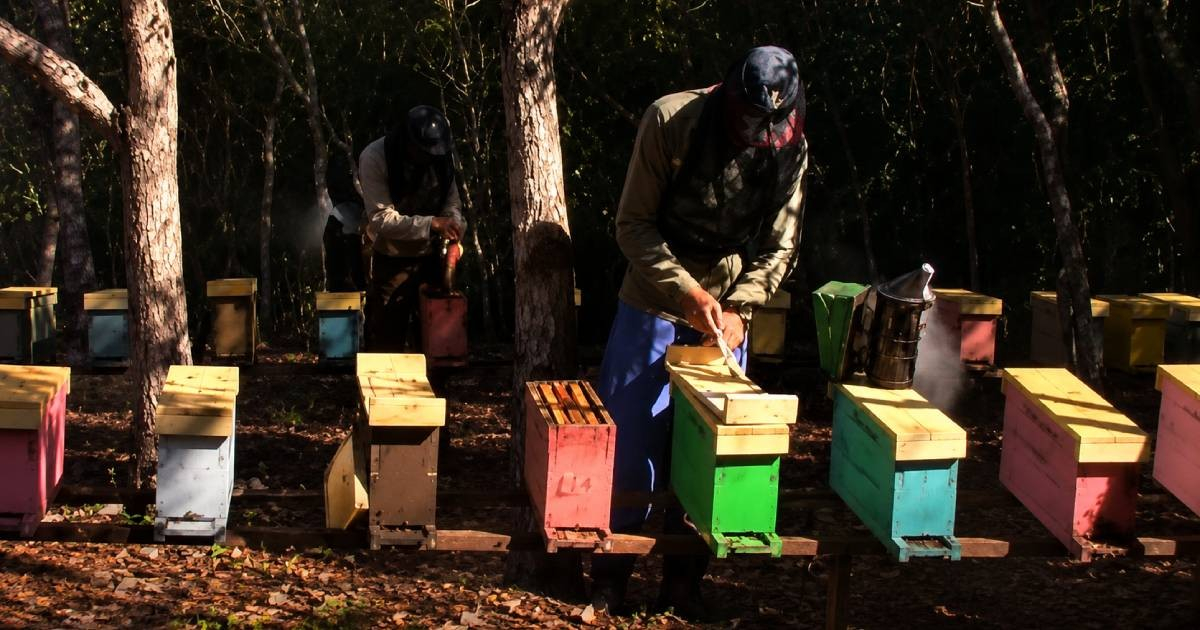
The general director of the Cuban state beekeeping company publicly acknowledged that exportation remains the "primary objective" of the sector, even as honey production has fallen to historically low levels. This statement was made on the television program "Cuadrando la Caja" on May 24.
Dr. Alberto Vicente Águila Abreus, head of the company that centralizes honey production and marketing in Cuba, candidly admitted that "we have experienced very depressed production volumes in recent times," but insisted that "we will always have to look to export" in order to earn foreign currency and sustain our operations.
The contradiction is striking: while honey production fell from 10,500 tons in 2021 to just 6,700 in 2023, and the yield per hive plummeted from 47.6 kg to 28.9 kg in the same period, the company continues to maintain exports as the central element of its strategy.
Cuba allocates about 90% of its honey production to international markets, primarily in Europe, where a ton sells for around $3,000, while Cuban producers receive only $650 per ton.
The executive outlined a financing scheme in which 42% of 70% of the foreign currency income from exports returns to the producer, which has served as an incentive amid high inflation. However, he acknowledged that the company has accrued a debt with its 1,940 producers of approximately 3.5 million pesos, of which only 50% has been paid, and that in the past two months, payments have slowed due to difficulties in exporting and collecting.
The lack of fuel has been identified as the central obstacle: it prevents the transportation of hives for harvesting, moving supplies, and maintaining the logistics chain. For example, 2025 was one of the worst years of the decade for the beekeeping sector.
The program also gathered other executives from state companies who painted an equally grim picture. Dayana Matech Vilá, first vice president of the Agro-Food Industry business group, revealed that more than 100,000 children in Cuba do not receive their daily milk due to a lack of fuel for collection, and that the children in Havana have gone more than two months without receiving meat or picadillo from the regulated food basket.
"While it’s not a complete 100% of the milk, if we had been using fuel as we were during the last stable period, there wouldn’t be more than 100,000 affected children," the official admitted.
Despite this situation, the same management reported a 19% increase in finished production during the first four months of 2026, reaching 9,000 tons, thanks to partnerships with small and medium-sized private enterprises. Decree 114 of 2026, approved this year, now allows the formation of mixed companies between state entities and private actors, which the regime presents as a way to sustain production.
Leonardo Martínez Cruz, deputy director of Frutas Selectas—a company designed to supply the tourism sector—acknowledged that the decline in tourism forced them to redirect their products to the domestic market: "Today, tourism has significantly declined due to the issues we all know, and we have had to redirect our market."
The picture that emerges from the program is one of a collapsing agricultural economy that, despite being unable to feed its own children, prioritizes exports as a strategic necessity to obtain the foreign currency that the dictatorship's economic model requires to survive. Cuba imports up to 80% of the food it consumes, and the agricultural sector recorded a 53% drop in primary production in 2024, the worst sector performance of that year.
Filed under: