
Related videos:
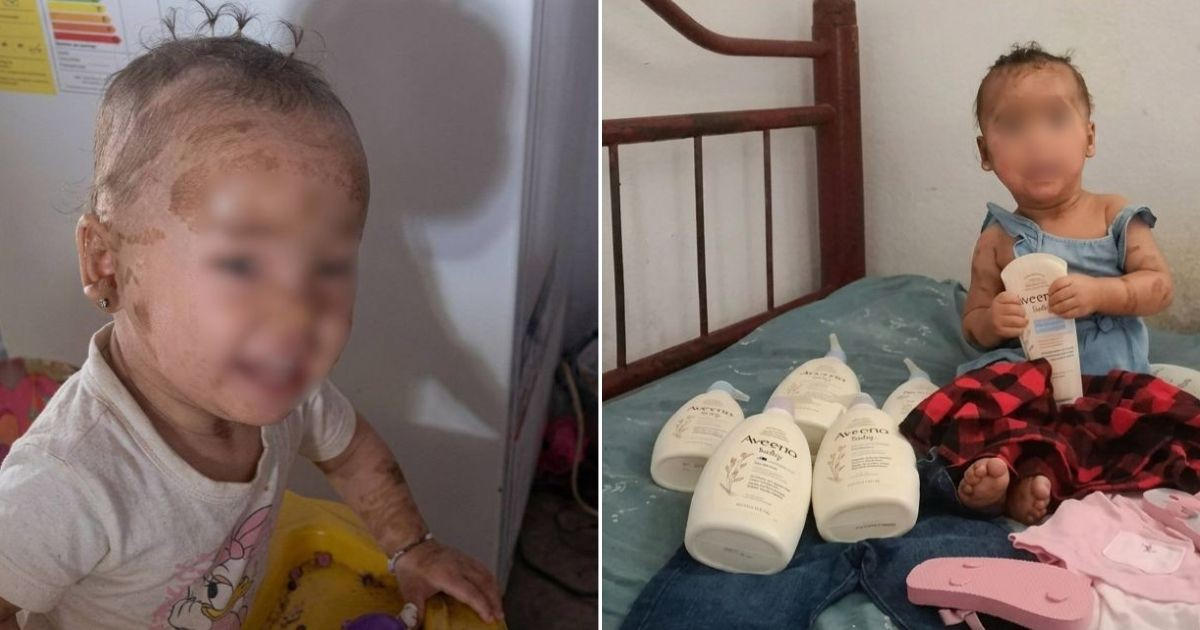
The creams and items donated by Cubans from both inside and outside the island arrived in the hands of little Nashly, a baby from Sancti Spíritus who suffers from lamellar ichthyosis, a rare genetic skin condition with no definitive cure.
The announcement was made by José E. González Marín, who had articulated the aid campaign on Facebook weeks earlier after sharing the girl's case.
"The creams and items donated by you have reached Princess Nashly. Thanks to your support, this beautiful baby will be able to continue alleviating her suffering," she wrote in her post.
The original call for help emerged on May 22, when family and close friends of Nashly urgently requested assistance in obtaining Aveeno cream, which had been recommended by doctors for its colloidal oatmeal content, an ingredient widely used in pediatric dermatology for soothing and moisturizing sensitive skin.
The product is not sold in Cuba and must be purchased from abroad, which made social media dissemination the only viable route for the family.
The image accompanying the thank you message shows Nashly sitting on a bed, surrounded by multiple jars of Aveeno Baby, an Aveeno spray, and clothing and accessories that were also donated, holding one of the products in her hands.
Laminar ichthyosis is a condition present at birth that causes extremely dry skin, thick scales, cracks, and intense itching.
In severe cases, it can lead to dehydration, infections, and respiratory complications. Management depends on constant hydration with emollients applied several times a day.
González Marín mentioned in his publication Daylin Sánchez, a person with direct experience in the disease and a support reference for the family: "Lamellar Ichthyosis is alleviated with love."
Nashly's case is part of a recurring pattern in Cuba, where the shortage of medicines and medical supplies has turned social media into the primary tool for solidarity mobilization for families of children with rare diseases.
In April 2025, the family of the child Liam, who has epidermolysis bullosa, also turned to Facebook to obtain special products for his care.
That same month, a Cuban mother sought help for her daughter Adisleydis, who is seven years old and has a rare growth condition, and she received support from Cubans in Spain, the United Kingdom, and the United States.
In all these cases, the dissemination on social media was the catalyst for the assistance received, in the absence of institutional responses from the Cuban state.
"Eternal gratitude once again to all the people who have supported us in one way or another. Thank you for helping us reach the right individuals and for showing empathy towards those in need. Blessings to everyone," concluded González Marín.
Filed under: