
Related videos:
The Group B of the 2026 World Cup is, on paper, the most balanced and open area of the tournament. Canada, Switzerland, Bosnia and Herzegovina, and Qatar make up a pool where no team arrives with the title of favorite, but all four have real arguments to dream of advancing to the knockout stage.
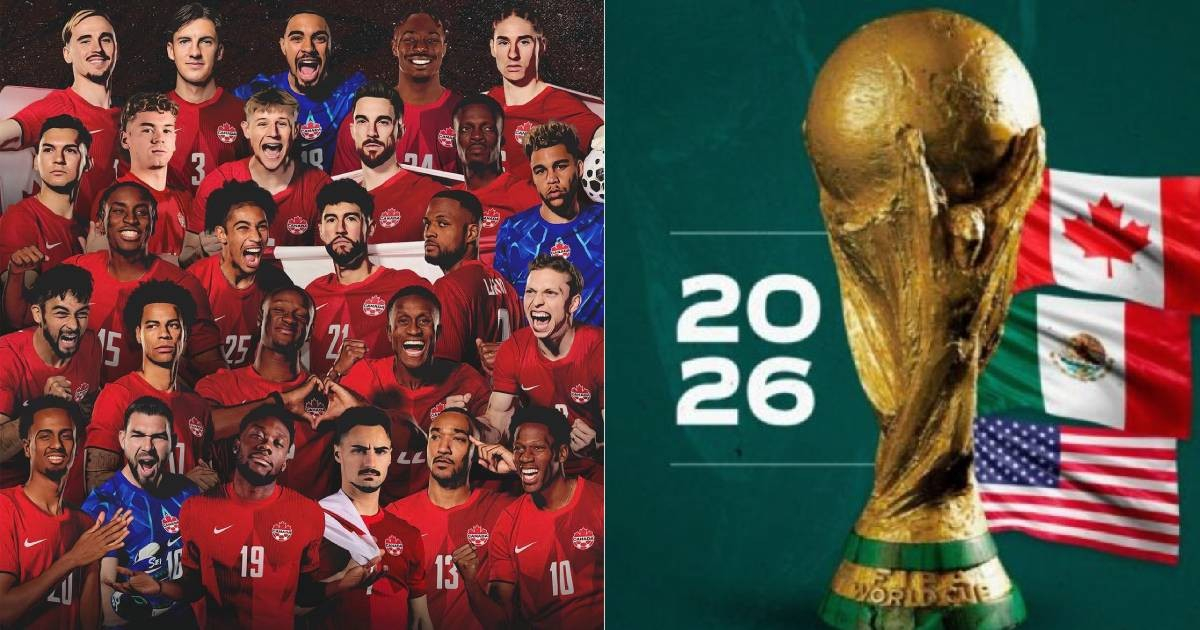
Canada is the proper name of the group. As one of the three host countries of the tournament —alongside the United States and Mexico— the Canadians will play in only their third World Cup and are still seeking their first qualification for a knockout stage. Their two previous participations, in Mexico 1986 and Qatar 2022, ended in the group stage.
Now, with a generation led by Jonathan David —the all-time top scorer of the national team— and the support of their fans, the team coached by Jesse Marsch arrives confident that this could be the tournament that marks a turning point for their football.
The pressure, however, will be considerable. The role of host raises expectations, and any early misstep could be devastating for a team that has never won a World Cup match. Alphonso Davies, who scored Canada’s first goal in a World Cup against Croatia in Qatar 2022, is dealing with physical issues that create uncertainty.
The main rival in the fight for the group leadership will be Switzerland, the team with the most World Cup experience in the group. The Europeans face their thirteenth participation with the reputation of being one of the most consistent teams on the continent: tactical discipline, defensive organization, and the ability to compete in tight matches are their hallmarks. They reached the quarterfinals three times —1934, 1938, and 1954— and made it to the Round of 16 in Qatar 2022.
They qualified for 2026 as the leaders of their UEFA group, with four victories, two draws, and no losses, conceding only two goals. Granit Xhaka, Manuel Akanji, and Breel Embolo are their key players under the management of Murat Yakin.
Bosnia and Herzegovina may have less tradition, but it has a qualifying history that is already epic. Their only World Cup as an independent nation was Brazil 2014, where they were eliminated in the group stage. To reach 2026, they had to overcome the European playoff in a dramatic fashion: they eliminated Wales in the semifinals on penalties, and on March 31, 2026, they defeated Italy in the final in Zenica, also on penalties, after drawing 1-1. Their football combines Balkan technique with significant physical strength, and many of their players compete in top-tier European leagues.
Qatar finishes the group with the mission of redemption. As the host of the last World Cup, it recorded the most painful statistic in its history by becoming the first host nation eliminated in the group stage, losing all three of its matches in 2022. Now, it arrives without that pressure, featuring players like Akram Afif and Almoez Ali, and with more international preparation than in that edition.
The Group B schedule begins on June 12 with Canada facing Bosnia and Herzegovina, while Qatar takes on Switzerland on June 13. The third matchday, on June 25, features Switzerland against Canada in Vancouver, and Bosnia and Herzegovina against Qatar happening simultaneously.
Switzerland and Canada hold a slight advantage on paper, but the difference between the four teams does not seem insurmountable. "There will be no world champions or historical favorites in this bracket. What there will be is something equally enticing: four teams convinced that this World Cup could be the perfect opportunity to achieve a feat they have never accomplished before."
Filed under: