
Related videos:
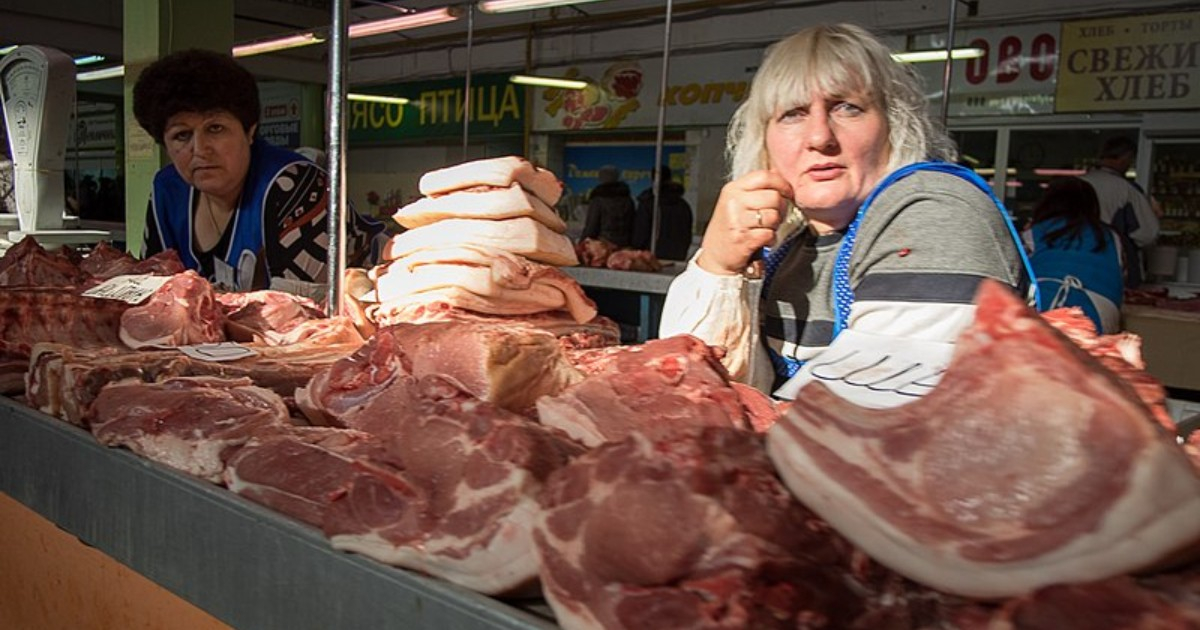
Around 90 Russian companies are interested in exporting meat, dairy products, and fish to Cuba, as announced this Thursday by Russian Deputy Prime Minister Dmitri Chernishenko during the Russia-Cuba Business Dialogue held as part of the St. Petersburg International Economic Forum (SPIEF 2026), at a time when the island is experiencing one of the worst food crises in its recent history.
The announcement came as Cuba imports 80% of the food it consumes, and one in three Cuban households has reported experiencing hunger recently, according to data from the Food Monitor Program.
Chernishenko emphasized that "despite external pressure, Russian companies continue to expand their presence in Cuba and are willing to invest in long-term projects," and called for the establishment of practical cooperation mechanisms such as payments in national currency and direct regional alliances.
The Russian official also detailed other agreements reached during the meeting: Russia will donate 50 Moskvich vehicles for taxi service in Havana, will sign a memorandum of understanding for the joint development of cancer vaccines, and last year supplied Cuba with six tons of substances for the production of medicines.
He also highlighted that in 2025, Russia increased its imports from Cuba by 20%, and that the supply of vehicles from the brands GAZ, UAZ, KAMAZ, and Lada continues to expand.
"Our partnership is set to become an example of a new architecture for international economic cooperation in a multipolar world," he stated.
On the Cuban side, the Vice Prime Minister and Minister of Foreign Trade and Foreign Investment, Óscar Pérez-Oliva Fraga, asserted that Cuba is the country in Latin America and the Caribbean "where Russian companies can fully and confidently develop their activities," arguing that the exit of international competitors due to U.S. sanctions presents an opportunity for Moscow.
Pérez-Oliva listed priority sectors for Russian investment: energy, refineries, tourism, transportation, mining, health, biopharmaceutical industry, infrastructure, and the agri-food industry, with a particular emphasis on the import and processing of wheat.
This approach is framed within an accelerated deepening of Cuba's dependence on Moscow: in April, during the XXIII session of the Cuba-Russia Intergovernmental Commission, the regime authorized Russian companies to directly manage industrial facilities on the Island, with projected investments exceeding 1 billion dollars.
The Russian company Zarubezhneft is already operating alongside the Cuban state-owned company CUPET at the Boca de Jaruco oil field, with an investment of 100 million euros to drill 30 new wells.
The food context in Cuba is critical: power outages—lasting up to 22 hours a day in some areas—affect food preparation in 80.4% of Cuban households, and a pound of bananas or tomatoes costs between 200 and 250 pesos in Havana.
The history of agro-food cooperation between the two countries dates back to 2023, when the Cuban Ministry of Agriculture accredited 23 Russian companies to export pork, chicken, beef, dairy products, and canned fish, and in October 2024, Cuba formally validated the Russian veterinary control systems, paving the way for unrestricted trade in exports.
Filed under: