
Related videos:
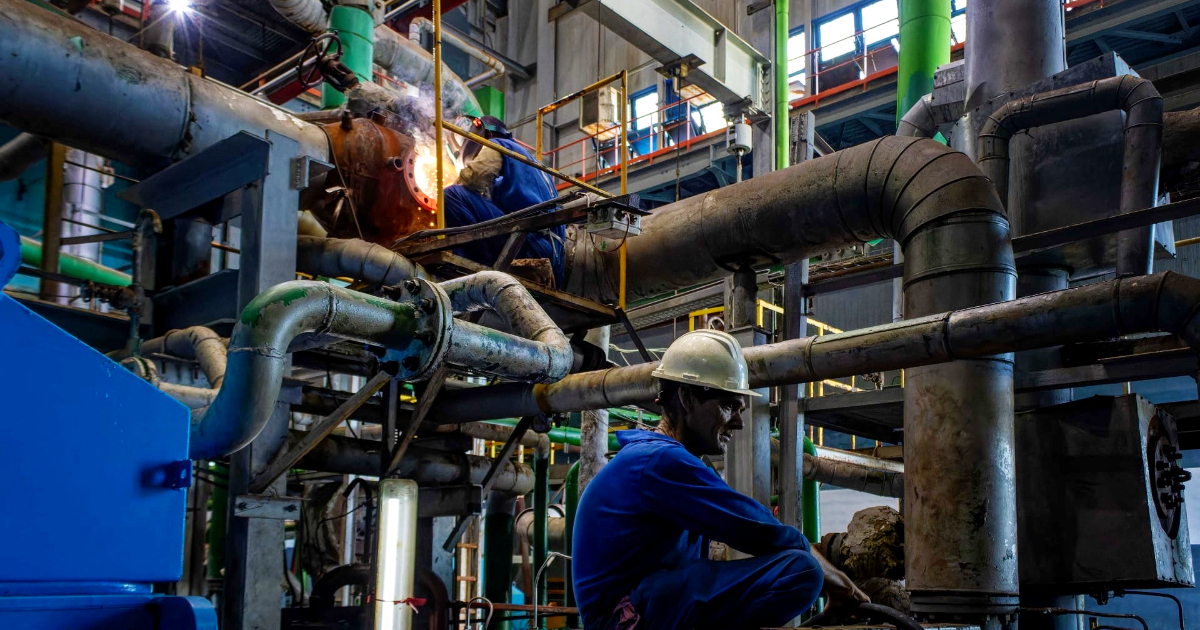
The Cuban regime authorized Russian companies to directly manage industrial facilities on the island, an unprecedented concession that deepens Havana's dependence on Moscow –although they claim otherwise– amid the worst economic and energy crisis in decades.
The announcement was formalized at the XXIII session of the Cuba-Russia Intergovernmental Commission, held on March 31 and April 1 in Saint Petersburg, and was confirmed by Román Chekushov, Secretary of State of the Ministry of Industry and Trade of Russia, who stated that Russian companies will have access to the management of industrial production facilities in Cuba, according to EA Daily.
The sectors covered by the agreements include energy, transportation, automotive industry, education, trade, and food production, with projected bilateral investments exceeding 1 billion dollars, reported the Russian government.
Among the specific projects, the resumption of vehicle assembly for GAZ in Cuba during 2026 stands out, along with the opening of a distribution office for that brand —adding to the UAZ line inaugurated in 2025— and the establishment of a fleet of fifty taxis in Havana using Moskvich vehicles.
In the energy sector, the Russian company Zarubezhneft is progressing alongside the Cuban state-owned company CUPET at the Boca de Jaruco field, with an investment of 100 million euros to drill 30 new wells.
Last Friday, the Deputy Foreign Minister of Russia, Sergei Ryabkov, was received at the Palace of the Revolution by Miguel Díaz-Canel as part of the Inter-Ministerial Consultations between both countries.
During the meeting, Díaz-Canel thanked Moscow for the recent shipment of fuel and acknowledged the seriousness of the situation: “this is the first and only fuel we have received in four months,” and that holds tremendous significance for us.”
The shipment referred to by the leader arrived on March 30 aboard the oil tanker Anatoly Kolodkin at the port of Matanzas, carrying about 100,000 tons of crude oil —approximately 730,000 barrels— at a time when the national electrical system had completely collapsed on March 16, leaving the island's 11 million inhabitants without electricity.
Cuba produces only about 40,000 barrels of oil daily against a demand of between 90,000 and 110,000, which makes it critically dependent on imports that the regime cannot afford or guarantee on its own.
Ryabkov described the meeting as a strong signal, both in the Russian Federation and in the international community, regarding the special nature of the relations that exist between Havana and Moscow, reported TeleSur.
Filed under: