
Related videos:
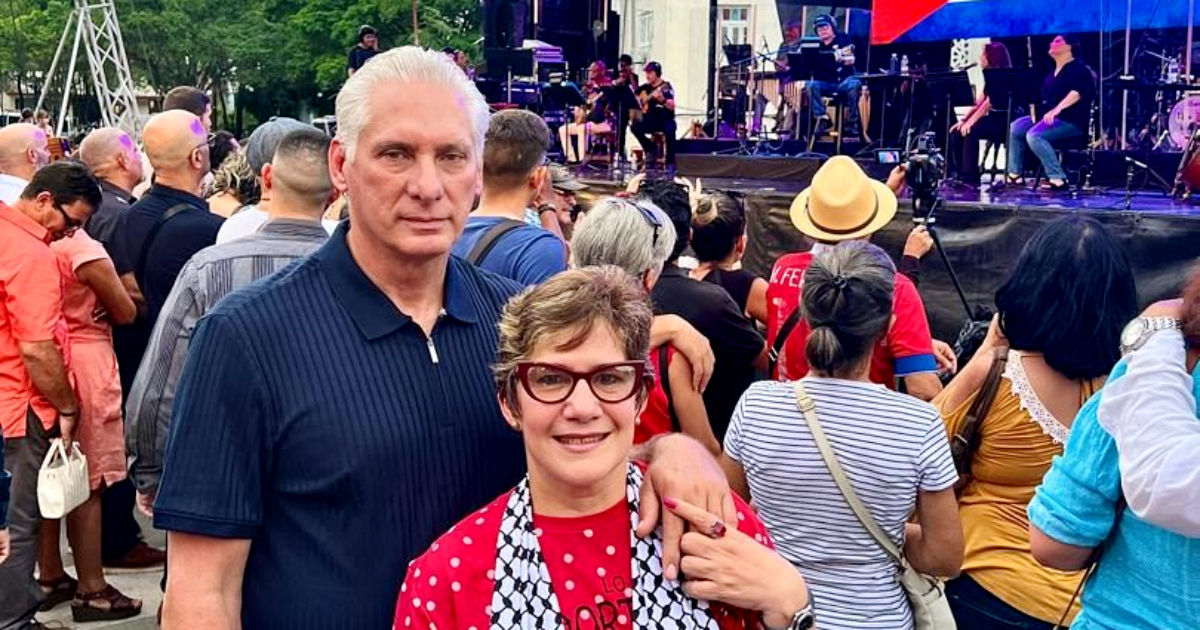
Lis Cuesta Peraza, wife of the Cuban leader Miguel Díaz-Canel, was added this Thursday to the list of Specially Designated Nationals and Blocked Persons by the Office of Foreign Assets Control of the U.S. Department of the Treasury.
The measure by the Trump Administration makes Lis Cuesta the first spouse of a Cuban leader to receive a direct sanction from the United States government.
The decision was published by OFAC on June 4, 2026 under the framework of Executive Order 14404, signed by President Donald Trump on May 1, 2026, titled "Imposition of Sanctions on Those Responsible for Repression in Cuba and Threats to National Security and U.S. Foreign Policy."
Cuesta Peraza was born on March 28, 1971, "in Sancti Spíritus," as she herself clarified on her social media. She is now listed in connection with Díaz-Canel, who was also designated in the same round of sanctions.
The similarity with the case of Cilia Flores, wife of Nicolás Maduro, is evident. Flores was placed on the SDN list on July 26, 2018, establishing the regional precedent of directly sanctioning the spouse of a Latin American ruler. The United States replicates this pattern in the Cuban case with Lis Cuesta.
The wife of the Cuban leader has publicly rejected the title of first lady, although she accompanies her partner on official trips around the world. Washington, however, treats her with the same rigor as any figure within the regime's apparatus.
In the same round, Manuel Anido Cuesta, son of Lis Cuesta, residing in Madrid, Spain, born on November 3, 1994, in Holguín, was also sanctioned due to his direct ties with his mother. The case of Manuel Anido extends the scope of the sanctions into European territory.
Another notable figure in this round is Alejandro Castro Espín, known as "El Tuerto," son of Raúl Castro and Vilma Espín, recognized as a central figure in the Cuban intelligence apparatus.
His son, Raúl Alejandro Castro Calis, born on May 16, 1995, in Havana, was also included in the list, linked to his father.
The sanctions against Raúl Castro's grandson represent one of the most direct actions against the Castro family in recent years.
In addition to the individuals, OFAC designated five entities: the Ministry of Revolutionary Armed Forces, the Committees for the Defense of the Revolution, the Cuban Institute of Friendship with the Peoples, the travel agency AMISTUR Cuba SA, and the mining company Minera La Victoria SA.
The sanctions on the Ministry of the Armed Forces range from historical organizations of the Revolution to economic and military structures of the current regime.
Simultaneously, OFAC published Frequently Asked Question 1258, which clarifies that Executive Order 14404 establishes a sanctions program separate from the Cuban Assets Control Regulations and warns about the risks for foreign financial institutions that engage in significant transactions with blocked individuals.
Filed under: