
Related videos:
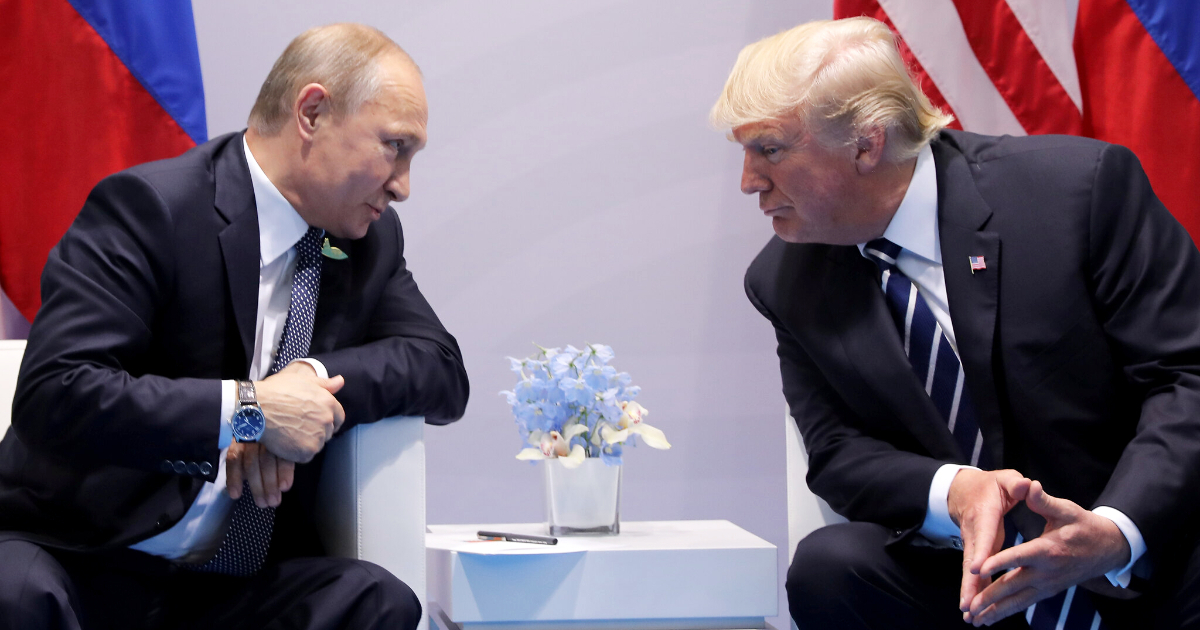
Russian President Vladimir Putin admitted this Thursday that he had contacts with the U.S. administration regarding a potential military operation in Cuba, similar to the one carried out in Venezuela on January 3 of this year. The revelation occurred during a meeting with representatives from major global news agencies, including EFE, held at the Konstantin Palace on the outskirts of St. Petersburg.
In response to a direct question on the subject, Putin answered succinctly: "Were there any contacts with the U.S. Administration regarding Cuba? ... Yes," without providing any details about the content, scope, or outcome of those conversations with Washington.
The backdrop of the statement is the so-called Operation Absolute Resolution, carried out by the United States on January 3, 2026 in Venezuela, which resulted in the capture of Nicolás Maduro and his wife Cilia Flores, who were taken to New York to face charges of narco-terrorism.
After that operation, the Trump administration used the Venezuelan precedent as a warning signal towards Cuba. Washington once again placed the island on its list of state sponsors of terrorism, imposed new sanctions against entities like GAESA, and recorded at least 25 reconnaissance flights near Cuba between February and May of this year, in addition to relocating two warships north of the island.
Russia responded to that pressure by strengthening its alliance with the Cuban regime. In March, Moscow sent a tanker with 100,000 tons of crude oil to Havana in light of the energy blockade imposed by the United States.
In parallel to Putin's statements, Russian Foreign Minister Serguéi Lavrov congratulated Raúl Castro on his 95th birthday on Wednesday, reaffirming Moscow's support. "In the context of the unprecedented external pressure faced by the Cuban people, we once again express our firm solidarity and support," Lavrov stated in an official note.
The Russian chancellor described the former Cuban dictator as "an example of selfless service to the motherland, to his people, and to the ideals of the Cuban Revolution," and stated that "for millions of people around the world, he is a symbol of stoicism, courage, patriotism, and unyielding will."
In May, Trump ruled out applying the Venezuela model to Cuba, although pressure on Havana has not subsided. The Center for Strategic and International Studies (CSIS) published an analysis this Friday with five scenarios for the use of military force in Cuba, indicating that the debate regarding the future of the island remains open in U.S. foreign policy circles.
Putin's statements are framed within the St. Petersburg International Economic Forum (SPIEF 2026), an event that Russia uses to project its image as an alternative power to the Western order and to present Cuba and Venezuela as strategic partners. The confirmation that Moscow and Washington have discussed Cuba—though without revealing details—places the island at the center of a major geopolitical tension between the two superpowers.
Filed under: