
Related videos:
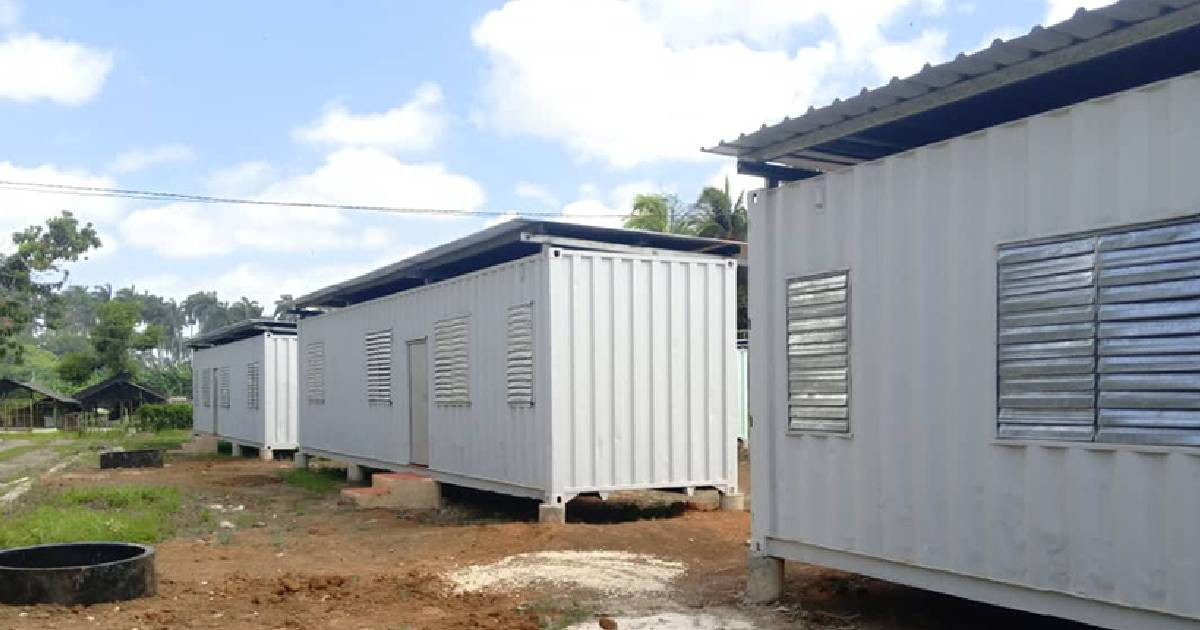
The province of Ciego de Ávila is promoting a program to transform 155 containers from solar parks into modular homes, with six houses already completed in the La Rodaja area and around twenty structures currently undergoing conversion, reported the official newspaper Invasor this Tuesday.
The initial phase of the project is located at the former site of the AIDS sanatorium in La Rodaja, the municipal seat of Ciego de Ávila, where the plan calls for the construction of approximately 60 housing units.
The program will be extended to 12 settlements across the 10 municipalities of the province, with the exception of Florencia, the source noted.
Each equipped container offers approximately 26 square meters, distributed among a small room, a master bedroom, a restroom, a countertop with a sink, and a small service patio.
According to the media outlet, to mitigate the tropical heat, the structures incorporate zinc roofs raised above the covering and interior finishes made from materials available in the area.
Leiter Méndez Valdivia, deputy director of Housing for the province, explained that the homes are placed on concrete pilings and anchored using welding. "These are secure homes," he stated, referring to their resilience against meteorological phenomena.
The project is managed by the small and medium-sized enterprise Andy and the Construction and Assembly Company of the Ministry of Construction, with 65 workers distributed across five brigades.
The construction manager, Miguel Ángel Fernández Abreu, stated that "we oversee the quality of the construction work and also ensure services such as the disposal of waste through underground sanitary networks, drinking water, and electricity."
The conversion cost of each container is around 1,830,000 Cuban pesos, an amount that exceeds that of other homes in advanced construction phases and forces reliance on state budget availability.
The program includes payment agreements tailored to the incomes of future residents, while the state budget initially covers a significant portion of the investment, emphasized Invasor.
Yuri Izaguirre González, the mayor of the municipality, highlighted that the program will prioritize vulnerable families, such as those affected by weather events, landslides, young graduates from homes without family support, the sick, the elderly, and mothers with multiple minor children.
The allocation of the housing has not yet taken place; the files are being assessed by the offices of Public Assistance, the Municipal Housing Directorate, delegates, technicians, and community stakeholders.
The Avileño project is part of a national program that the regime announced in mid-2025 to transform over 3,500 containers into housing, but the government itself acknowledged as a failure in November due to the slow pace of extraction and transformation of the structures.
By last April, only 133 units had been delivered nationwide, while the official housing deficit exceeds 929,000 homes, and 35% of the approximately 4.1 million units are in poor or fair condition.
Technical critiques of the model are constant. The architect Abel Tablada from the Universidad Tecnológica de La Habana warned in May that metal containers "can become an oven under tropical conditions," and he described the program as "a temporary and emergency solution" that should not be confused with a long-term housing plan.
Residents of Cerro and Guantánamo have reported leaks, electrical failures, and a lack of thermal insulation in units that have already been delivered, in a country that suffers from power outages of more than 20 hours a day, worsening the living conditions in metal structures exposed to the sun.
Filed under: