
Related videos:
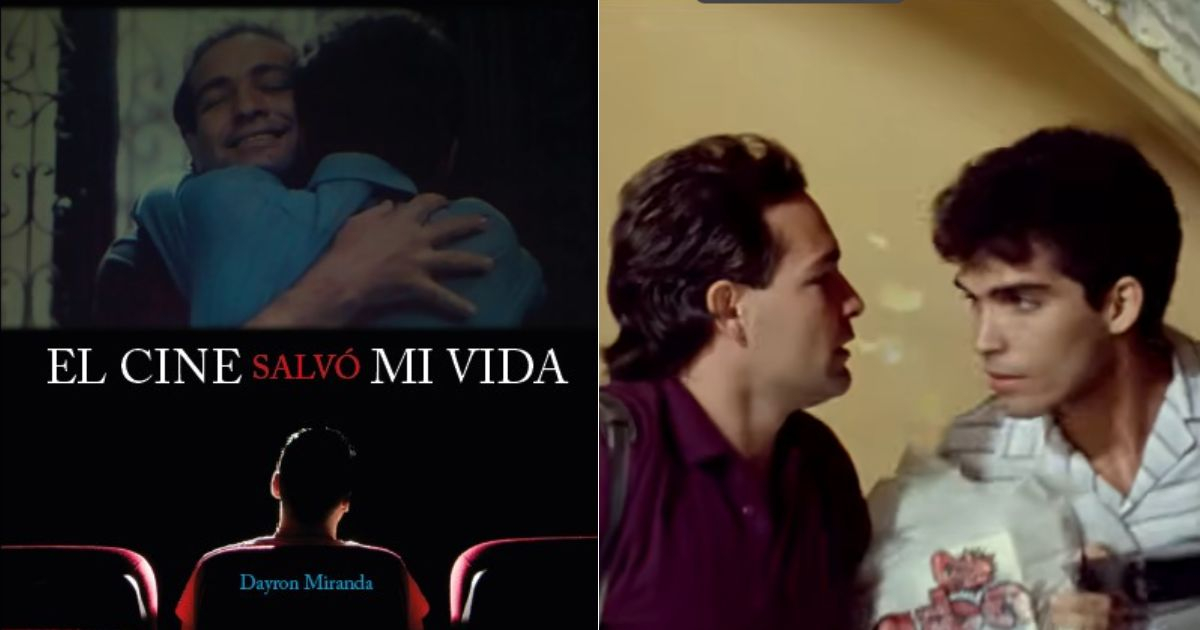
Dayron Miranda, a specialist at the Cinemateca de Cuba, published his book Film Saved My Life this Thursday, the result of 12 years of research and personal experiences, which constitutes the first work that examines, from a postmodern perspective and structure, the representation of homosexuality in fictional Cuban cinema.
The volume, published by the Spanish publisher Hurón Azul as part of its 23 y 12 collection —the same one that published the five Bitácoras de Cine Cubano—, focuses on the feature films produced by the ICAIC during the period 1993-2026.
According to the description from the Cinemateca de Cuba, the work "addresses the issue of homosexuality, society, history, and Cuban cinema in an open manner, interwoven with cinematographies and artistic references from all five continents," something that has not been tackled before on this scale.
The book draws on autobiographical elements: Miranda, at 33 years old, presents her own existence as a historical journey through Cuba, framing her life as "a significant critique and journalistic and anthropological investigation, not only psychosocial but also the inner exploration that every human being undertakes from birth: the quest for oneself, for happiness, according to one's circumstances, during the time in which they had to survive" (sic).
The volume is divided into four segments: Air and Water, which represent childhood and adolescence, "the nascent conceptions we have as human beings during those ages"; and Earth and Fire, which reflect youth and adulthood, "the mental maturity we experience to face reality, no matter how complicated it may be, in this case, that of Cuba in relation to the world," the source points out.
To construct this journey, Miranda, who holds a degree in Journalism, intertwines diverse genres such as testimony, poetry, reportage, investigative journalism, and screenwriting. The segment Tierra additionally incorporates opinion interviews and essays, based on his diploma thesis, transforming the book, in the words of the Cinemateca, into "two books in one."
The work includes around twenty unpublished photographs and interviews with internationally recognized Cuban figures, such as: Senel Paz, Jorge Perugorría, Laura de la Uz, Isabel Santos, Luis Alberto García, Enriquito Almirante, Fernando Pérez, and Miguel Barnet, the site indicates.
Senel Paz was the writer and screenwriter who penned the script for Fresa y Chocolate (1993), based on his story "The Wolf, the Forest, and the New Man." The film by ICAIC was directed by Tomás Gutiérrez Alea and Juan Carlos Tabío and marked a milestone in the representation of homosexuality in Cuban cinema; it became the first and only production from the Island nominated for an Oscar for Best Foreign Language Film.
The film starred Jorge Perugorría (Diego) and Vladimir Cruz (David), whose iconic embrace on screen is featured on the cover of the volume.
The year 1993, the starting point of the research, is not a coincidence: it coincides with the premiere of that film and opens a timeframe that reaches until 2026, during which Cuba underwent profound transformations in its policy toward the LGBTQ+ community. This process culminated with the approval of the new Family Code in the referendum on September 26, 2022, which included same-sex marriage.
In the national memory, there are still wounds related to decades of harsh discrimination and abuses against homosexuals. Several researchers have addressed the crimes committed in the Military Units to Aid Production (UMAP), the forced labor camps that Fidel Castro's regime created in November 1965 and operated until 1968.
After such violations, leaders like President Miguel Díaz-Canel have claimed that “the fight against homophobia and transphobia is part of the ideals of socialism in Cuba”.
The goal of Miranda's book, according to the Cinemateca, is "to bring people closer to classic or significant works that may assist them in their own inner search," with references not only to cinema but also to painting, music, literature, and graphic art, such as the Cuban film poster.
At the author's explicit request, the volume is only available in physical format through various digital platforms.
Filed under: