
Related videos:
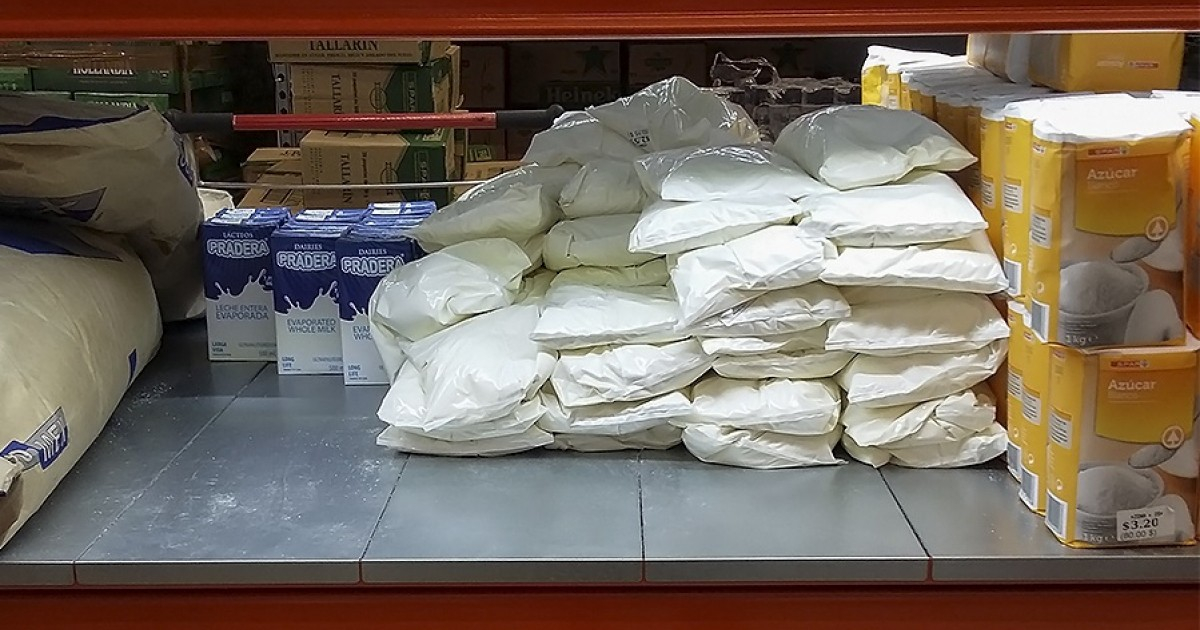
The Minister of the Food Industry of Cuba, Alberto López Díaz, acknowledged this Friday that more than 100,000 Cuban children are not receiving their daily milk, during an intervention in the television program Mesa Redonda where he admitted that the official plan for child supply is impossible to fulfill.
According to López Díaz, the plan includes supplying powdered milk to 331,000 children and liquid milk to another 200,000, for which 1,500 tons of powdered milk are needed. None of these targets are being met.
"We can't get it even by paying because it becomes complicated for us. After we make the payment to the suppliers, they return it to us because banks and bank branches do not accept payments originating from Cuba," the minister stated, in one of the most candid admissions made by a regime official regarding the food crisis.
The official explained that in May it was also not possible to complete the distribution of the available milk: "We have been unable to finish the distribution due to a lack of fuel."
Despite the widespread collapse, the government guarantees milk only to 15,026 children with chronic illnesses and to more than 16,000 pregnant women.
The infant milk crisis in Cuba is not new. In March, the dairy company in Matanzas acknowledged interruptions due to a lack of fuel, with children going over two months without receiving the product.
In May, half a kilo of powdered milk reached a price of 2,333 pesos in the informal market of Ciego de Ávila.
The deterioration is structural. Between 2018 and 2023, national milk production fell by 58%, and powdered milk imports decreased by 71%, according to data from the World Food Programme. Cuba imports between 70% and 80% of the food it consumes.
The shortage is not limited to milk. López Díaz acknowledged that in 2026 the basic basket has not included oil, chicken, or yogurt: "The impact on the basket has been tremendous. This year we have not been able to provide oil, chicken, or yogurt. We have barely given out one round of coffee in the capital of the country."
The minister also outlined the challenges of importing wheat. Of more than six vessels contracted for 2026, only one —which came from the previous year— arrived in January, and two more recently. A shipment of 5,000 tons of flour was offloaded from the ship before it set sail: "There were some pressures, they unloaded it and that wheat could not reach Cuba."
For baby food, Cuba must purchase the containers from China, facing delays of three months just for transportation. "Now we are sourcing it from much farther away. We refrain from mentioning country names and company names due to persecution," stated López Díaz.
The minister attributed all the difficulties to the U.S. embargo and estimated the losses in the sector at more than 450 million dollars during 2025.
However, the Cuban food crisis is a result of decades of a failed economic model under the dictatorship, which has devastated national agricultural production and made the country almost entirely dependent on imports.
In December 2024, more than 4,380 children in Guantánamo began receiving a liter of milk every three days, and the government even offered chocolate mixes as a substitute.
In January 2025, cola syrup was distributed as an alternative in some areas.
As palliative measures, the ministry announced the acquisition of more than 60 electric tricycles to distribute products from the regulated basket, the installation of 3,800 MWh of renewable power, and the issuance of more than 12,000 non-state commercial fishing licenses.
None of those measures address the underlying issue: "Without energy, without fuel, it is not possible—in an industry with our technology—to produce food," acknowledged López Díaz himself.
Filed under: