
Related videos:
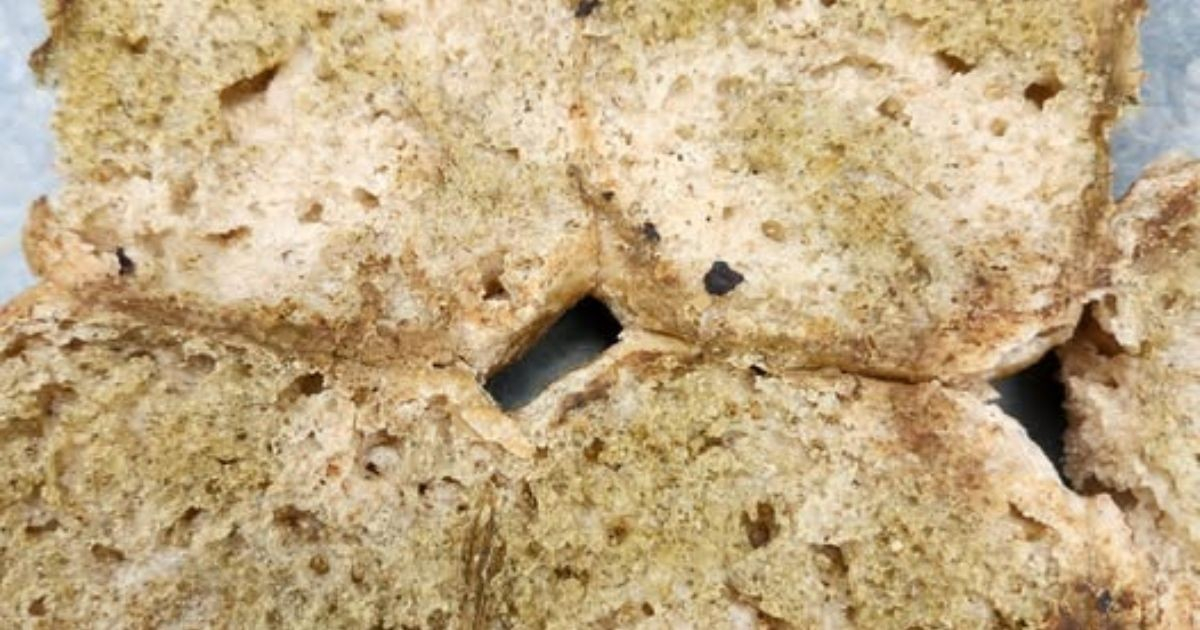
A Santiago native identified as Soraya Fernández posted on Friday in the Facebook group "The Cheapest in All of Santiago de Cuba" a complaint that ignited social media: the Panadería La Indiana, located on the corners of Patricio Lumumba and René Ramos Latourt, sold to its customers normed bread that had a greenish tint due to mold, a sour smell, and a texture that was in a state of decomposition.
"It is a disrespect to the people to sell this regulated bread. It is disgusting, with a sour smell and green underneath. Do they think the people are pigs? I bought it to show that once again the rulers do not care about the common people," wrote Fernández, whose post garnered hundreds of reactions, comments, and shares within a few hours.
The photographs depict several pieces of bread cut on a metal surface, showing greenish and yellowish spots in the crumb, dark specks, and an uneven texture that indicates a product in clear decomposition. The regulated bread, a symbol of the rationing system since 1962, reflects the failure of the economic model of the Cuban dictatorship.
A baker from the Island who participated in the comments offered a technical explanation: "I am a baker, and what’s happening there is that they are using already fermented dough. They sprinkle it a bit with new flour and make bread that way, but since they don’t add the proper sugar or the necessary process to work with fermented dough, the bread comes out in those conditions and also sour."
The outrage was unanimous. "Even pigs wouldn't eat that. How embarrassing," wrote one internet user. Another pointed out that she had been unable to buy the rationed bread for three days and that "when they do give it out, it's sour and disgusting, although they haven't gone so far as to hand it out when it's green." An anonymous comment was even more straightforward: "The bread the government sells to the population isn't fit for even a pig. People should buy it and throw it at the door of the PCC so they can see the crap they're giving to ordinary citizens."
Other Cubans expanded on the picture of precariousness. "Remember that we are no longer people. The most important things for a human being are water, electricity, and food, and we no longer have those; they've taken them away from us," lamented one internet user. Another questioned the weight after seeing it mentioned on official television: "Yesterday I saw the information on Mesa Redonda that the bread weighed 60 grams. I wonder what they use to make that bread, if it's dirt. It's better not to sell it; that solves nothing."
The complaint also highlighted the inaction of the authorities. "There's no shame whatsoever. That bread in that state for the population. Then the inspectors who roam the streets don’t see that. A little old man sits on the corner selling some cigarettes and they swarm over him like bees," wrote a user. Those who do not have access to the regulated bread must turn to the informal market, where the price ranges between 25 and 30 pesos per unit.
The problem is neither new nor exclusive to a bakery. Santiago de Cuba had already registered complaints in February 2025 about deformed and burnt bread, and that city woke up with "zero flour coverage" with no date set to normalize the supply. In March 2025, the shortage drove the price up to 50 pesos per unit in the informal market. Just over a year later, that price has multiplied.
Nationally, the regime promised in April 2026 to stabilize flour production with new investments and mills of 400 tons capacity, but bread continued to disappear or deteriorate. Ciego de Ávila barely guaranteed two days of bread throughout May, with only 32 tons of flour received.
The World Food Program describes the average Cuban household diet as "inadequate," while many Cubans have turned to the trash in search of food in a context that analysts characterize as a humanitarian emergency.
Filed under: