
Related videos:
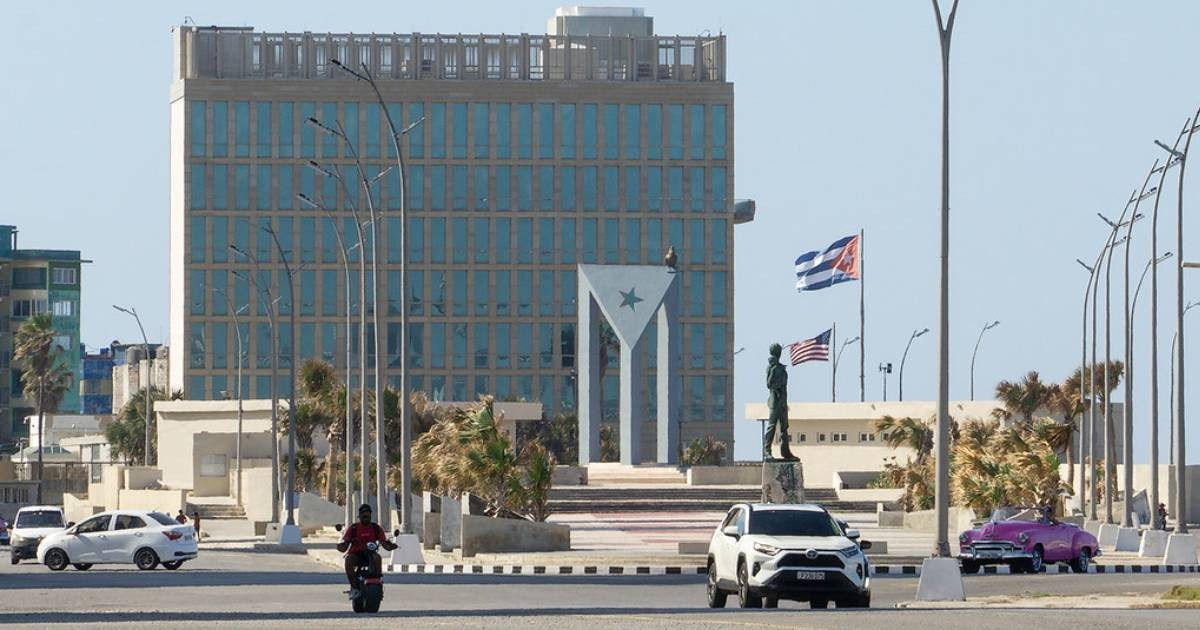
The Embassy of the United States in Cuba posted an official alert on its social media this Monday, denouncing that the so-called "ciberclarias" have intensified their efforts to spread false information about U.S. policy using symbols and images associated with the U.S. government.
"The U.S. Embassy in Cuba has noted that there are intensified efforts by cyberclarias to spread false information about U.S. policy using symbols associated with our government," the statement says.
The diplomatic mission urged its followers to verify information before sharing it and to consult the embassy directly if they have any doubts: "Before sharing, you can ask us if it's real, as many already do."
The term "ciberclarias" is a Cuban political neologism used pejoratively to refer to accounts and profiles on social media described as coordinated trolls serving the Cuban regime.
The name comes from the "claria," an inexpensive and abundant farmed fish in Cuba, which is also an invasive species, used metaphorically to evoke something prolific and of low prestige.
This phenomenon has been documented since at least 2020 by the computer scientist Raúl Danglade, creator of the site LasCiberclarias.com, who identified more than 120 fake profiles on Twitter linked to these coordinated operations.
According to Danglade, these accounts amplify pro-government hashtags such as #DeZurdaTeam, #CubaSalva, and #SomosContinuidad, while attacking dissenters, independent journalists, and foreign institutions.
The embassy's alert represents a new level in this phenomenon: it is no longer just about attacking Cubans critical of the regime, but rather about impersonating the image of a foreign power to fabricate false news about its politics.
In September 2025, the Cuban diplomat Johana Tablada de la Torre was involved in an illustrative incident by spreading false information against Carlos Giménez after sharing a manipulated post from a typical ciberclaria profile.
This is not the first time the embassy has issued such warnings. In January 2025, the diplomatic mission had already alerted about false migration rumors circulating that were attributed to official U.S. sources.
The embassy emphasized in its publication that "those who spread false news want to create confusion, fuel rumors, and distort reality to deceive and advance their propaganda."
The Cuban regime, for its part, uses the argument of a supposed "media war" driven from abroad to justify restrictions on freedom of expression on the internet, including the Decree-Law 370, in effect since 2019, with which it has pursued journalists and users for posts on social media.
"In an environment where news circulates rapidly, it is essential to use reliable sources, verify data, and avoid spreading content whose accuracy has not been confirmed," concludes the embassy's statement.
Filed under: