
Related videos:
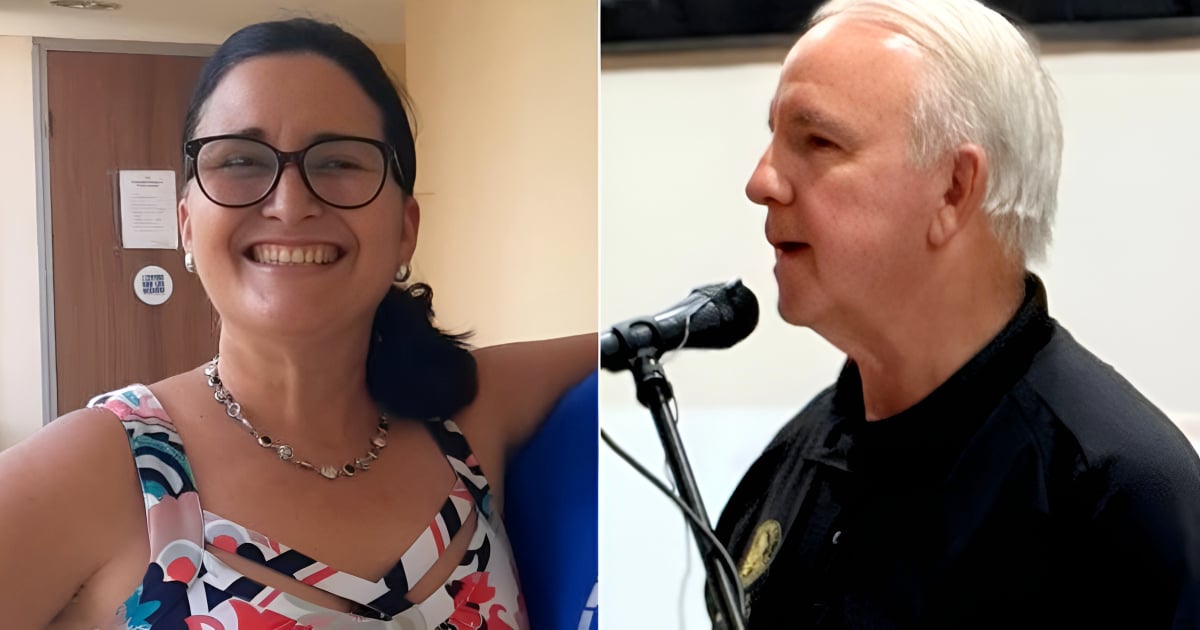
The official from the Cuban Ministry of Foreign Affairs (MINREX), Johana Tablada de la Torre, was once again exposed for sharing false news on social media, in which a phrase is wrongly attributed to the Cuban-American congressman Carlos Giménez that he never said.
In a recent post on Facebook, Tablada de la Torre republished a post from the user Frank Ernesto García Hernández - a typical profile of the so-called "ciberclarias" - featuring an image in which the legislator was quoted as saying: “Anyone who wants a Cuba without Castroism must be prepared to sacrifice their loved ones, bringing the country to a point where families on this island suffer unimaginable hardships in all kinds of shortages.”
"They dream of an 'ethnic cleansing' in Cuba. To take a bulldozer to the country and 'Americanize' the island," concluded García Hernández in his post, which, with his own "reflection" and graphic manipulation, was shared by the ambassador of Miguel Díaz-Canel through her social media, spreading a falsehood aimed at discrediting the image of the Cuban-American politician.
The image even included a link to an article from the independent media Diario de Cuba, but it omitted a crucial detail: the phrase is not from Carlos Giménez, but part of the opinion piece written by journalist Rafaela Cruz, where the potential impact of the congressman's proposal to cut remittances and flights to Cuba is analyzed from an editorial perspective.
In the original text, Cruz warns that such measures would involve "sacrifices" for Cuban families, but the phrase is never presented as a direct quote from the politician. However, when graphically manipulated and circulated on social media by profiles aligned with the government, it was turned into a falsehood intended to incite outrage.
Paradoxically, this misinformation was echoed by a high-ranking official of the regime, who has repeatedly accused the independent press of “manipulating” and “lying” about the Cuban reality. What happened confirms the opposite: it is the regime's spokespersons who disseminate false narratives with no regard for journalistic rigor or respect for the truth.
This practice, increasingly common among official communicators, contradicts their own narrative. While they criticize the critical coverage of independent media such as CiberCuba, 14ymedio, or Diario de Cuba, they themselves engage in media manipulation, mixing real content with fabricated claims and false attributions.
The use of fake news as a political weapon is not new for the Castro regime, which has made distortion, censorship, and indoctrination the pillars of its communication apparatus.
What is indeed new is the level of exposure: today, thanks to technology and independent journalism, these manipulations are easily dismantled and displayed to the world.
In a context where the regime continues to lose international credibility, such episodes only reaffirm who the true manufacturers of lies are in Cuba.
Another attack in the campaign against Cuban-American politicians
The publication by Tablada de la Torre, based on a false and out-of-context quote, is not an isolated incident, but rather a further manifestation of the Cuban regime's systematic campaign against Cuban-American political leaders such as Giménez, Marco Rubio, María Elvira Salazar, and other lawmakers critical of Castroism.
From the official apparatus, they have been labeled as "annexationists," "puppets of imperialism," or "enemies of the Cuban people," while in reality they are democratically elected figures from their communities and active representatives of the Cuban exile in the United States Congress.
A Giménez, for example, the State Security publicly accused him of being "anexionista" and of promoting a "hate agenda" following his visit to Guantánamo, without providing a single solid argument beyond ideological disqualifications, which deceitfully use a false equivalence of "nation," "homeland," or "Cuba," to the so-called "Cuban revolution."
The publication by Tablada de la Torre only deepens the discursive misery of the Cuban government, which, unable to support the legitimacy of the regime with arguments, resorts to personal discredit, the distortion of facts, and the spread of lies.
This crude use of social media—by a career diplomat—reveals the moral bankruptcy of what was once called "revolutionary diplomacy."
Instead of providing real explanations for the economic collapse, repression, massive exodus, or preventable deaths in hospitals lacking supplies, Castroism chooses to attack those who expose it to the world, creating enemies and diverting attention with media manipulation campaigns.
This latest attempt at manipulation by Tablada de la Torre not only falls apart under scrutiny, but also clearly depicts the helplessness of a regime that refuses to acknowledge its own shame.
The use of falsehoods against critical voices is no longer surprising, but it does confirm that the greatest threat to the dictatorship is not in Washington, but in the truth.
Filed under: