
Related videos:
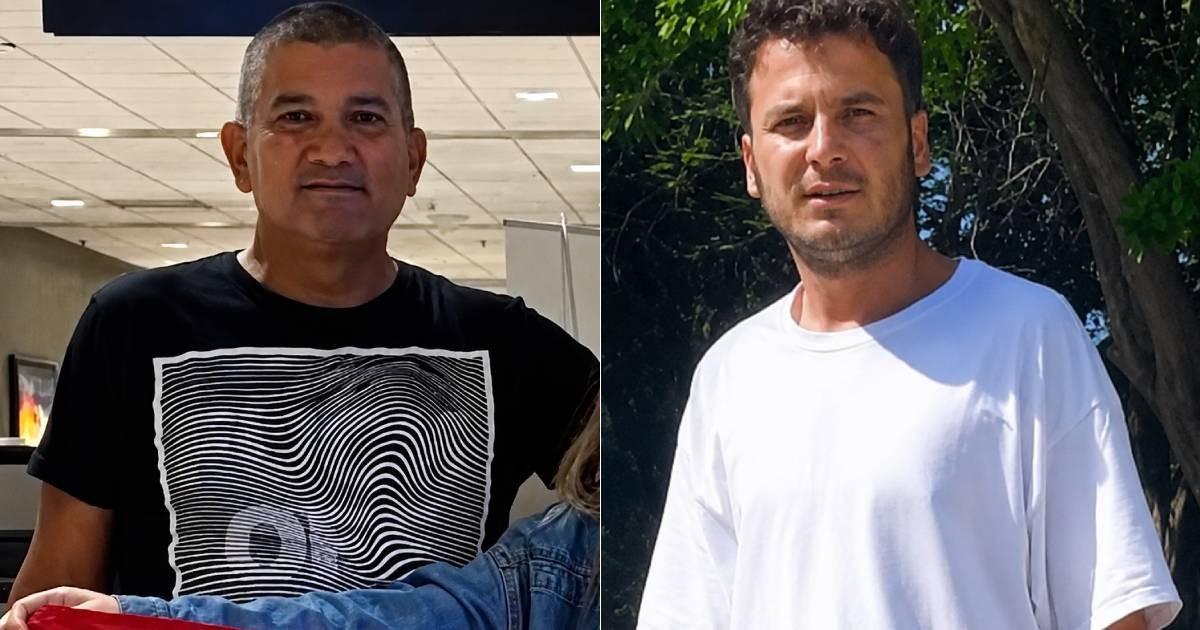
The families of Emilio Nieves Matanzas and Javier Batista Pérez, two Cubans residing in Cape Coral, Florida, are reporting that both were deported to Cuba on May 21 despite having active legal resources in front of federal courts in the United States.
The two cases share a troubling pattern: neither had a criminal record, both had filed appeals with the Immigration Appeals Bureau and habeas corpus petitions, and both were transferred to detention centers in Louisiana before being sent to the island.
Emilio Nieves Matanzas entered the U.S. in 2022 through the border with his partner, Odalys Díaz, and was residing in Florida with an I-220A document. On November 23, 2025, he was arrested by Immigration and Customs Enforcement (ICE) during a traffic stop and transferred to Louisiana.
His lawyer, Rafael Verde, explained to Telemundo 49 that the immigration judge denied the asylum case but acknowledged that Emilio was a "credible person," and that the defense filed an appeal within the legal timeframe and also a habeas corpus so that he could await the process outside of detention.
"The United States does not have the authority to deport a person to their country while they are awaiting a decision from a Higher Court," Verde stated, adding that deportation "is against all the protections that the U.S. government offers to immigrants."
Odalys Díaz, the wife, recounted that Emilio's first words upon calling from Cuba were devastating: "God has abandoned me. Just imagine this phrase from a person who is currently completely helpless, abandoned, with nothing in Cuba."
The couple also described Emilio's arrival on the island: "They take him off the plane, ask him several questions, open the door, and say bye bye."
A federal habeas corpus judge has requested that ICE explain the reason for the deportation, setting a deadline for a response by July 27, leaving Emilio in legal limbo in Cuba for at least two months.
The second case is that of Javier Batista Pérez, 62 years old, diabetic and with no criminal record, who was arrested on June 6, 2025, at an immigration court in Orlando.
Her daughter, Mary Batista, also told Telemundo 49 that the family lost track of her father while he was being transferred between detention centers: "I didn't know if he was in Mexico, in Cuba, or somewhere else. They only told me that they couldn't give me more information."
The response came when Javier called from Cuba. "He told me that he was sent to Cuba to die. He is very ill because he is an elderly person and is sick; he is diabetic," Mary said.
Her lawyer, Leslie Cabrera, claims that she had notified the government in writing about the pending federal process before the deportation. Days later, a judge approved the habeas corpus, and it was then that the government confirmed that Javier had already been sent to Cuba.
"Several days later, I saw that the habeas corpus was approved. I sent the approved habeas corpus to the United States government, and that is when they responded and informed me that the client was deported on May 21," Cabrera stated.
The lawyer was emphatic in her assessment: "Essentially, what the government did was override the judge. What we are doing now is entering a process to see if we can return our client to the United States."
These cases add to a pattern of deportations of Cubans with active processes under the Trump administration. A recent precedent offers some hope: Alejandro Ramírez Díaz, who was deported on March 19, 2026, without a final deportation order, managed to return to the U.S. after 41 days in Cuba thanks to a habeas corpus that a federal judge ruled in his favor.
According to Human Rights Watch, between January 2025 and March 2026, the U.S. deported 4,353 Cubans to Mexico, of whom 26% had no criminal record.
Odalys Díaz, Emilio's partner, summarized the determination of those facing these situations: "I am not going to stop fighting, I am not going to stop speaking out, because there are many more cases like mine."
Filed under: