
Related videos:
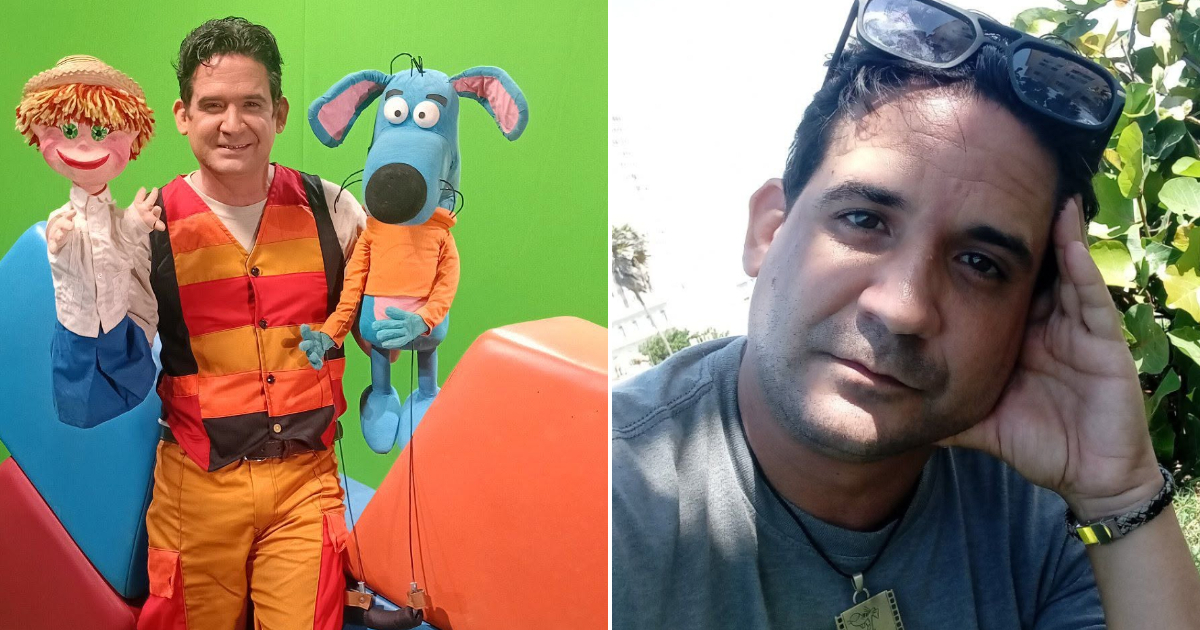
The Cuban playwright and actor Maikel Chávez reported this Monday on Facebook that he was attacked with a knife on the Malecón in Havana, in front of the Ameijeiras Hospital, in broad daylight, by two individuals who stole his entire monthly salary through a bank transfer.
Chávez, born in Caibarién in 1983 and known for his work in theater for children and young people, recounted that he went out to the Malecón in search of fresh air after enduring more than 20 hours without electricity due to the blackouts affecting the island.
"I was attacked by two individuals wielding knives. They thought I was a foreigner and their plan was to take my cell phone and throw me into the sea," the artist wrote in his post, titled "S.O.S... THEY HAVE LEFT US ALONE...".
According to his account, he managed to convince the assailants that he was Cuban and lived just a few blocks away from the location: "I don’t know what power I drew upon to make them understand that I am Cuban, that I live a few blocks from that site, and that I can’t stand the blackouts any longer."
Although the criminals agreed not to take his phone, they stole his entire salary through a bank transfer. Chávez published the recipient account and the phone numbers used by the assailants, and asked for help from the authorities and the Ministry of Culture.
The playwright described the modus operandi of the gang: to beat the victims —especially those they confuse with foreign tourists— and throw them into the sea. "I am LITERALLY AFRAID. I can't even go out to the boardwalk in broad daylight anymore," he wrote.
The assailants threatened to hit him if he spoke about the incident, but Chávez decided to go public with the report anyway.
Her post reflected a deep anguish over the situation in Cuba. "I work for the good of families in my country. I haven't slept well in days; I went out to the Malecón in search of air after being without electricity for over 20 hours," she wrote, adding, "Maybe I should have been one of those who leave and not one of those who stay."
The assault on the recognized artist occurs amid a wave of thefts shaking Havana in recent weeks. Last Wednesday, scholar Julio César González Pagés reported being assaulted by two minors in El Vedado, and on Saturday he documented more than 30 burglaries in homes in just one week in that same neighborhood.
The national situation is equally alarming. According to the Cuban Citizen Audit Observatory (OCAC), in the first half of 2025, there were 1,319 verified crimes —almost five times more than in the same period of 2023—, with 721 thefts being the most common category.
The security alert issued by the U.S. Embassy in Havana in September 2025 already warned about the increase in thefts linked to the economic decline on the island, a crisis that the Cuban regime has exacerbated after more than six decades of dictatorial governance.
Chávez concluded his statement with a question that encapsulates the sense of abandonment felt by many Cubans who have chosen to stay: "What do I do, country? Tell me what I should do, my country that I have chosen above all else."
Filed under: