
Related videos:
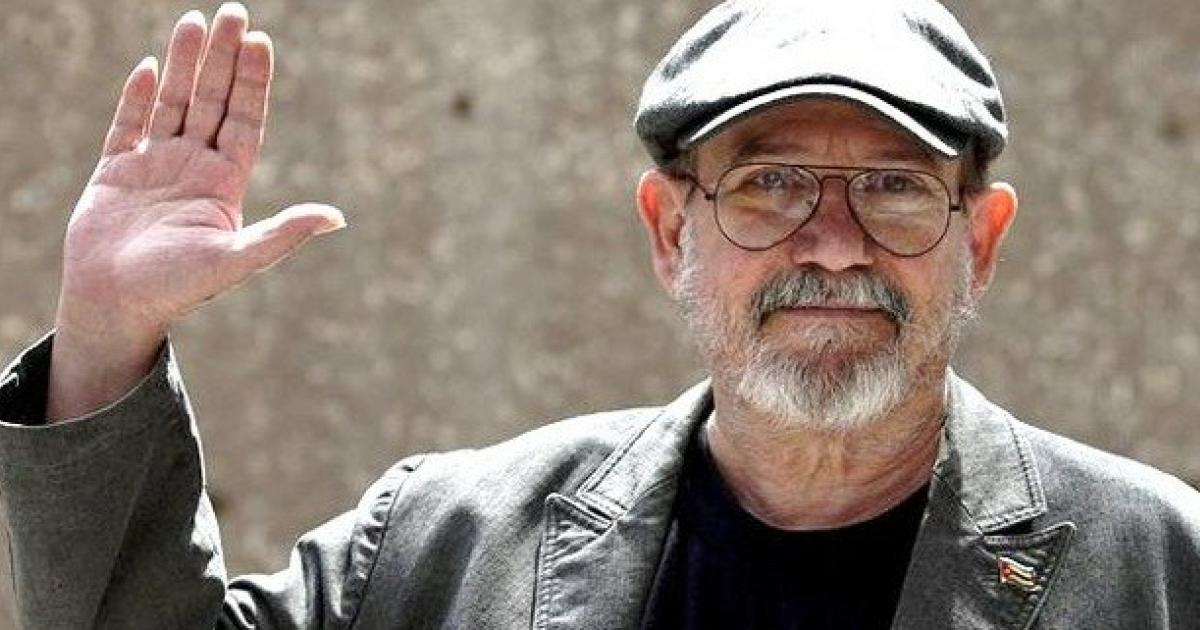
The Cuban singer-songwriter Silvio Rodríguez expressed his belief in "the right to free expression and manifestation" in a extensive interview granted to elDiario.es published this Sunday from Havana, in which, at the age of 79, he discussed the political, economic, and social situation in Cuba.
The troubadour, the foremost representative of the Nueva Trova Cubana, emphasized that law enforcement should supervise protests to prevent incidents, although he clarified that he does not agree with using them for "vandalistic and violent acts."
This position has direct antecedents. In May 2021, weeks before the historic protests of July 11, Rodríguez was already calling for the legalization of protests in Cuba, stating: "These little scandals will end the day they are legalized."
After the events of July 11, he called for amnesty for the prisoners "who were not violent" and in March 2022, he expressed his disagreement with the sentences of 15, 20, and 30 years imposed on protesters, questioning that "they did not kill anyone."
In the same interview this Sunday, Rodríguez criticized the U.S. embargo: "There has never been a longer blockade in history than that of Cuba, and now, with the latest measures, it's also the cruelest and most inhumane," referring to the tightening of sanctions under the Trump administration.
However, the singer-songwriter also sharply pointed out the internal errors of the island's economic model.
"Fidel said that our model was no longer useful, that Revolution meant changing everything that needed to be changed. I cannot understand how decades have passed without more effective measures being taken. If a more realistic economy had been adopted, what is happening today would not be possible, or at least not in such a dramatic way," he declared.
This criticism aligns with the views expressed by Rodríguez in an interview with El País in March 2026, where he described the Cuban economic model as "very idealistic" and "orthodox," and pointed out that Cuba should have rethought its system about 30 years ago.
On that occasion, he also stated that "people perform better and produce more when they can directly benefit from what they do," although he maintained his opposition to the idea of the opposition coming to power and his defense of national sovereignty.
In April 2025, Rodríguez had already acknowledged "political and economic errors and dogmatism" within Cuba, although on that occasion he pointed out that the embargo creates "our greatest difficulties" and clarified: "I am not one to blame it for everything."
The interview takes place at a time when Cuba is experiencing a severe economic crisis, characterized by shortages of food, fuel, and medicine, as well as unprecedented mass emigration, all within a context marked by the tightening of U.S. sanctions.
Filed under: