
Related videos:
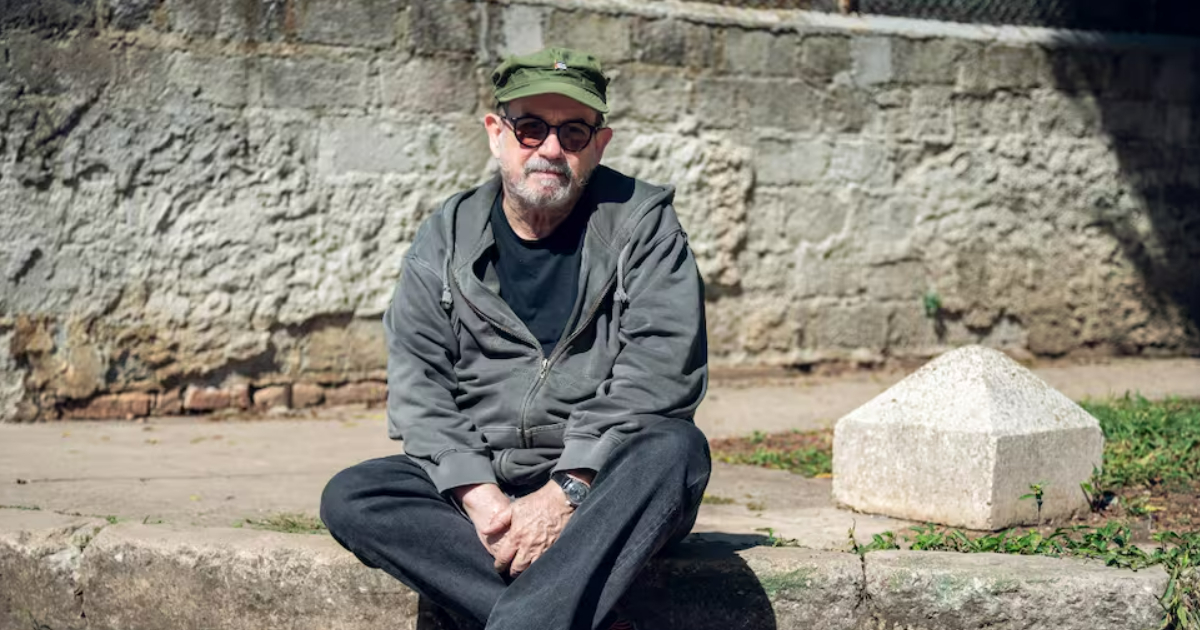
The Cuban singer-songwriter Silvio Rodríguez acknowledged in an interview published this Sunday by elDiario.es that Fidel Castro himself admitted the failure of the Cuban economic model and that, despite this, the regime did not take the necessary measures to correct it.
Rodríguez, 79 years old and a member of the National Assembly, was emphatic: "Fidel said that our model was no longer serving us, that the Revolution meant changing everything that needed to be changed. I can't understand how decades have passed without more effective measures being taken. If a more realistic economy had been adopted, what is happening today would not be possible, or at least not in such a dramatic way."
The quote from Fidel that Rodríguez revives refers to statements made by the historical leader in 2010 in front of students from the University of Havana, when he acknowledged that the Cuban model "no longer works even for us."
That Rodríguez cites her in 2026 to criticize the subsequent inaction is politically significant: he uses statements from Fidel Castro to question the lack of subsequent changes in the system.
The interview was conducted by special envoy Andrés Gil in Havana and was published shortly after another interview from the same outlet with Miguel Díaz-Canel, in which the leader described three scenarios he attributes to the Trump administration: provoking a social explosion to intervene under the pretext of a humanitarian effort, coercive dialogue to seize control of the economy, or direct military aggression.
While Díaz-Canel focused his speech on external responsibility, Rodríguez added an internal self-criticism that the regime systematically avoids.
This position is not new in the trova scene. In March 2026, in an interview with El País, he had already described the Cuban economic model as "very idealistic" and the Government's vision as "orthodox and closed," noting that the measures for opening came "a bit late" and that Cuba should have reconsidered its model about 30 years ago.
In that same interview, he described everyday reality starkly: "There is tremendous inflation. Old folks like me, with a lifetime of savings, sometimes can't even buy a carton of eggs."
Rodríguez's statements come at a time of widespread crisis in Cuba, with power outages exceeding 20 hours daily in more than half of the territory, severe shortages of food and medicine, and unprecedented external pressure.
The Trump administration has amassed more than 240 sanctions against Cuba since January 2025 and has intercepted at least seven oil tankers, reducing the island's energy imports by between 80% and 90%.
On June 4, the OFAC directly sanctioned Díaz-Canel, his wife Lis Cuesta, and Alejandro Castro Espín, in an escalation that coincided with cacerolazos in Havana described as the most widespread protests since July 11, 2021.
Rodríguez, despite his self-criticism of the model, did not break with the system: he defended the Revolution against those calling for foreign intervention and stated about the Cuban opposition that "I don't wish them harm, but I don't wish for them to win."
However, his acknowledgment that decades of inaction have worsened the crisis contradicts the official narrative that blames all of Cuba's ills on the U.S. embargo, placing the troubadour in an uncomfortable position for the regime that honored him with military tributes just three months ago, when the MINFAR formally presented him with a replica of an AKM rifle in a ceremony with Díaz-Canel.
Filed under: