
Related videos:
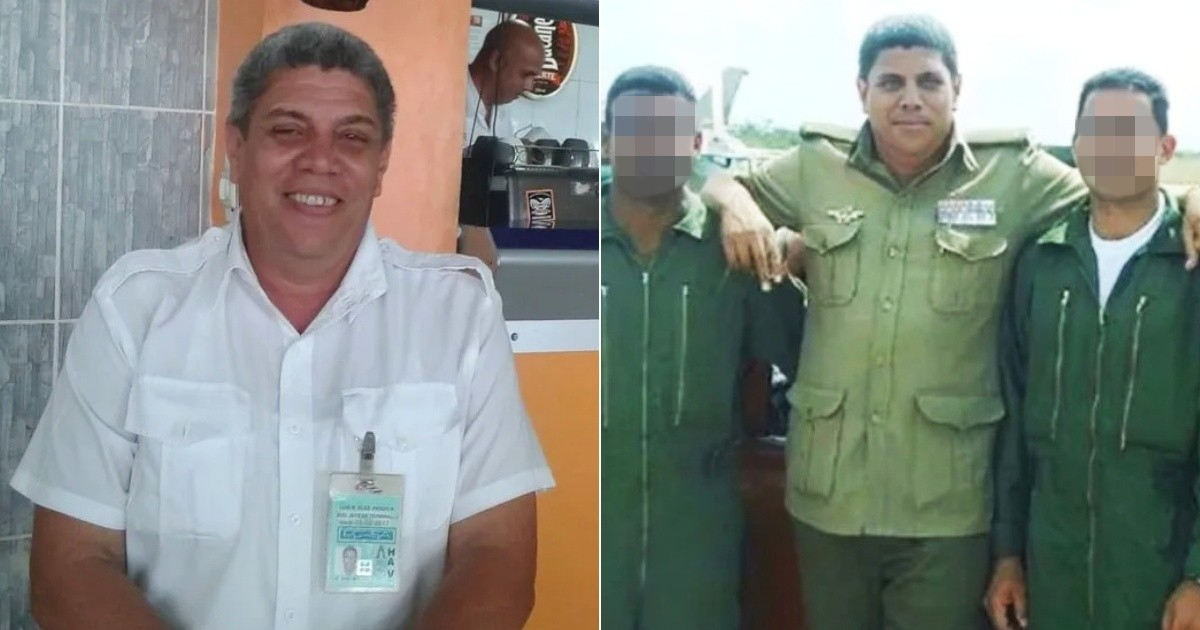
Luis Raúl González-Pardo, former lieutenant colonel of the Cuban Air Force, arrived in Miami to face federal charges related to the shooting down of the planes belonging to Brothers to the Rescue on February 24, 1996, one of the most painful crimes in the history of the Cuban exile.
His transfer from Jacksonville -reported by Telemundo 51- marks the end of a migration process and the beginning of a new criminal trial in the Southern District of Florida, where he will have to appear before a federal court to formally hear the charge of conspiracy for being implicated in the death of American citizens.
The only accused in custody
González-Pardo, 65 years old, is the only one of the six defendants in the federal charges who is currently in U.S. custody.
The substitute indictment, declassified on May 20 by the Department of Justice, also includes Raúl Castro -who was the minister of the Revolutionary Armed Forces (FAR) in 1996- and four other former Cuban military personnel.
According to the accusation, González-Pardo did not fire the missiles that shot down the two Cessna 337 planes, but piloted the MiG-29A 911 -identified as "Code 22"- in the pursuit of the plane of José Basulto, founder of Brothers to the Rescue, who managed to escape because he was already approaching U.S. airspace.
The charges include conspiracy to assassinate U.S. nationals, two counts of aircraft destruction, and four individual counts of murder for the deaths of Carlos Costa, Armando Alejandre Jr., Mario de la Peña, and Pablo Morales, whose bodies were never recovered.
The road that led him to Miami
The process began in November 2025, when the FBI arrested González-Pardo for immigration fraud: he had concealed nearly thirty years of military history when applying for immigration benefits after entering the United States on humanitarian parole in April 2024.
In January 2026, he pleaded guilty to fraud in the visa application and to making false statements to a federal agency.
On May 28, he was sentenced in Jacksonville to seven months in prison, a sentence he had virtually already served, which cleared the way for his immediate transfer to Miami.
It was investigator Luis Domínguez from the Cuban Repressors project who identified him as "Code 22" through radio transcripts from the 1996 International Civil Aviation Organization report and alerted the FBI.
"The evidence has always existed."
Federal prosecutor Yara Klukas, second in command of the Southern District of Florida Federal Prosecutor's Office, explained that the arrest of González-Pardo was the turning point that reactivated the entire investigation.
"The evidence has always existed," Klukas stated. "We had one of the pilots in federal custody," he added.
The prosecutor confirmed that Raúl Castro is considered a fugitive since the arrest warrant was issued: "Raúl Castro is a fugitive because he has not appeared in court. Since last Wednesday, there has been an arrest warrant against him and the other pilots, and to date, he has not shown up."
Still, he did not rule out the possibility that the other defendants may appear.
The legal challenges it faces
A judge will decide whether González-Pardo remains in custody or if he can request bail.
The criminal lawyer Alfredo Izaguirre was emphatic: “He should not be released because he doesn’t even have a legal immigration status in the country.”
Izaguirre also warned that the former pilot could become a key witness against the other defendants.
"It gives him the opportunity to collaborate and be a witness against others, once they arrive here, and that could benefit him with a reduction of his sentence," he emphasized.
However, Domínguez warned that González-Pardo is at a crossroads: cooperating with the prosecution could work to his advantage, but his wife remains in Cuba.
Silvia Iriondo, a survivor of the attack who was on Basulto's plane, summarized the weight of the process:
"The fact that he did not fire does not mean he is not responsible for a conspiracy to kill American citizens and a legal resident of the United States in international airspace during a humanitarian flight."
If found guilty in the federal indictment for the downing of the Hermanos al Rescate aircraft, González-Pardo could face life imprisonment.
Filed under: