
Related videos:
Enrique Arango Arias, head of the National Seismological Service of Cuba, admitted this Monday that the 6.2 magnitude earthquake that shook the western part of the island caught both the Cuban and international scientific communities by surprise, as it occurred in an area where a quake of such magnitude was not anticipated.
The epicenter was located in the waters of the Gulf of Mexico, in the Yucatán Channel, 142 kilometers northwest of Minas de Matahambre, in Pinar del Río, at a depth of 20 kilometers, according to the National Center for Seismological Research of Cuba (CENAIS).
The powerful earthquake shook western Cuba at 2:00 p.m. local time.
"It occurs in the heart of the Gulf of Mexico, in an area of very stable carbonate platform, with no history of seismic activity," stated Arango Arias.
The specialist emphasized that the earthquake is not linked to any known fault in the country or its vicinity, making it a scientifically unusual event.
"We would never have expected a 6.2 magnitude earthquake in that location," said the seismologist.
Arango dismissed the possibility of it being a landslide or a phenomenon of human origin, such as an explosion, and explained that the seismic signal is characteristic and can be clearly distinguished by the arrival of the P and S waves.
The head of the Seismological Service announced that investigations will begin to confirm the causes of the event.
The strong earthquake off the coast of Cuba was felt in Miami and other areas of Florida, including Tampa, Jacksonville, Orlando, Naples, Fort Myers Beach, West Palm Beach, and Tallahassee, and even reached Kingsland, Georgia. Perceptibility was also reported in Cancun, Mexico.
In Cuba, the visibility reports covered the entire western region: Pinar del Río, Havana, Artemisa, Mayabeque, Matanzas, Mariel, Bahía Honda, Consolación del Sur, Güines, Cabañas, and the Isle of Youth.
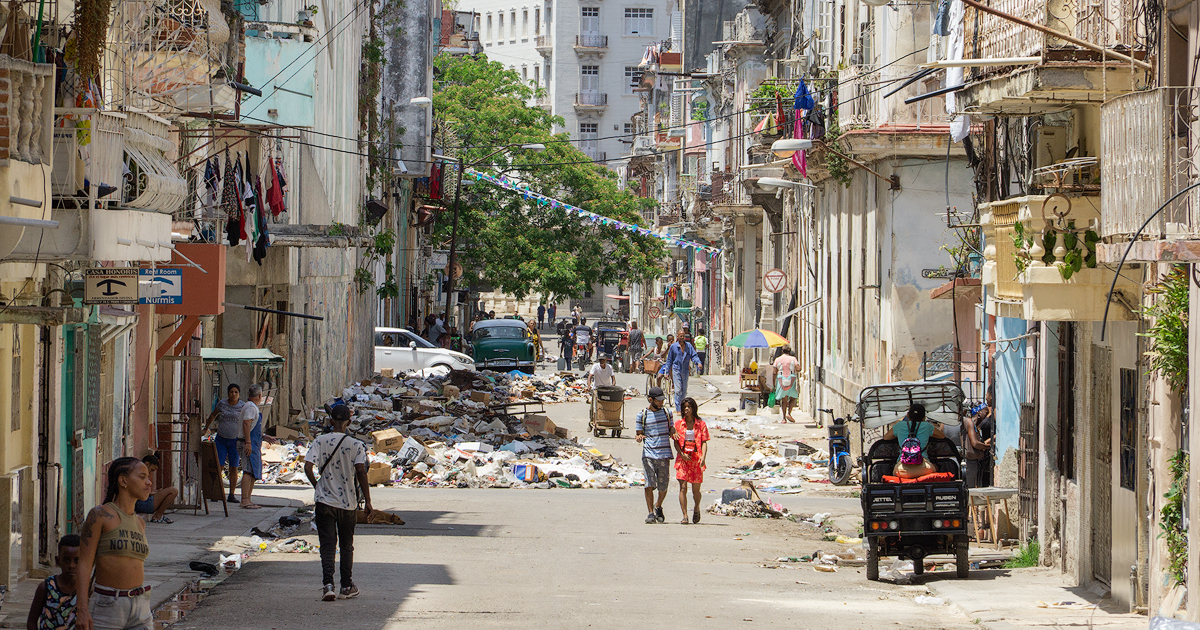
In Havana, the fright left by the earthquake was particularly intense in a city with a deteriorated housing stock. "I felt it, I thought the building was going to collapse," wrote a Havana resident on social media. Another commented, "This was just what we needed: no electricity, no water, no food, no life, and now an earthquake."
Multiple buildings in Miami were evacuated as a precautionary measure. The National Weather Service in Miami and San Juan ruled out any risk of tsunami for Florida, Puerto Rico, and the U.S. Virgin Islands. No material damage or casualties were reported in Cuba or Florida.
This is the second major earthquake of the year in Cuba. The first was the magnitude 6.0 earthquake that shook the eastern part of the island on March 17, with its epicenter in Imías, Guantánamo, which generated over 900 aftershocks in 24 hours and caused damage to homes.
Meteorologist Matt Devitt described Monday's event as "the second largest earthquake ever recorded in the Gulf of Mexico," highlighting the exceptional nature of a quake that science itself acknowledges it failed to predict.
Filed under: