
Related videos:
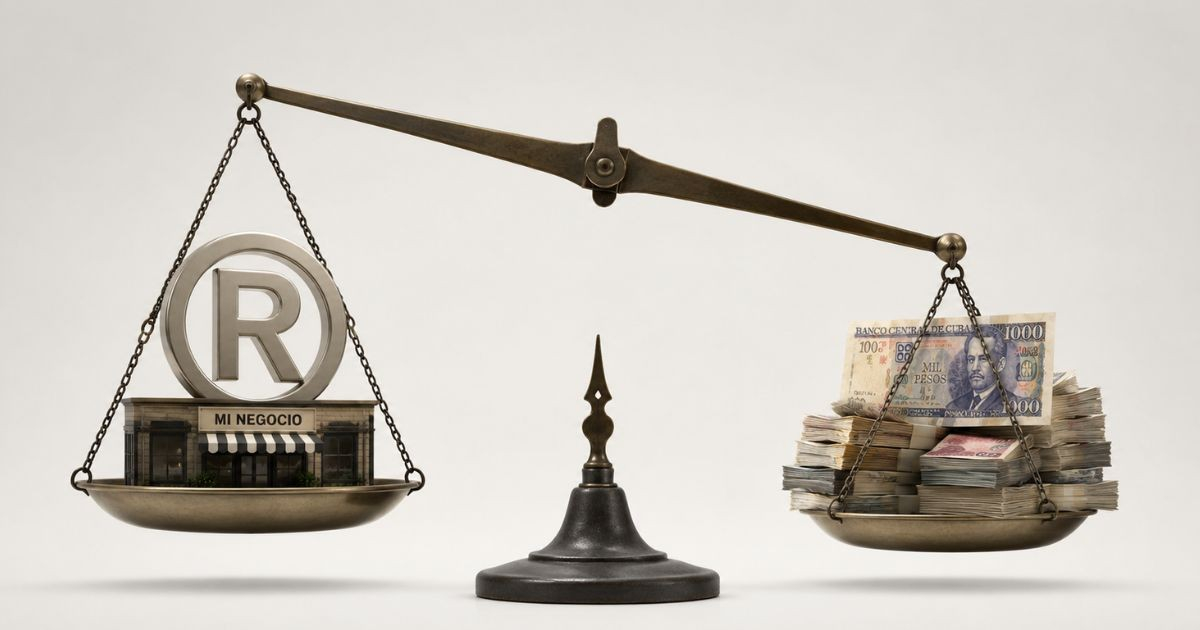
The Official Gazette of Cuba published a comprehensive regulatory package on Tuesday that establishes the new costs for registering trademarks, patents, and other industrial property assets on the island, with fees expressed in U.S. dollars for the majority of private sector players and foreign investment.
The central document is the , signed on May 28 by the acting minister Rudy Montero Mata, which updates all the fees of the Cuban Office of Industrial Property (OCPI) and repeals the previous table that had been in effect since 2021.
Registering a trademark in Cuba will cost 390 dollars for an application covering up to three classes of products or services, with an additional 120 dollars for each class beyond the third.
The regulation also sets the fee at 50 dollars for each priority claim and 100 dollars for the request for expedited processing, applicable when the applicant intends to file the trademark abroad and a registration is required.
The ten-year renewal of the registration amounts to 440 dollars for up to three classes, with additional fees if processed during the grace period: 480 dollars in the first three months and 520 dollars in the following three months.
Collective or certification trademarks, designed for groups of producers or entities that certify quality, have higher fees: 450 dollars for the application and 480 dollars for the renewal, both covering up to three classes.
For those looking to protect inventions, the application for a patent costs 460 dollars, a fee that includes the first two years of maintenance.
Subsequent annuities increase gradually: from 200 dollars for the third to 1,300 dollars for the twentieth, which represents a significant cumulative burden for independent inventors or small businesses wanting to maintain a patent throughout its 20-year term.
Utility models cost $350 for application; industrial designs cost $200; and integrated circuit layout designs cost $300.
Other expenses that entrepreneurs should calculate include filing an opposition to a trademark application ($150), a reform appeal to the general director of the OCPI ($150 for trademarks, $250 for patents), a request for nullification of a registration ($250), and a background search by class ($50).
Specialized services are the most expensive: a search for freedom to operate—necessary to determine if a product can be marketed without infringing on others' patents—costs 1,200 dollars, and a rights infringement search costs 500 dollars per item.
The rates in dollars apply to Cubans residing abroad, non-permanent resident foreigners, foreign legal entities, and forms of foreign investment.
Natural persons who are nationals residing in Cuba and companies with 100% Cuban capital will pay in Cuban pesos according to the approved exchange rate, which in practice implies similarly high amounts due to the depreciation of the peso.
There is a 40% reduction for individuals and public universities on patents, utility models, industrial designs, plant varieties, and integrated circuits; additionally, starting from the third year of maintenance, those same entities receive an additional 50% discount.
The regulatory package also includes the Decree-Law 103 "On Trademarks and Trade Names," approved by the Council of State on February 12, 2025, which broadens the types of protectable trademarks: auditory, motion, multimedia, holograms, tactile, and gestural trademarks are now recognized, in addition to the traditional word, figurative, and mixed marks. Olfactory and taste trademarks are expressly excluded.
The registration is granted for 10 years from the date of application submission, renewable for equal periods, and expiration due to non-use occurs when the holder has not effectively used the trademark for three consecutive years within the national territory.
The process, however, can take months: the OCPI will publish the application in the Official Gazette within a period of up to 180 calendar days; then, affected third parties will have 60 days to file objections, and the substantive examination must be completed before one year has elapsed since the submission.
In the case of trade names, exclusive rights are acquired through initial use in commerce, but registration helps reinforce protection against third parties who use identical or similar signs that could cause confusion, improper association, or exploitation of the business's reputation.
The three regulations —Decree-Law 103, its Regulation through Decree 151/2026, and Resolution 71/2026— will come into effect 60 days after their publication, that is, around August 8, 2026, when Decree-Law 203 "On Brands and Other Distinctive Signs" from December 24, 1999, which governed the system for more than 26 years, will be repealed.
Filed under: