
Related videos:
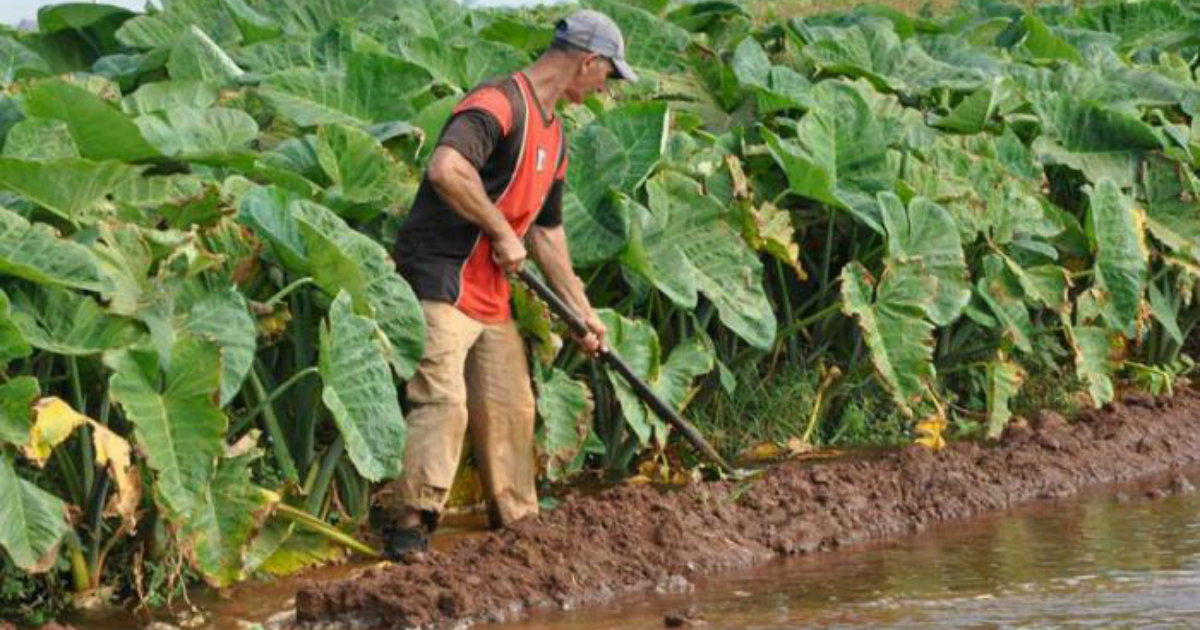
The Cuban regime published a draft law that eliminates the Ministry of Agriculture as an independent entity and instead creates the Ministry of Agro-food, a super agency that will consolidate agricultural production, the food industry, sugar and its derivatives, beverages and liquors, fishing, and the forestry sector under a single authority.
The text, signed by the president of the National Assembly of People's Power Juan Esteban Lazo Hernández and by Miguel Díaz-Canel as president of the Republic, is scheduled for approval in the parliamentary session of July 2026 and would come into effect 60 days after its publication in the Official Gazette.
According to Article 67 of the project, the new organization will be "responsible for directing and controlling state policy regarding the sustainable possession and use of the country's agricultural and forest land, agricultural, sugarcane, and forestry production; the food industry, sugar and its derivatives, beverages and liquors, as well as fishing activities and their commercialization."
The merger occurs at the worst time for the sector: the Minister of Agriculture himself admitted in 2024 that the egg production dropped from 4-5 million daily to 1.2 million, that rice cultivation was reduced to about 60,000 hectares compared to a capacity of 200,000, and that the sector was operating with less than 10% of the available fuel.
Cuba imports between 70% and 80% of the food it consumes, at an approximate cost of 2 billion dollars annually.
The reform, the most significant since Decree-Law 67 of 1983, reduces the number of ministries from 27 to 20 and includes other far-reaching changes.
The Ministries of Economy and Planning, and Finance and Prices are merging into the Ministry of Economy, Finance, and Planning, which will centralize control over the budget, taxes, prices, planning, and public credit.
The Ministry of Environment, Habitat, and Housing is established, which will bring together under a single authority housing, urban planning, land management, water resources, the environment, and the National Cadastre.
The regime also establishes the Ministry of Information and Social Communication, which will have authority over media, advertising, sponsorship, and the so-called "Country Brand."
Cuban economist Pedro Monreal criticized this decision, pointing out that the new entity "skirts" the idea of a "ministry of truth" and that in the reorganization, this ministry is "redundant" while there is a "lack" of others such as Domestic Trade and Construction and Housing.
The Central Bank of Cuba gains explicit ministerial rank: it will be led by a Minister-President who will be part of the Council of Ministers, and the project establishes that this position is compatible with that of Deputy Prime Minister.
In parallel, the regime created the INAEES, an entity that will concentrate control over more than 2,000 state-owned companies under the Council of Ministers, which analysts describe as another layer of economic recentralization.
The official justification is to "reorganize, resize, and improve the structure of the Central State Administration, with the aim of achieving greater efficiency in administrative functions," as stated in the text of the project itself.
Ministers will have up to one year to complete the transfer of human, material, and financial resources between the merged agencies, according to the schedule approved by the Council of Ministers.
Prime Minister Manuel Marrero admitted in May 2026 that Cuba "cannot sustain so much bureaucracy," although the simultaneous creation of new regulatory entities like INAEES contradicts this narrative of institutional austerity.
Filed under: