
Related videos:
The Cuban regime once again used the U.S. embargo as a shield to justify the collapse of its healthcare system, despite having allocated more investments to tourism than to this essential sector in recent years.
The Deputy Minister of Public Health, Carilda Peña, stated during the television program Mesa Redonda that the sanctions from Washington have caused losses exceeding 288 million dollars to the Cuban healthcare sector between March 2024 and February 2025.
Peña pointed out that the situation worsened following the executive orders adopted by the administration of President Donald Trump in 2026, estimating the accumulated damage to the healthcare system at more than 4.183 billion dollars over the course of more than six decades.
"These figures represent hospitals lacking resources, suspended consultations, and treatments that do not reach those who need them most," lamented the official in front of state television cameras.
The deputy minister stated that the embargo affects all levels of care—primary, secondary, and tertiary—and that even the blackouts that paralyze hospitals are a consequence of the U.S. sanctions.
However, the official data from the regime contradicts that narrative. According to figures from the National Office of Statistics and Information for 2024, Cuba allocated more than 36.8 billion Cuban pesos to activities related to tourism, while public health and social assistance received only 1.977 billion pesos, just 1.3% of the total national investment.
This means that investments in tourism have once again surpassed those in public health by a margin of almost 19 times, despite the hotel occupancy rate barely reaching 23%.
Cuban economist Pedro Monreal described this model as "very distorted" and "unjustified," warning that "the contradiction between a declining tourism industry that continues to voraciously consume scarce investment resources and a food crisis adrift expresses, at the very least, a stagnant policy."
The Cuban hotel sector is largely controlled by GAESA, the business conglomerate of the Revolutionary Armed Forces.
In July 2025, the Office of Western Hemisphere Affairs of the U.S. Department of State criticized the regime's massive investment in tourism with a straightforward statement: “Empty hotels receive electricity, while Cuban children lack medicine and milk.”
The healthcare collapse is a documented reality that predates Trump's sanctions. The Minister of Health, José Ángel Portal Miranda, acknowledged in February 2026 that the government would not resolve the shortage of resources, medications, and medical supplies in the short term.
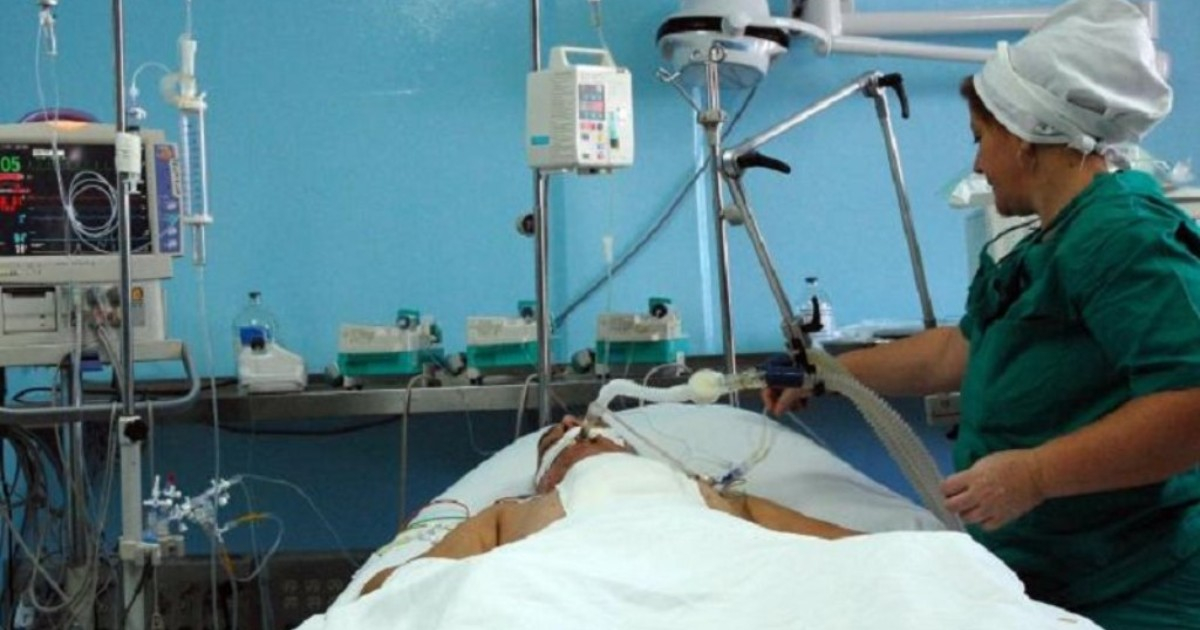
Cuban hospitals operate with less than 30% of the basic medicine supply, experience power outages of up to 20 hours daily, and report partial collapses in their infrastructure. In November 2025, part of the ceiling of the Calixto García Hospital in Havana collapsed.
The consequences for the population are devastating: 96,387 patients are waiting on the surgical waiting list, including 11,193 children. Child mortality rose from 4.0 per thousand live births in 2018 to 9.9 in 2025, while maternal mortality increased from 40.6 in 2024 to 44.1 in 2025, according to data from the Ministry of Health itself.
The regime has spent decades using the embargo as a scapegoat to justify its failures, but its own investment figures reveal a deliberate choice: hotels for the military elite, crumbling hospitals for the Cuban people.
Filed under: