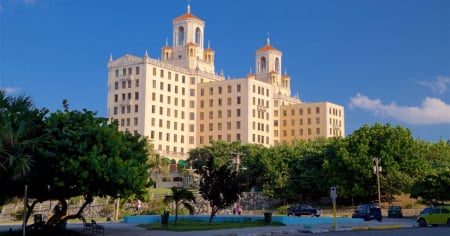
The Office of Western Hemisphere Affairs of the Department of State criticized the regime for prioritizing spending in the tourism industry over essential sectors such as health and education.
In a strong message posted on social media, he denounced that in 2024 the regime spent eleven times more on tourism than on basic social services.
"Empty hotels receive electricity, while Cuban children lack access to medicine and milk," the diplomatic mission stated in a recent post.
The criticism highlights the disconnect between official priorities and the urgent needs of the Cuban population, which is facing one of the worst social and economic crises in recent decades.
The policy of prioritizing the construction of hotels, many of which remain empty due to low visitor numbers, has continued despite the chronic shortages in hospitals, schools, and pharmacies.
WhileCuban children suffer from malnutrition and lack access to essential medications, state-run hotels—most of which operate under joint ventures with military conglomerates—maintain a constant supply of electricity and air conditioning.
The message also suggests that investment in tourism is driven by personal interests within the ruling elite: “They are trying to establish a future for their corrupt officials, who build hotels and other facilities that they will be able to privatize for themselves when the regime falls.”
The report points to military companies as direct beneficiaries of the tourism boom—particularly the GAESA conglomerate—while the people suffer the effects of inflation, scarcity, and mass emigration.
The statement comes amid a rise in public discontent within the island, characterized by power outages, intermittent strikes, and citizen protests.
Tourism, meanwhile, has yet to recover from the collapse caused by the pandemic and the sanctions, and it still fails to justify the volume of state resources allocated to it.
According to official figures, in 2024, investments in business services, real estate activities, and rentals reached 24.907 billion Cuban pesos (CUP), making it the primary destination for the country's capital expenditure.
This is complemented by 11,936.5 million CUP allocated to hotels and restaurants, bringing the total to over 36,800 million pesos invested in activities closely related to tourism.
In contrast, fundamental sectors for social well-being and the productive development of the country once again received a significantly lower share of state resources.
Public health and social assistance barely received an investment of 1,977.4 million CUP, while agriculture, livestock, and forestry received 2,645.5 million, representing a meager 2.7% of the total national investment.
Frequently Asked Questions about Investment in Tourism in Cuba and Its Social Impact
Why does the U.S. criticize the Cuban regime's investment in tourism?
The U.S. criticizes the Cuban regime for prioritizing investment in tourism over essential sectors such as health and education. In 2024, eleven times more was spent on tourism than on basic social services, reflecting a disconnect from the urgent needs of the Cuban population, which is facing a severe social and economic crisis.
How does the prioritization of tourism affect the Cuban population?
The priority of tourism affects the Cuban population by diverting resources from essential sectors like health and education. While hotels receive electricity and resources, the population suffers from prolonged blackouts, shortages of medicines, and food. This highlights a policy that favors tourism revenue over citizen well-being.
What interests are behind tourism investment in Cuba?
Behind the tourism investment in Cuba are the interests of military conglomerates such as GAESA, which control a large portion of the tourism sector. The investment in hotels primarily benefits the ruling elite, who could privatize these assets for their own gain, while the Cuban people face daily shortages.
How does the Cuban regime justify investing in tourism amid the energy crisis?
The Cuban regime justifies investment in tourism by claiming that the sector generates economic benefits for prosperity and mitigates the effects of the crisis. However, this narrative is challenged by the daily reality of Cubans, who endure blackouts and a shortage of basic services while hotels remain illuminated and operational.
Filed under: