
Related videos:
The Governor of Puerto Rico, Jenniffer González-Colón, warned the Cuban regime this Wednesday that the diplomatic offer from Secretary of State Marco Rubio is not a negotiable proposal, but an ultimatum, and pointed to July as the month when Havana should make a decision.
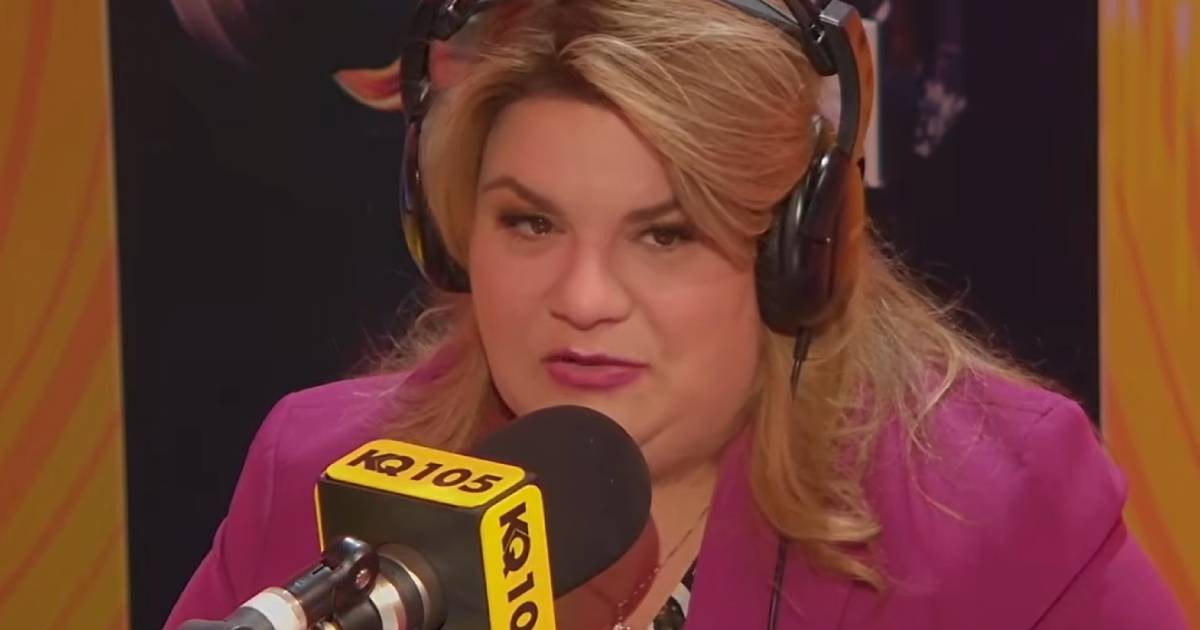
In an exclusive interview granted to Telemundo 51, the governor was emphatic: "The United States does not make offers on two occasions. And I believe that anyone studying international public policy must view these words from Secretary Rubio as an ultimatum. And I think the Cuban government should take that offer made by the U.S. government and make that change. And July could be an excellent month to see it."
The statements come at a time of maximum pressure on Havana.
On that same day, Secretary of War Pete Hegseth visited the Guantanamo Naval Base and stated in front of the troops: "What happens to the future of Cuba is in the hands of the President of the United States and the leadership of Cuba," and he added that the Department of War will be "prepared and positioned for any possible eventuality."
González-Colón interpreted that visit as an unmistakable sign: "When Secretary of War Hegseth visits the troops, action always follows. And I believe that the Secretary of War of the U.S. is someone who backs his words with action."
The governor drew a direct parallel with Venezuela: she stated that the U.S. military deployment in the south of Puerto Rico preceded the capture of Nicolás Maduro on January 3, 2026, and that the same pattern—deployment, pressure, action—could be repeated with Cuba.
Regarding Rubio's proposal, González-Colón acknowledged that it has so far been rejected by the regime, but insisted that Havana should study it thoroughly: "Marco Rubio has rolled out the red carpet for the Cuban government to escape the situation, the debacle they are living in."
The interview also addressed the statements made by Brigadier General Arturo Garffer, the Secretary of Public Safety of Puerto Rico, who pointed to July as a possible date for a military intervention if there is no immediate diplomatic response. González-Colón fully supported that interpretation.
The governor also announced that from May to August 2026, military exercises will be conducted in Puerto Rico with more than 8,100 troops: "More than 8,100 troops will be conducting military drills here," she specified.
This scenario fits within a maximum pressure strategy that includes over 1,300 marines deployed in the Caribbean under Operation Southern Spear since May 29, over 240 sanctions imposed since January 2026, and the interception of at least seven tankers, which has reduced Cuban fuel imports by between 80% and 90%.
On June 4th, Trump promised to "address Cuba" after resolving the crisis with Iran, labeling the regime as a "failed nation." On the same day, Rubio acknowledged before Congress that there are technocrats in Cuba with whom Washington could collaborate for a transition, although he admitted he could not identify a specific person to lead that process.
The regime, for its part, has rejected the diplomatic offer and has blocked the channeling of the 100 million dollars in humanitarian aid offered by Washington through the Catholic Church or Samaritan's Purse. Díaz-Canel warned on June 7 that any military action would provoke a "bloodbath."
González-Colón closed her message with a warning that encapsulates the moment: "July could be an excellent month" for the Cuban regime to make the decision that Washington has been demanding for months.
Filed under: