
Related videos:
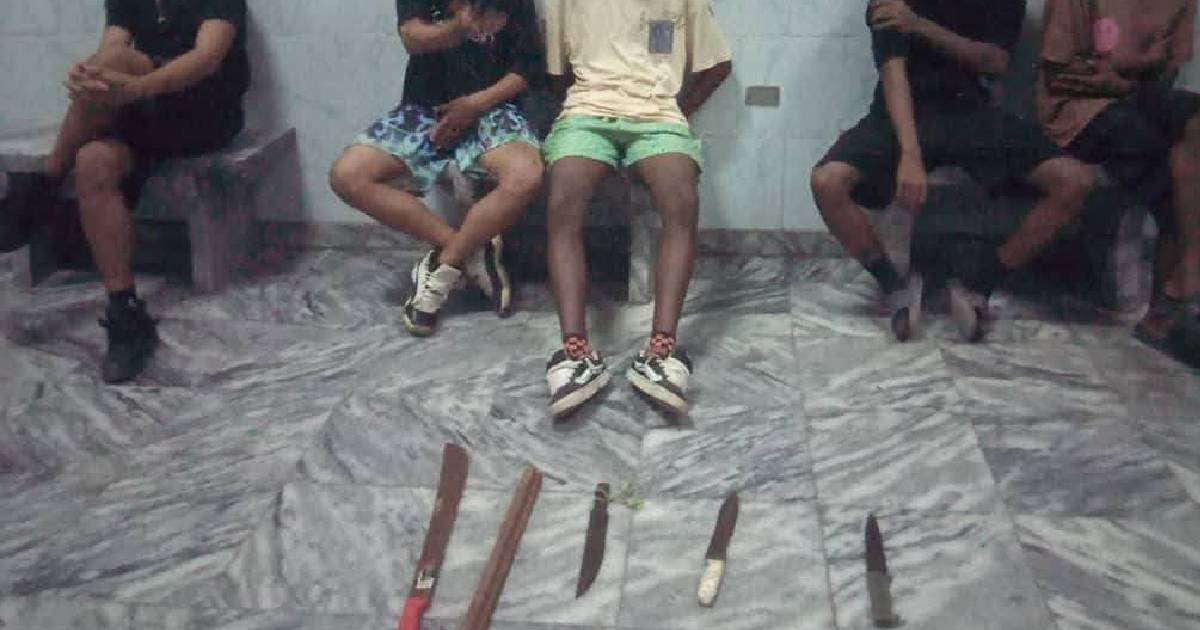
Youth gangs are silently spreading across Cuba, driven by the economic crisis, poverty, and the trafficking of synthetic drugs, according to a report by Diario de Cuba published this week.
The phenomenon, which now encompasses almost all neighborhoods in Havana, has shifted from being a marginal issue to becoming a structural threat that the regime is unable —or seemingly unwilling— to contain, the outlet points out.
The most visible turning point was the large-scale brawl on June 8, 2024, on the outskirts of the Finca de los Monos, in the Cerro municipality of Havana, during an event organized by the Young Communists Union.
The Government of Havana denied that there were any deaths and reported only two injured, although independent accounts mentioned at least six wounded.
Since then, the problem has only continued to grow, the report notes. The most affected municipalities in Havana are Arroyo Naranjo, Diez de Octubre, Cerro, Marianao, Guanabacoa, San Miguel del Padrón, and La Lisa.
Traditional bands —el Diamante and Pacto de Sangre— are joined by new groups such as 100pabajo from Santos Suárez; Faceta del Mundo from Cerro; and groups that have emerged directly from prisons: Obsorbo Fogo, Atá Perositan Nangorian, Justicha Allán, and Miki Pintao.
Prison gangs are considered the most dangerous because they do not confine themselves to a neighborhood: they cross provincial and even national borders and already have members outside the country.
Andy, 21 years old, joined one of these gangs while serving time in the Guatao youth prison. "All I can tell you is that I had to take a blood oath in front of a document; that is, they cut me in such a way that the blood dripped onto the paper. They performed a religious initiation and gave me the pica (tattoo) to identify me," he recounted.
"I got involved with the partners in the gallery. It's very difficult to survive alone in a prison without associates to protect you," he explained. He warned, "Betrayal is paid for with death."
A babalawo recently released from prison pointed out that these bands create initiation rituals inspired by religious practices that actually contradict the spirit of groups like the abakuás.
Yosvany, 19 years old, is a member of 100pabajo. "Sometimes we meet in the park of Santos Suárez and at the 'waterless malecón' to unwind, and occasionally to snatch phones or whatever we can," he told Diario de Cuba. He also admitted to selling "papelitos", the street name for the chemical, the synthetic drug that has been ravaging among Cuban youth since they were 13 or 14 years old.
In May 2025, young people with machetes took part in a massive confrontation on the Boulevard de San Rafael, in the heart of Havana, with many minors among the participants.
The figures confirm the accelerated deterioration. The Cuban Observatory for Citizen Auditing (OCAC) documented 2,833 verified crimes throughout 2025, an increase of 115% compared to 2024 and 337% compared to 2023. In the first half of that year, 1,319 crimes were recorded, averaging 7.3 crimes per day.
In July 2025, the regime tightened the criminal laws regarding the trafficking of synthetic cannabinoids, with penalties that can range from life imprisonment to the death penalty. However, legal repression has not halted the expansion of distribution networks controlled by the gangs themselves.
As Diario de Cuba warned, "the phenomenon of gangs in Havana and other cities in the country is like an iceberg, of which only a small part of the surface is visible at this moment. The bulk of the problem remains hidden and continues to grow slowly, driven by poverty and state inefficiency."
Filed under: