
Related videos:
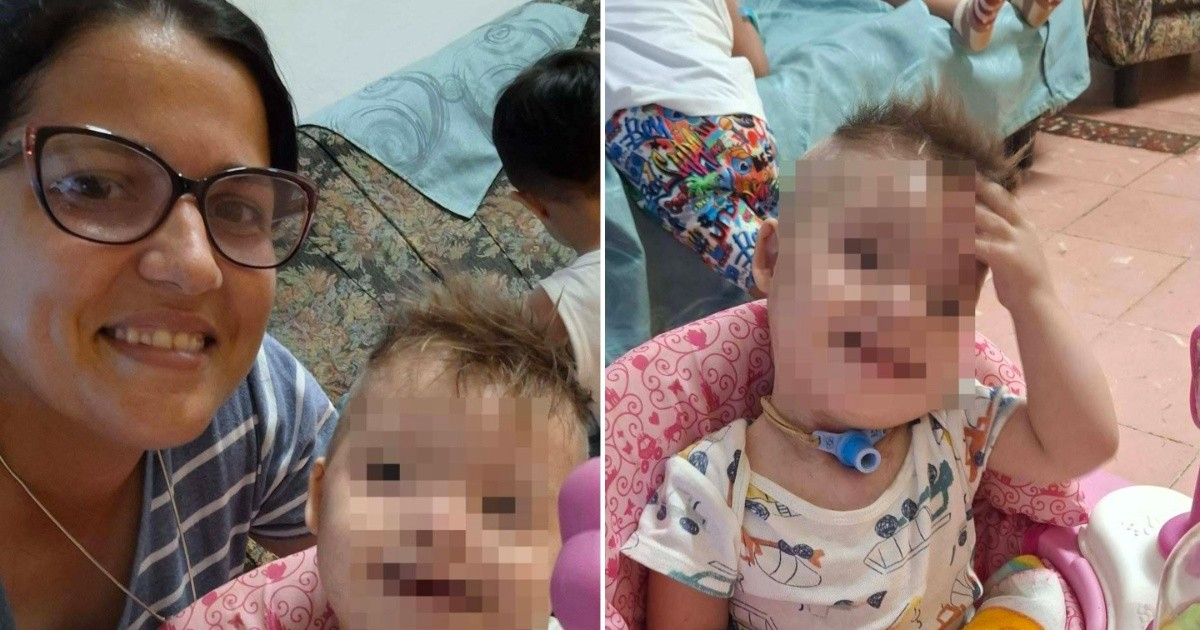
Elsa Rodríguez, a Cuban mother living in the municipality of Batabanó, Mayabeque province, managed to obtain a generator for her son Crislandy —a baby approximately one or two years old with a tracheostomy and heart problems— thanks to the solidarity of Cubans who responded to her plea on social media.
In a Facebook post where she expressed her gratitude for the help received, Elsa wrote: "Thank God and all the good people who have reached out to us. Crislandy now has a Generator. Thank you for so much help in such a short time."
In the image that accompanied the message, the little one appears smiling in a pink walker, wearing a blue medical device around the neck and an orange cast on the left arm.
Crislandy's case adds to a series of similar situations that have become frequent in Cuba, where families with children who depend on electricity are facing a silent emergency due to the prolonged blackouts affecting the country since 2025.
The electrical crisis has caused outages of up to 30 consecutive hours in rural areas, directly threatening the lives of children who rely on respirators, ventilators, and cardiac monitoring systems to survive.
Given the state's inability to ensure a stable electricity supply or provide alternative equipment to these families, many have had to be hospitalized indefinitely or turn to community solidarity through social media to obtain generators or solar panels.
A nurse from a Cuban pediatric hospital explained to El País the seriousness of the situation: "Electricity is crucial for a child on a ventilator, because without power the equipment fails."
On June 7, another documented case described a Cuban boy with only one lung who had been without electricity for 50 hours in his home, with no solution provided by the State.
In November 2025, mother Yanelis Hernández Palmero, from Los Palacios, Pinar del Río, reported that her son Jeisel, who has spinal muscular atrophy type 1, depends on continuous ventilation and electricity for his medical equipment, without any institutional response.
In March 2026, The New York Times reported on the testimony of a mother from Havana who starkly summarized the reality of thousands of Cuban families: "His life depends on electricity."
The phenomenon of solidarity self-management through social networks has become the main mechanism of support for these families in the absence of state solutions, filling the gap that the Cuban dictatorship has neither been able to nor wanted to guarantee for its most vulnerable citizens.
Filed under: