
Related videos:
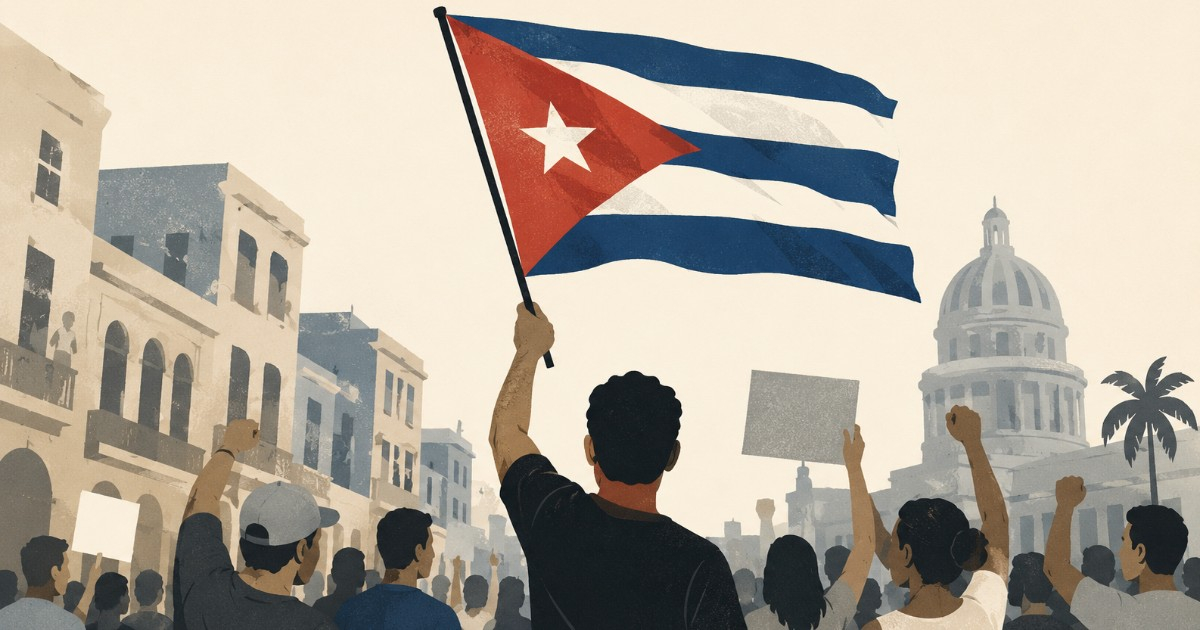
Residents of the neighborhood Santos Suárez in Havana took to the streets on Thursday to bang pots and pans after experiencing 31 consecutive hours without electricity, according to independent journalist José Raúl Gallego on his Facebook account.
In his post, Gallego warned that the police arrived at the scene shortly after the protest began.
"From Santos Suárez, they inform me that they are in the street banging pots after 31 hours without electricity. The police have arrived," wrote Gallego.
This is not the first time that this neighborhood in the Diez de Octubre municipality has been the scene of such a protest. In April, Santos Suárez was already the site of a massive pot-banging protest with police presence, including "black berets" near the Esquina de Toyo. On June 6 and 7, it joined a wave of simultaneous protests in several areas of the capital.
The events of this Thursday fall within a sustained wave of protests that has been shaking Havana since March 8, 2026. Neighborhoods such as El Vedado, Centro Habana, Miramar, Luyanó, Lawton, Alamar, Regla, Guanabacoa, Playa, San Miguel del Padrón, Marianao, and El Cotorro have been the scene of protests on different dates.
On Wednesday, residents of El Cotorro shouted "Down with the dictatorship" amid yet another blackout. On Monday, a night of tension in Centro Habana resulted in strong protests in Infanta and San Lázaro with a significant police presence.
The electrical crisis that fuels these protests has structural roots. On June 5, the Electric Union (UNE) reported an availability of only 1,090 MW compared to a peak demand of 3,050 MW, resulting in a deficit of 1,960 MW. This gap meant that up to 65% of the country could be left without power simultaneously.
Among the causes are chronic breakdowns at the thermal power plants Antonio Guiteras, Máximo Gómez, Ernesto Guevara, and Lidio Ramón Pérez, along with a fuel shortage that left 106 distributed generation plants equivalent to 890 MW out of service.
The regime's response to the protests has involved police deployments, the presence of special forces, internet cuts, and arrests. According to the organization Cubalex, at least 14 people have been detained in Havana since March 6, 2026, due to demonstrations related to the blackouts.
The pattern repeats itself with each passing day: neighbors take to the streets or bang on pots from their homes after enduring hours or days without electricity, and the police show up to disperse them. Since January 31, when the UNE confirmed that 63% of the country was left without power simultaneously during peak hours, the situation has only worsened.
Filed under: