
Related videos:
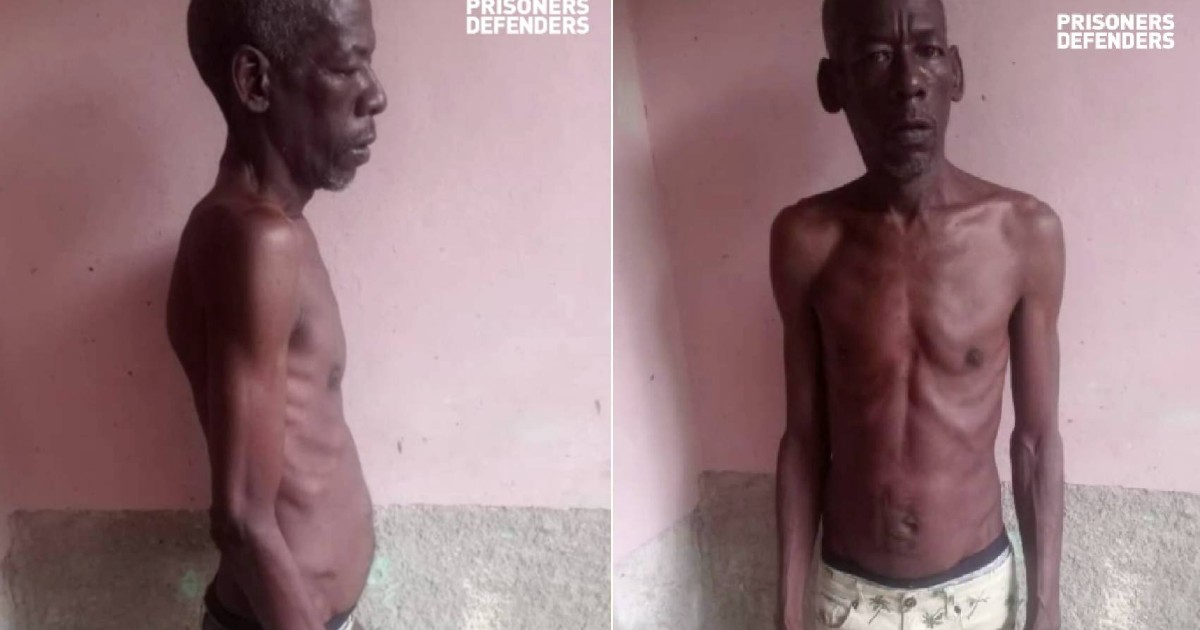
Carlos Alberto MacDonald Ennis, Cuban political prisoner from Las Tunas, was released this Thursday after more than two years of provisional detention without trial, in critical health condition that human rights organizations describe as alarming.
MacDonald Ennis is not released on full bail: he remains under a precautionary measure of a bond of 50,000 Cuban pesos, equivalent to approximately 132 dollars, more than seven months of the average salary in Cuba.
In an audio recorded after his release, MacDonald Ennis himself explained that the original bail was 100,000 pesos and was reduced by half due to his health issues: "Yesterday I was released from prison at 5 PM, with a bail that was initially set at 100,000 pesos, reduced to 50,000 pesos because of my health problems, including a tumor I have in my sinuses, in the left and right jaw, as well as diabetes mellitus and severe malnutrition, as I weigh 48 kilograms."
Upon leaving the Provincial Prison "El Típico Nuevo" in Las Tunas, he weighed only 48 kilograms, showing visible signs of severe malnutrition.
During his imprisonment, he developed a tumor in the paranasal sinuses that grows toward internal structures of the head, causing him intense pain and posing a risk to vital organs.
This is compounded by preexisting medical conditions—hypertension, diabetes mellitus, and heart disease—all exacerbated by the lack of medication and medical follow-up in prison.
Prisoners Defenders reported that, despite the seriousness of his situation, MacDonald Ennis did not receive any medical treatment during his entire detention: "After more than two years of imprisonment without trial and severe medical negligence, his life remains at risk."
He was arrested on March 15, 2024, accused of committing an attack, propaganda against the constitutional order, and other acts against State Security, due to social media posts critical of the Cuban government.
During his confinement, he suffered systematic repression: illegal extension of provisional detention, rejection of habeas corpus appeals, isolation in a punishment cell, and denial of medical information, as documented by Prisoners Defenders and the Cuban Observatory of Human Rights (OCDH).
The OCDH, which repeatedly reported the deterioration of his health during his imprisonment, confirmed his release and shared the audio in which MacDonald Ennis thanked human rights organizations and his fellow countrymen.
This pattern of medical neglect in prison is not an isolated case. In April 2026, the OCDH reported the serious health condition of the political prisoner Ana Ibis Tristá Padilla, who is experiencing kidney problems and lacks adequate medical care.
The Cuban regime announced in April a massive pardon for over 2,000 prisoners, but organizations such as Prisoners Defenders, OCDH, and Cubalex verified that the first released individuals were common criminals, excluding political dissidents.
By the end of May 2026, Prisoners Defenders reported 1,281 political prisoners in Cuba, the highest figure ever documented by the organization.
From prison, MacDonald Ennis did not lose his voice or his conviction. In the audio released after his liberation, he ended with a direct message: "I need the whole world to know that we want freedom for all political prisoners, for all movements, all parties, for all our brothers, all our warriors, all our mambises, all our great brothers in struggle. Thank you very much, homeland and life."
Filed under: