
Related videos:
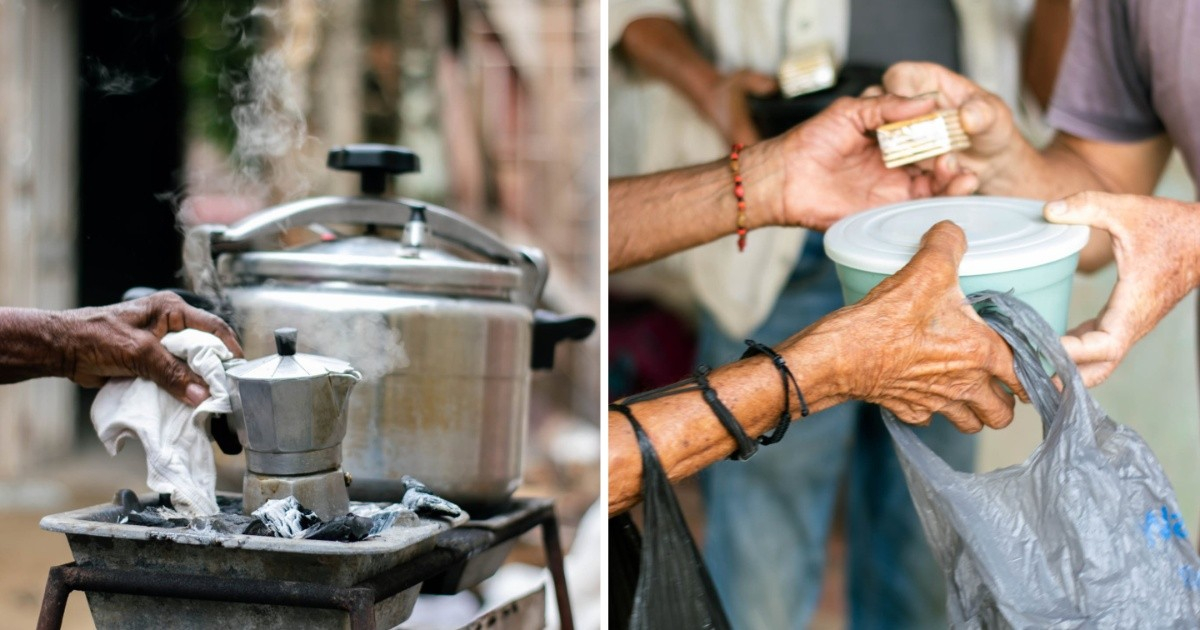
Cáritas Camagüey has launched a dining facility for homeless individuals at the former home of Father José Luis in the city of Camagüey, where every Tuesday a group of volunteers prepares charcoal-cooked meals to distribute to the 20 beneficiaries who come each week.
The initiative was documented by Judith Josseline Colunga Olivera and published on the Cáritas Cuba website as a testament to the work that the Catholic Church maintains in the face of the humanitarian crisis affecting the island.
Among the volunteers who make the service possible are Leonides, who brings the containers to the kitchen, and Juana and Gabriel, who are responsible for serving the food.
Juana, who is nearly 80 years old but works with the energy of a young person, explained her motivation simply: "In such difficult times, one must help in any way they can."
The stories surrounding the dining hall reveal the depth of the social crisis in Cuba.
One of the beneficiaries confessed that weekends are the toughest: "Sundays are the hardest, the day I go hungriest," he said, highlighting that the weekly assistance is not enough to meet all their needs.
The report also notes the recent passing of one of the dining hall attendees, a man with mental instability and diabetes who was found dehydrated in his home.
The door had to be broken down to access him. He was taken to the hospital, but died shortly after. A week later, his sister moved into the residence.
This dining hall is part of a network of similar initiatives supported by the Catholic Church and other religious denominations in various Cuban provinces in response to the collapse of the regime's social protection system.
In Matanzas, the Franciscan Oasis of Cáritas assists more than 80 elderly individuals twice a week with food, companionship, and spiritual support.
In Palma Soriano, a severe storm destroyed part of the solar panel system of the Parish of Our Lady of the Rosary, which supported a dining hall for nearly one hundred vulnerable individuals.
In Santiago de Cuba, the San Juan Methodist Church feeds over 400 people every Sunday, including the elderly and families in extreme poverty.
The magnitude of the problem is reflected in the data from the Food Monitor Program: 96.91% of the Cuban population has difficulties accessing food, and 33.9% of households reported that a member went to bed hungry in the 30 days prior to the survey.
Many of those who visit these soup kitchens are Cuban elders who survive on pensions ranging from nine to ten dollars a month, without family support networks in a country that has seen over 1.4 million people leave between 2019 and 2025.
While the Cuban regime is unable to guarantee basic food for its population, initiatives like those of Cáritas Camagüey represent, according to the chronicle itself, a sign that "not everything is lost."
Filed under: