
Related videos:
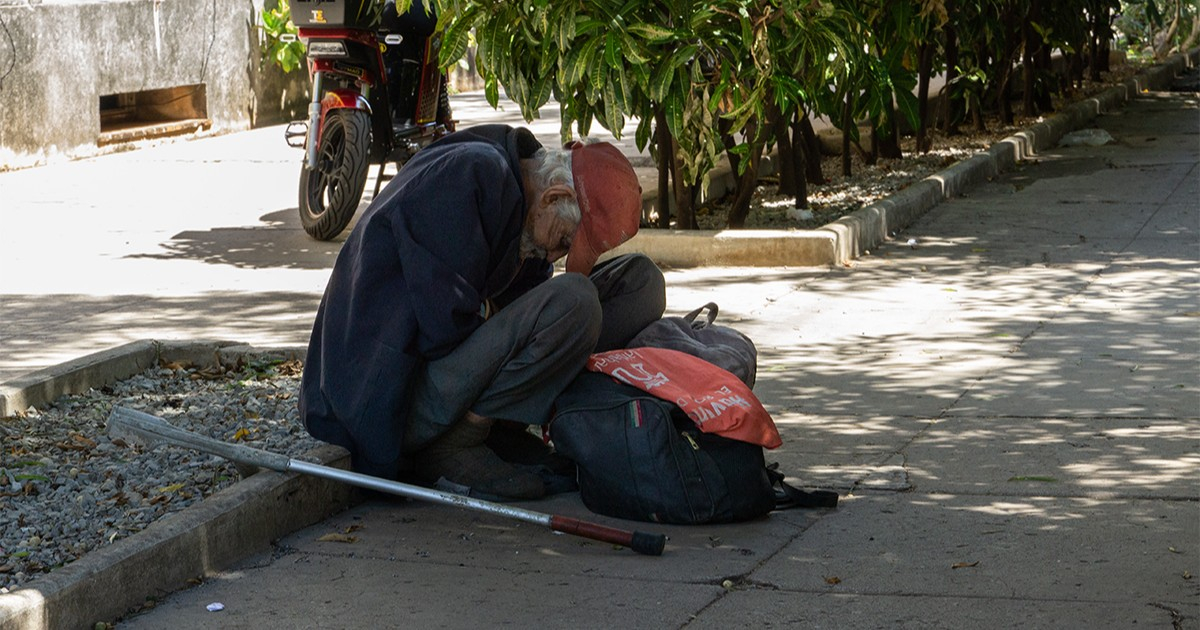
Sagrado Armando García, 85 years old, spent decades working at the Ministry of Social Security of Cuba, convinced that the system would protect him in old age.
Today he lives alone in Havana, suffers from dizziness due to hunger, and when he fainted at home, his son couldn't take him to the hospital because he didn't have fuel for the car.
"They are leaving us to our fate," García said in a special report from Reuters published this Wednesday.
His story is that of thousands of older Cubans who dedicated their lives to the revolutionary project and today face the worst crisis of their old age: pensions that amount to just seven dollars a month on the black market, power outages of up to 22 hours a day, shortages of medications, and a collapsing healthcare system.
The Cuban peso has lost nearly a third of its value against the dollar since the Trump administration cut fuel supplies to the island in January 2026, exacerbating a crisis that was already severe for retirees.
Etienne Labande, representative of the World Food Programme (WFP) in Havana, warned that the situation of older adults has drastically worsened since January.
"This is a population at very high risk right now. Inflation has skyrocketed, there is no public transport, and getting around costs a lot of money," he declared to Reuters.
The Cuban government has formally requested assistance from the WFP to continue providing two daily meals to the most vulnerable, thereby acknowledging its inability to sustain even that minimum.
Cuba is the nation that ages the fastest in Latin America and the Caribbean, the news agency recalled.
More than a quarter of its population is over 60 years old, according to government statistics, while the total population has fallen below 10 million since 2021, a 10% decrease driven by low birth rates and the massive exodus of young people.
The healthcare system, long touted as the great achievement of the Revolution, has also been crumbling for years.
The number of doctors dropped by 30% between 2019 and 2024 according to figures from the Cuban government itself, 70% of essential medications are scarce or inaccessible, and the waiting list for surgeries could reach 160,000 patients by the end of the year, an increase of 60%.
Bryan Arbuelles, a member of the clergy at the San Juan de Letrán church in Havana, puts it bluntly: "In this crisis that Cuba has been experiencing since January, the elderly are the most affected. They are people who worked for decades, but their pensions now are not sufficient to live on."
And he added, "The outlook is terrible."
However, the regime has been in free fall for years. This is not new.
The gap between those who receive remittances from abroad and those who do not has become crucial for survival.
The foreign press has documented the abandonment of elderly Cubans in multiple reports.
With an average monthly income of just 15 dollars, even small transfers from abroad make a significant difference between eating or not eating.
Regina Zaida Jorge, a retired 74-year-old doctor who lives without running water and relies on state rations and donations from the Catholic Church, sums up the bitterness of her generation: "The policies here were designed to guarantee the basics. But deep down, they are cosmetic measures, meant to keep you alive. You have to forget about aspiring to have a television, a phone; the pension doesn’t cover anything."
A spokesperson for the U.S. State Department quoted Secretary Marco Rubio, attributing the crisis to corruption and mismanagement within the regime: "Cuba has experienced blackouts long before January 3 of this year for two reasons: it no longer received free oil from Venezuela and it did not invest a single dollar in its power plants. Cuba is a disaster."
Jorge, who claims to have given "everything" as a poorly paid state worker to a system unable to provide even a bar of soap, concludes with a phrase that encapsulates the disillusionment of an entire generation: "I feel like I sacrificed myself in vain."
Filed under: