
Related videos:
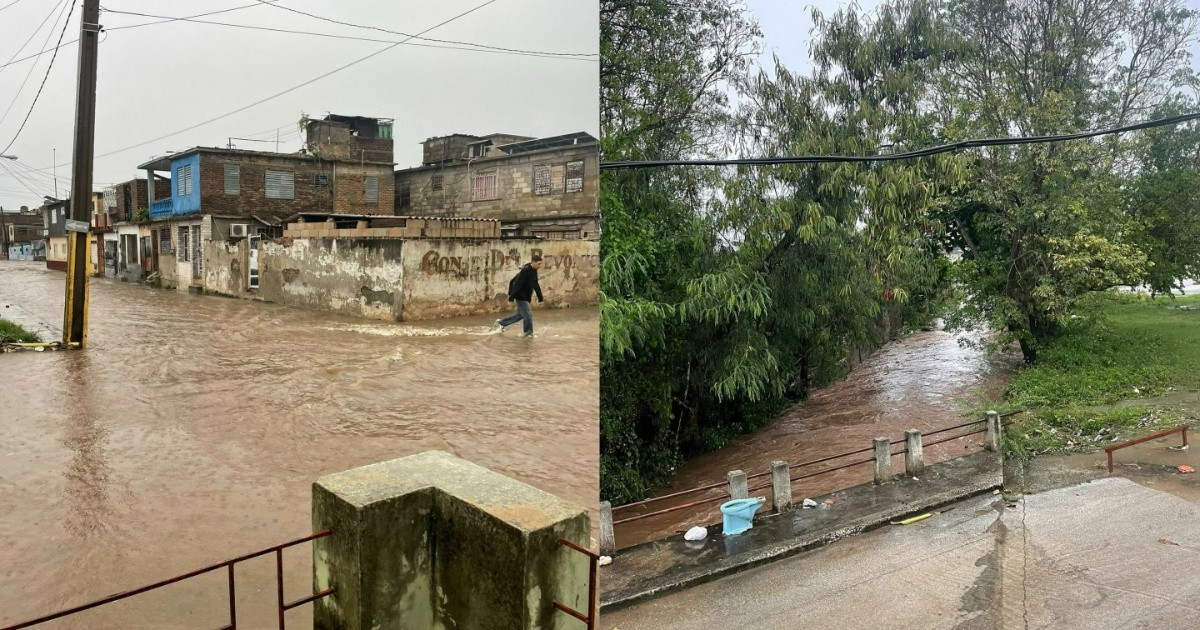
Strong rains inundated the streets of Holguín once again this Saturday, as the river that runs through Mendieta Street overflowed, leaving muddy water between 30 and 50 centimeters deep in the heart of the urban area.
The resident Pedro Lorenzo Hechavarría Pupo documented the situation in images posted on Facebook and warned that, even after the rain stopped, the danger had not passed: "In Holguín, after the rain stopped and the river receded from Mendieta street, the current of the river that runs through Mendieta street was still very strong."
The photographs show murky brown water carrying plastic debris, trash, and sediment through streets lined with dilapidated buildings, zinc roofs, and utility poles with overhead wires.
Saturday's incident is not an isolated event: June 2026 has been an especially difficult month for the eastern province.
Since the fourth, flooded homes and isolated neighborhoods have been reported in the municipality of Cueto. On the eighth, the rains caused damage to the roof of the Cathedral of San Isidoro, a historical heritage site of the city, and limited access to the chapels of the Sagrario and the Virgin of Charity.
On the ninth, the Marañón River experienced a rise that the local media outlet La Antena described as alarming: the flow increased "considerably" and the water level rose "visibly, causing concern among the neighbors."
A persistent trough over the eastern region was identified by the newspaper Granma as the meteorological system responsible for the ongoing precipitation, which also kept the likelihood of rain high in Guantánamo and the northern area of Holguín.
The municipality of Sagua de Tánamo, also in the province, experienced flooding described on social media as catastrophic during this same period.
The vulnerability of Holguín to rainfall has structural roots. The Marañón and Jigüe rivers—which join to form the Holguín River—flow through densely populated areas such as the Alcides Pino, Vista Alegre, and Pueblo Nuevo neighborhoods, posing a constant hydrological risk.
June is historically one of the rainiest months in the province, with totals nearing 266 mm and between 15 and 22 days of monthly rainfall, right at the beginning of the hurricane season.
The deteriorating infrastructure exacerbates each episode: insufficient drainage systems, poorly maintained buildings, and unkept waterways turn every storm into an emergency for the residents.
In November 2023, heavy rains damaged more than 2,800 homes in the province, and Hurricane Melissa in 2025 left over 7,500 homes damaged, figures that illustrate the accumulated magnitude of the problem in light of the lack of structural solutions from the authorities.
Filed under: