
Related videos:
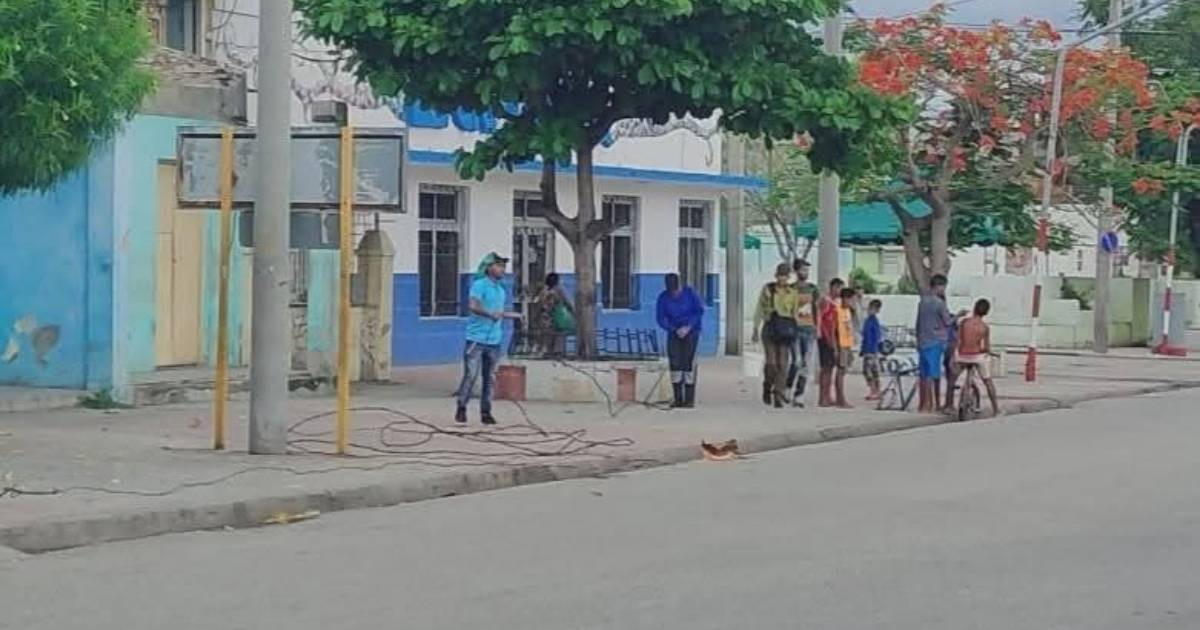
The Cuban regime deployed a joint operation on Monday involving the National Revolutionary Police, the Inspection Directorate, and the Electric Company of Santiago de Cuba to dismantle illegal electricity connections in various neighborhoods of the city, following irreversible damage caused by those connections to transformers in the Trocha and Cristina area.
According to the Electric Union (UNE), the identified cause was that nearly 30 homes had illegally connected to circuit 10, which supplies important hospital centers in the province.
The operation extended to several neighborhoods of the city.
In the Luis Dagné neighborhood —streets 11, 14, 15, and 19— it was detected that several bakeries in the non-state sector were illegally drawing power from two circuits, causing overload and damage to transformers.
Interventions also took place on Varadero Street in the Venceremos neighborhood, on 4th and 5th Streets between F and G in Vista Hermosa, and on Manduley Avenue and La Ceiba.
As a result of the interventions, approximately 1,000 meters of electrical connections were recovered, which will be used to address pending complaints due to a lack of materials.
The director of the UEB of Commercial Services, Fernando Javier Hau Corona, acknowledged that the overload when restoring service after long hours of blackout also contributes to the deterioration of the equipment. However, he emphasized that illegal connections significantly worsen the problem by adding "a load greater than what should normally be received when there is electrical service."
The company reported that it is deepening its investigation into the origin of the irregularities and the resources used.
The operation takes place within the context of an unprecedented electrical crisis. This Monday, the UNE reported an availability of only 995 MW against a demand of 3,050 MW, with a projected deficit of over 2,000 MW for peak hours.
Similarly, the Antonio Guiteras Thermal Power Plant —the largest in the country— went offline again due to a leak in the boiler, marking its fifteenth breakdown so far in 2026, just three days after returning to service.
Santiago de Cuba has experienced power outages lasting up to 40 and 50 consecutive hours during June, which has triggered a wave of protests.
On June 5th, neighbors from the Micro 2 neighborhood staged protests with pots and pans after more than ten days without electricity.
On June 12, residents of the José Martí Urban Center took to the streets demanding electricity, food, and freedom.
This Monday, recovered transformers arrived in Santiago from Havana to alleviate the impact in neighborhoods with damaged equipment. However, independent journalist Yosmany Mayeta Labrada questioned the pattern of late responses: "The lingering question is why, so often, these solutions only come into play when silence is no longer an option."
The UNE warned that "any crime that threatens the stability of the National Electric Power System will be punished with the full weight of the law," while the investigation into the origins of the illegal connections and the resources used remains open.
Filed under: