
Related videos:
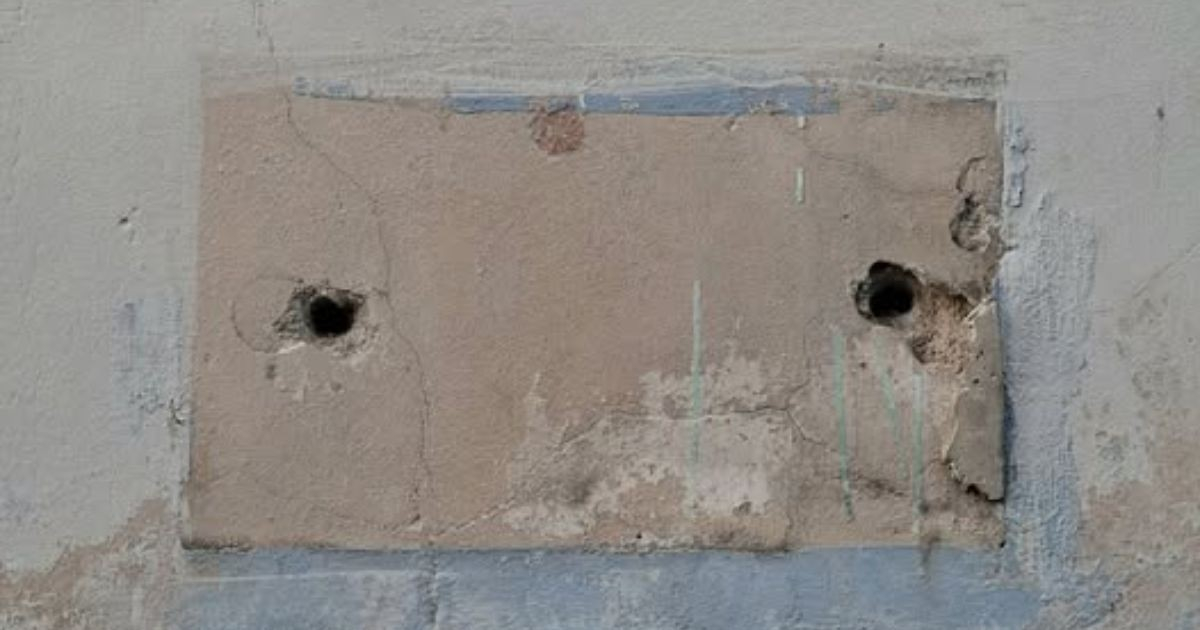
A bronze plaque dedicated to the poet José María Heredia on Río Street in Matanzas has disappeared, and in its place there is now only a rectangular patch of cement with two holes on a deteriorated wall. The Cuban photographer Julio César García reported the incident this Sunday on Facebook, accompanying the post with a photograph that shows the outline where the plaque was once anchored.
García did not rule out any hypothesis regarding the whereabouts of the plaque. "Perhaps it is being restored, maybe it was transformed into keys, or it was sold for scrap metal," he wrote, pointing to a widespread practice in Cuba: the theft of metals — bronze, copper, aluminum — to sell them as scrap in light of the extreme shortages the country is experiencing.
For the artist, director of the FOTOCANÍMAR Festival and the International Photography Colloquium of Matanzas, the issue transcends the material. "It doesn't matter; the metaphor is forgetfulness. The lack of identity, uprooting, the end justifies the means, shamelessness, the betrayal of the memory of an island and its people by those who govern and inherit power," he stated in his publication.
Heredia is regarded as the first great romantic poet of Cuba and the Americas. His connection to Matanzas is deep: he lived there, practiced as a lawyer, directed the magazine La Biblioteca de las Damas, and wrote part of his works. In October 1823, he composed "La estrella de Cuba" there, considered by some researchers as the first openly independentist poem in Cuban literature, and from the port of that city, he clandestinely departed into exile in November of that same year.
José Martí consecrated him in his speech delivered at Hardman Hall, New York, on November 30, 1889, in which he stated that Heredia was "perhaps the one who awoke in my soul, as in the souls of all Cubans, the unquenchable passion for freedom."
The complaint immediately sparked outrage on social media. The profile of the Museo Farmacéutico de Matanzas responded with a brief but forceful comment: "Shameful treatment of Heritage." One user lamented that the plaque was "the place that barely reminded us that José María Heredia lived and created among us," and warned that "one day, there will be nothing left of that historical memory, and we will have to start all over again." Another user pointed out that what is being lost is not only the history of the country but also "values, principles, education, and solidarity," attributing the chaos to "a system that has failed for a long time and clings to its last breath, trampling over the people."
García linked the loss directly to the crisis afflicting the Cuban people. “My people no longer have time to think; they are barely focused on surviving and not falling ill physically and mentally. What time, then, will they have for memory?” he wrote, pointing out that from this situation “the giant with seven leagues takes advantage, and those in power benefit.”
The disappearance of the plaque dedicated to the author of the "Hymn of the Exiled" is not an isolated incident. Last May, the theft of the historic plaque at the Armando Carnot children's park in Matanzas, dedicated to the so-called "Doctor of the Poor," was reported. Also in May, the mausoleum for the martyrs of independence in Cárdenas became vulnerable to looting following the theft of its gate. In Holguín, the sword from the statue of Major General Julio Grave de Peralta has been stolen at least for the third time, and five sculptures in the Plaza de la Marqueta are at risk of collapse due to severe deterioration.
The pattern is systematic: the cultural institutions of the regime have shown either an inability or a lack of interest in protecting the national heritage, while the unprecedented economic crisis drives part of the population to take any valuable element they encounter. As one internet user warned in the comments: "They're even taking the wiring; or rather, this shows no signs of stopping, or it will stop when there’s nothing left."
Filed under: