
Related videos:
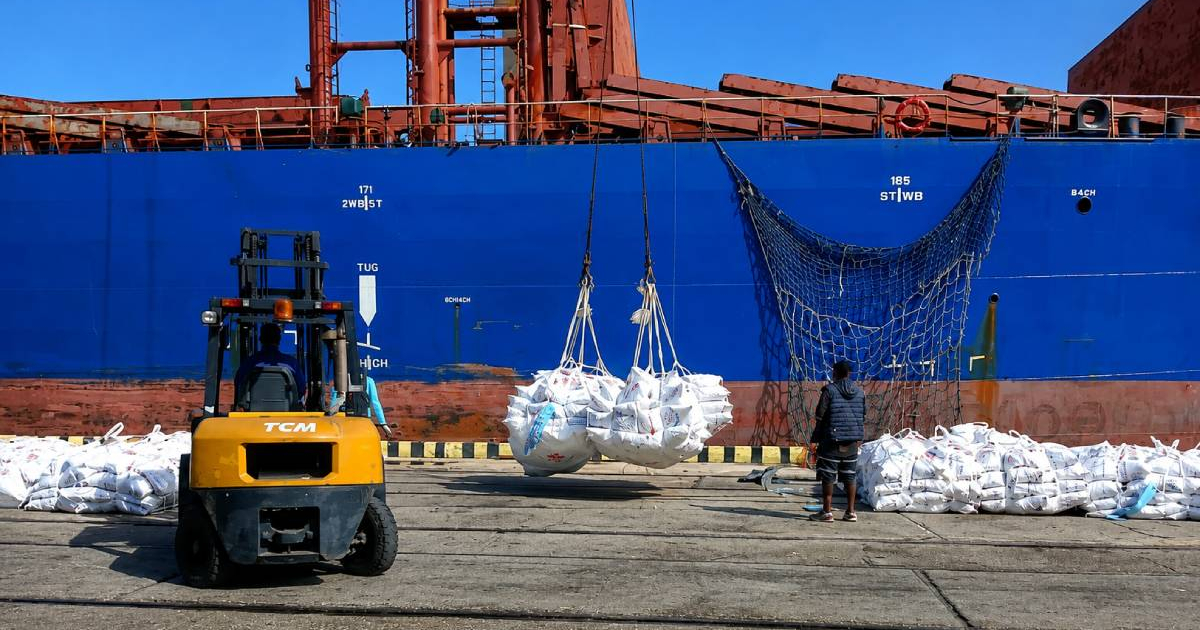
The Cuban Ministry of Domestic Trade (MINCIN) published images on Facebook this Tuesday of the unloading of the second shipment of rice donated by China at the Port of Havana.
They presented the operation as a progress "with effort and organization," when in reality the unloading has been ongoing for approximately 29 days —almost three times the original timeframe of 10 days intended for its completion.
The shipment, weighing 15,000 tons, arrived at the Haiphong terminal of the Port of Havana on May 23. The unloading was supposed to be completed within ten days, but the deadline was not met.
The MINCIN attributed the delay to "fuel shortages caused by the unjust blockade imposed by the government of the United States," using the term that the regime employs to refer to the embargo.
On May 29, Reinier Lores Riverón, director of ASEGEM —the MINCIN entity responsible for supply logistics— had already publicly acknowledged the non-compliance and blamed Washington for the delay in the unloading of rice.
"The extraction has not been able to proceed at the planned rates, due to the existing situation with fuel limitations arising from the signing of the second executive order by the United States government," stated Lores Riverón.
Last Thursday, Foreign Minister Bruno Rodríguez Parrilla reiterated the accusation on the social media platform X, pointing out that the 15,000 tons "could not be transported immediately to each province due to interruptions related to cargo transport," and that the oil embargo impacts the supply of food and medicine on the island.
Rodríguez Parrilla added that "the lack of fuel prevents almost 50% of the medicines produced in Cuba in recent months from being distributed throughout the country."
The delay, however, also reflects the internal logistical deficiencies of the regime: a shortage of operational trucks, total dependence on imports for the basic food of the Cuban diet, and a deteriorated port infrastructure.
This second shipment is part of a total package of 60,000 tons approved in January 2026 by Chinese President Xi Jinping, distributed in four shipments of 15,000 tons each, as part of emergency aid that also included 80 million dollars for electrical equipment.
In addition to an initial commitment of 30,000 tons announced in January, the total amount of rice committed by China to Cuba in 2026 amounts to 90,000 tons.
While the regime presents the rice subsidy as an achievement, the pound of rice exceeds 350 pesos in the informal market in Havana.
Filed under: