
Related videos:
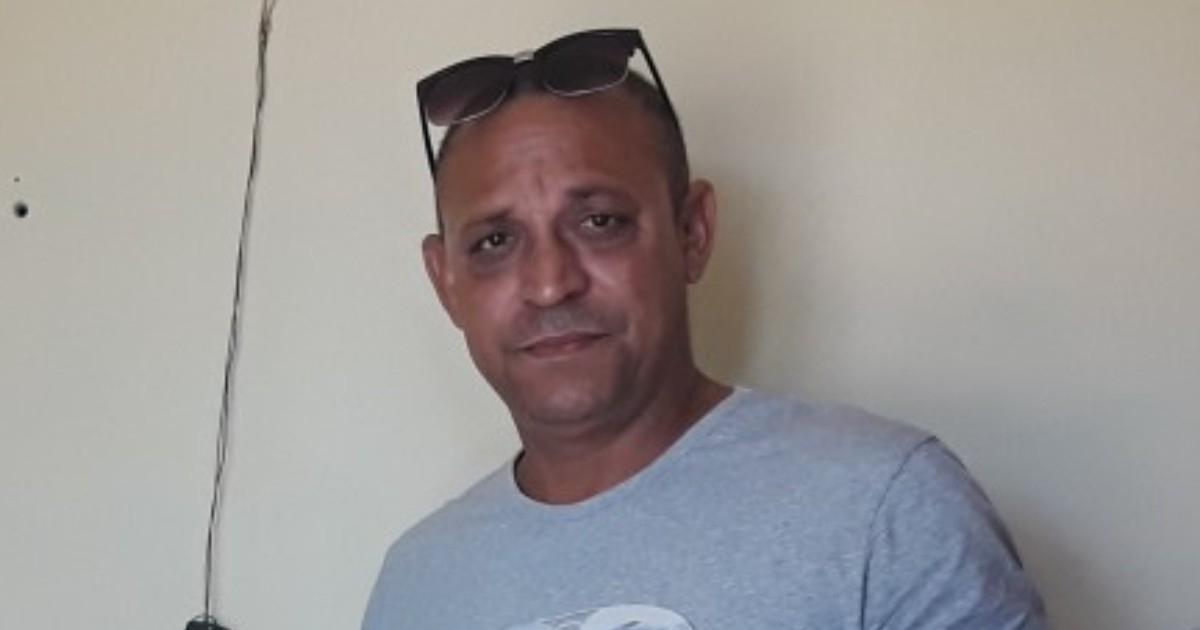
The independent journalist and political prisoner Jorge Bello Domínguez sent a letter of denunciation from the maximum security prison in Guanajay, in which he warns that he fears for his life and directly holds the prison officials and State Security responsible for any harm to his health or physical integrity.
The letter, dated June 12 at 5:35 in the morning, was made public yesterday by the human rights organization Cubalex at the request of Bello Domínguez himself.
In the letter, the journalist names Captain Camilo Ernesto Hernández Ortega, head of the medical clinic at the prison, and First Lieutenant Lis Marelis Ajete Suárez, deputy director of medical services, accusing them of sabotaging his insulin syringes and tampering with the medication vial.
Bello Domínguez suffers from type II diabetes mellitus with elevated blood glucose levels, as well as hypertension, which means that the denial or alteration of his treatment poses a direct risk to his life.
"I know I walk on the edge of an abyss and I am certain that something is being plotted against me; that is the price to pay for not yielding and remaining steadfast to my ethical, moral, and ideological principles," wrote the journalist from Guanajay.
The political prisoner was sentenced in April 2022 to 15 years in prison by a military court after participating in the protests of July 11, 2021, in Güira de Melena, Artemisa, in a trial that his family and human rights organizations described as fraudulent due to the lack of physical evidence and the use of testimony from a co-defendant who collaborated with State Security.
The current complaint is not the first.
In July 2022, he was beaten at the Combinado del Este by a disciplinary chief, and during that same period, his mother reported that they were injecting him with insulin using blunt needles, which caused abscesses in his arms and thighs.
In June 2025, having been transferred to Guanajay, he had been without insulin or hypertension medication for two months.
On March 31, 2026, the Inter-American Commission on Human Rights issued Resolution No. 21/2026 granting precautionary measures in its favor, with no response from the Cuban regime.
That same month, her mother filed a complaint with the Legal Commission on Penitentiary Establishments of the Attorney General's Office, also without a response.
In his letter, Bello Domínguez explicitly holds "the health systems, state security department, and penitentiary authorities of the province of Artemisa responsible for any situation that arises in my environment, both concerning health and physical integrity."
The case is set against a backdrop of widespread deterioration of the conditions for Cuban political prisoners: according to Prisoners Defenders, in May 2026 there were 1,281 political prisoners in Cuba, of which 449 suffered from severe illnesses caused or exacerbated by the conditions of imprisonment and the systematic denial of medical care.
“Dignity is not for sale, it cannot be conditioned, and much less can it be attempted to be killed; this is something that dictators and the repressive apparatus do not learn,” Bello Domínguez states in his letter.
Filed under: