
Related videos:
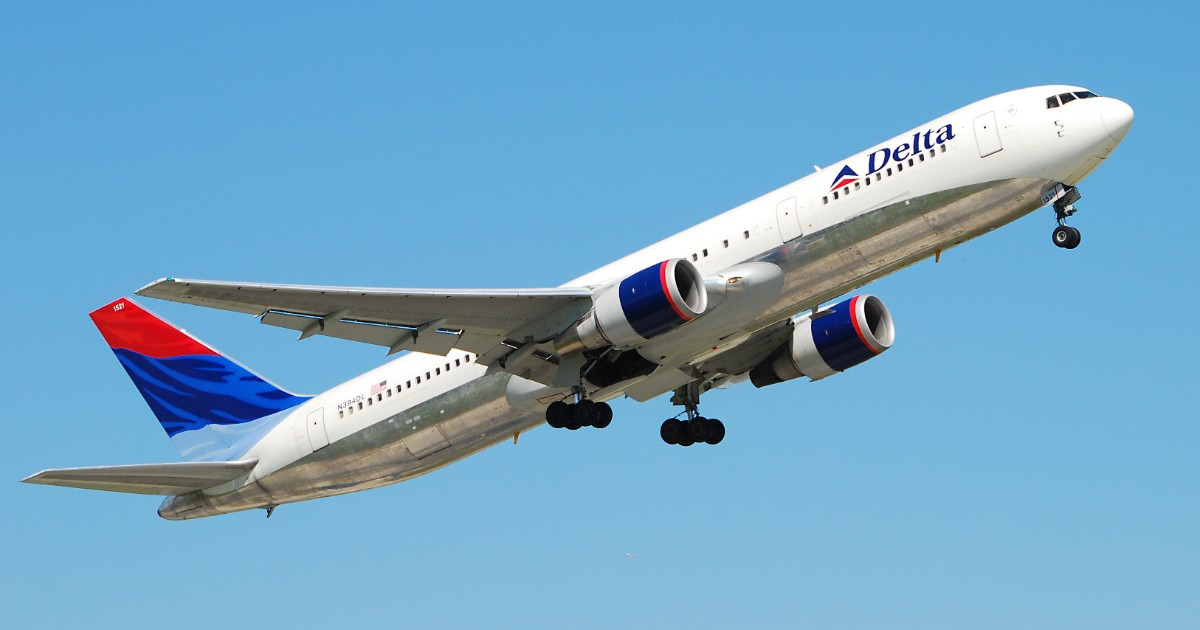
Delta Air Lines has completely eliminated its daily flight between Atlanta and Havana and has cut its frequencies from Miami by half, according to reports this week from the travel specialized outlet Caribbean News Digital.
The measure was authorized by the U.S. Department of Transportation (DOT) through a temporary inactivity exemption that allows the airline to freeze its slots without losing long-term flight rights.
The detail of the cuts
The daily service from Hartsfield-Jackson Atlanta International Airport - the main global hub for Delta - has been completely canceled.
Parallely, in Miami the airline decreased from two daily flights to just one, which represents a 50% reduction in its weekly seating capacity to the island.
The company justified the decision with a powerful statement:
"The current conditions of the aviation market simply do not justify the previously assigned volume of seats."
Delta will focus its operations on the segment of visits to family and friends from Miami, which is considered the most resilient traffic between the United States and Cuba, and has left the door open to restoring frequencies if demand shows a sustained recovery.
A tourism industry in free fall
Delta's decision reflects a widespread collapse of Cuban tourism in 2026.
According to the National Office of Statistics and Information (ONEI), Cuba received only 30,883 international visitors in May, the lowest monthly figure in years.
In the first five months of the year, the island welcomed 359,491 tourists, a 58.4% decrease compared to the same period in 2025.
The main source markets collapsed without exception: Canada fell by 67.4%, down to 126,239 visitors; Russia decreased by 62.5%, down to 21,136; and the United States dropped by 55.3%, down to 25,572.
The only segment that resisted was precisely the Cuban community abroad, which increased from representing 6.8% of visitors in January to 47.6% in May.
The fuel crisis and political pressure
Behind the collapse of air connectivity lies an energy crisis that has intensified since January 2026.
Executive Order 14380, signed by Donald Trump on January 29, declared a national emergency regarding Cuba and authorized additional tariffs against countries that supply oil to the island.
Weeks later, Cuba warned of the unavailability of Jet A-1 fuel at nine international airports, triggering a wave of cancellations.
U.S. airlines have turned to "tankering"—taking enough fuel from the mainland for the round trip—to cope with local shortages.
Even so, the combination of regulatory restrictions, declining demand, and rising operational costs has undermined the feasibility of maintaining multiple frequencies.
At least 11 international airlines have suspended flights to Cuba in 2026: Air Canada, WestJet, Sunwing, Air Transat, LATAM Perú, Magnicharters, Air France, Iberia, Rossiya, Nordwind, and Turkish Airlines.
Air Transat attributed losses of 17.8 million dollars directly to the suspension of its routes.
Iberia suspended its direct route from Madrid to Havana on June 1, describing the decision as one that "exclusively affects Cuba, due to its exceptional situation."
At that operational pressure, politics is also at play. The Cuban-American congressman Carlos Giménez sent letters in February to the executive directors of American Airlines and Delta, requesting them to cancel all their flights to Cuba, arguing that they "provide the dictatorship with hard currency that only benefits its repressive apparatus and does not help the Cuban people."
Cuba ended 2025 with only 1.8 million visitors, the lowest figure since 2002, excluding the pandemic years.
The figure is far from the 4.6 million recorded in 2018.
The hotel occupancy rate fell to 12.9% in the first quarter of 2026, less than half of the 23.7% during the same period the previous year.
Filed under: