
Related videos:
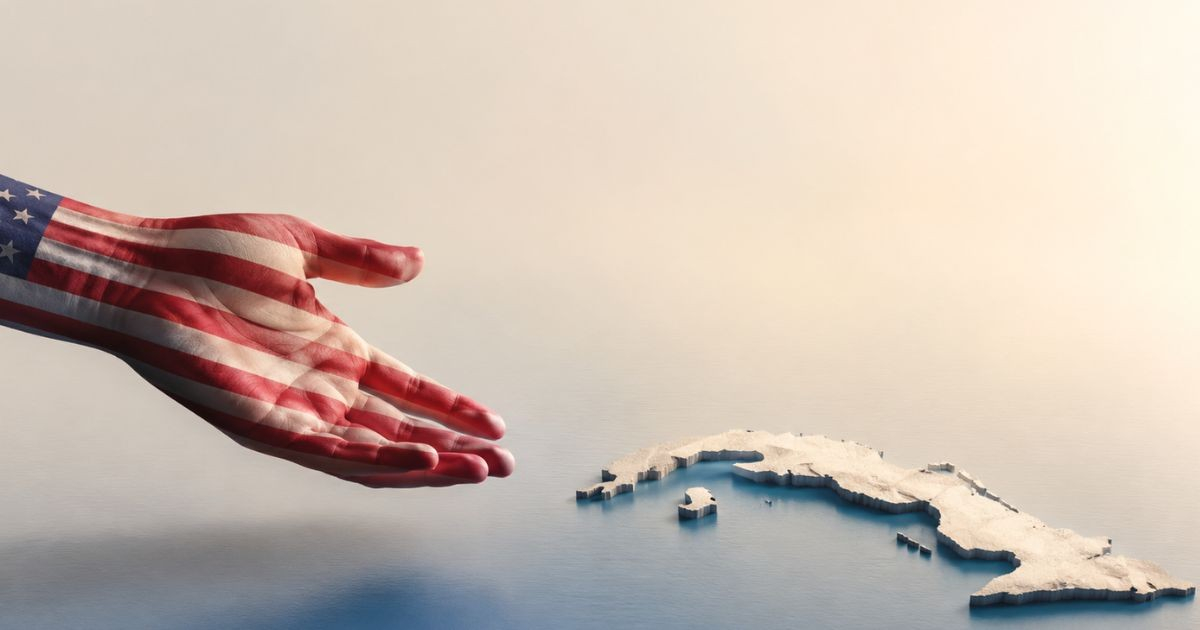
The Embassy of the United States in Cuba confirmed on Wednesday the distribution of a $100 million humanitarian aid package for the island: $60 million will be managed by the Catholic Church and an additional $40 million will be channeled through trusted non-governmental organizations, according to what the diplomatic mission published on its Facebook account.
The announcement came after a series of meetings held by Mission Chief Mike Hammer with representatives of the Catholic structure in Cuba: Sean Callahan, president of Catholic Relief Services; Carmen María Nodal Martínez, director of Cáritas Cuba; and Bishop Dionisio García Ibáñez, in his role as president of Cáritas Cuba.
According to the Embassy, the meetings aimed to "coordinate the distribution of humanitarian aid for ordinary Cubans in order to ensure that support reaches those who need it most effectively."
The decision to exclude the Cuban state as an intermediary is a non-negotiable condition for Washington.
The Secretary of State Marco Rubio made it clear on May 15th: "The only condition is that it must be distributed by non-governmental organizations. It cannot be humanitarian aid that the government takes for itself."
This operational announcement comes more than a month after Rubio publicly announced the offer from Rome, one day after meeting with Pope Leo XIV at the Vatican.
The Department of State formally announced the proposal through an official statement on May 13, specifying that the funds would be channeled exclusively through independent means from the regime.
The chosen channel has a proven track record. After the hurricane Melissa, which struck eastern Cuba in October 2025 as a category 3 storm, the U.S. already distributed nine million dollars through Caritas Cuba without state mediation, benefiting around 24,000 people in five eastern provinces.
The network of the Catholic Church in Cuba comprises 11 dioceses across 14 provinces and has approximately 1,000 clergy and volunteers available for distribution, making it the largest logistical structure outside of government control.
On June 2, Hammer had already held a meeting with the leadership of the Catholic Church in Cuba, including Cardinal Juan de la Caridad García Rodríguez and Monsignors Arturo González Amador and Eloy Ricardo Domínguez Martínez, which the Embassy described as "fruitful."
The Cuban regime's stance has ranged from outright rejection to a conditional openness.
The chancellor Bruno Rodríguez Parrilla initially described the offer as a "fable" and a "lie," but days later stated that Cuba was "willing to listen." Díaz-Canel, for his part, posted on X that if the U.S. has "real willingness," Cuba "will find no obstacles or ingratitude."
Rubio warned that the responsibility lies with the regime: “The Cuban people must know that there are 100 million dollars in food and medicine available to them right now, and the only reason they are not receiving it is the Cuban regime,” he stated in a interview with NBC on May 15.
The humanitarian context on the island is extremely grave: the electrical deficit exceeded 2,204 MW during peak nighttime hours in May, with blackouts lasting up to 22 hours a day, and the Cuban Conflict Observatory recorded 1,133 protests just in April 2026, a 29.5% increase compared to the same month the previous year.
Filed under: