
Related videos:
The geochemistry of oil answers a question that has direct implications for the Cuban energy crisis: why is the oil produced on the island mostly heavy and rich in sulfur?
According to an analysis published in Juventud Técnica by Dr. Rafael Tenreyro Pérez, the answer lies in millions of years of geological processes that determined the composition of the source rock of the major deposits in the northern part of the country.
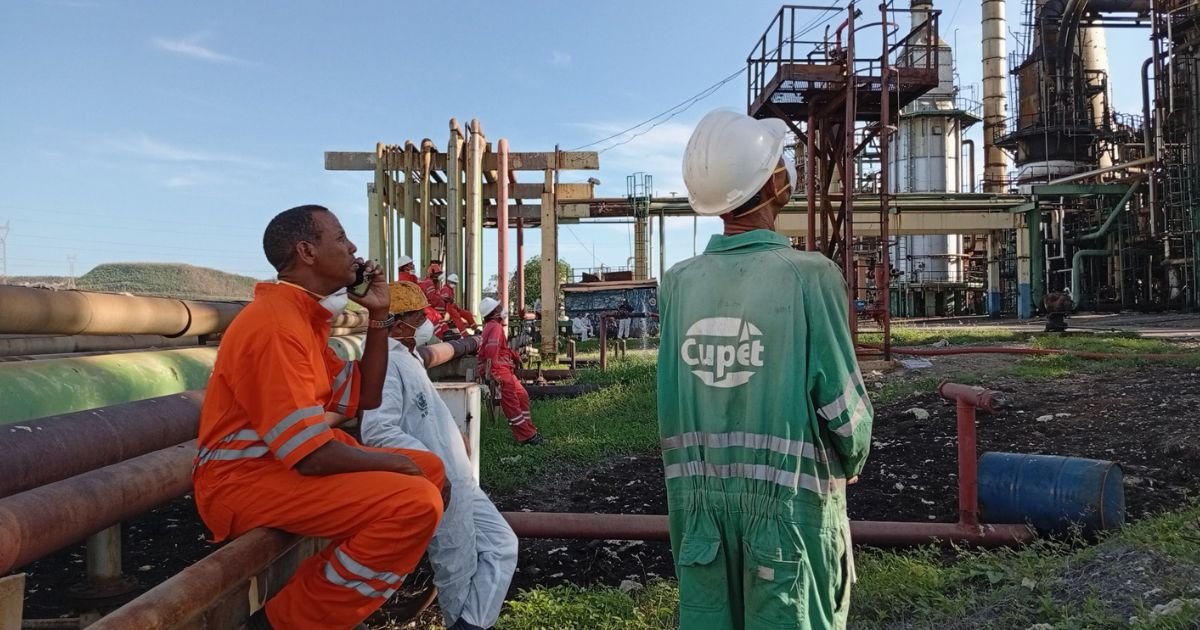
"In Cuba, around fifty oil fields have been discovered, the smallest portion of which contains extrheavy oil. However, in terms of volume, heavy and highly sulfurous oil accounts for the majority of production," wrote Tenreyro Pérez, who served as the head of Exploration at Unión Cuba Petróleo (CUPET) for 16 years until his retirement in 2016.
Geochemical studies have identified three families of crude oil on the island. The most significant by volume—Family I—"derives from a carbonate source rock from the Upper Jurassic, deposited in an extremely anoxic environment, with marine organic material rich in sulfur compounds."
This family is present in the main deposits along the northern coast, between Havana and Varadero, and shares similarities with crude oil from Mexico.
The decisive factor is the temperature at which the crude oil left the rock that generated it. "In reservoirs, heavy crude escaped from the source rock at low temperatures (immature oil) and retains a high sulfur content," explains the specialist.
The lower the thermal maturation of the oil, the higher its density and the greater its content of sulfur compounds, which reduces its commercial value and complicates its refining process.
The API gravities of the main northern fields illustrate this reality: Varadero records around 10.5° API; Boca de Jaruco ranges between 11° and 14.7°; Puerto Escondido between 11.3° and 13.4°; and Seboruco between 8° and 12°. Only Santa Cruz del Norte reaches about 19° API. For reference, a light crude exceeds 31° API.
The Families II and III of Cuban crude oils, found in other areas of the island, are lighter and have lower sulfur content, but they represent a smaller fraction of total production. In some locations, Family I oils have been found to be more mature, reaching up to 37° API, though they still maintain high sulfur levels.
Tenreyro Pérez himself points out a geological paradox: "The good news is that if we had had a different type of organic matter, these deposits would not exist today." It was precisely that sulfur-rich marine organic matter, deposited under anoxic conditions, that generated enough crude oil to sustain national production.
The history of that production began in 1969, when the discovery of the Guanabo and Vía Blanca oil fields—both of heavy oil—ushered in a new era.
The drilling of approximately 12 exploratory wells in the early 1970s along the northern coast led to the discovery of eight additional fields, including Boca de Jaruco, Puerto Escondido, Yumurí, Camarioca, and Varadero.
"If until 1968 the island's total production averaged around five hundred barrels per day in its best years, the development of the fields near the northern coast between Havana and Varadero allowed for a more than one hundredfold increase in those production levels," recalls the author.
This geological reality currently has direct consequences on the energy crisis. Cuba produces around 40,000 barrels per day of crude oil—mostly heavy and difficult to refine—against an estimated demand of between 90,000 and 110,000 barrels per day.
The structural deficit, exacerbated by the sharp decline in oil imports and the reduction of supplies from Venezuela and Russia, is behind the massive blackouts being experienced by the Cuban population.
Filed under: