
Related videos:
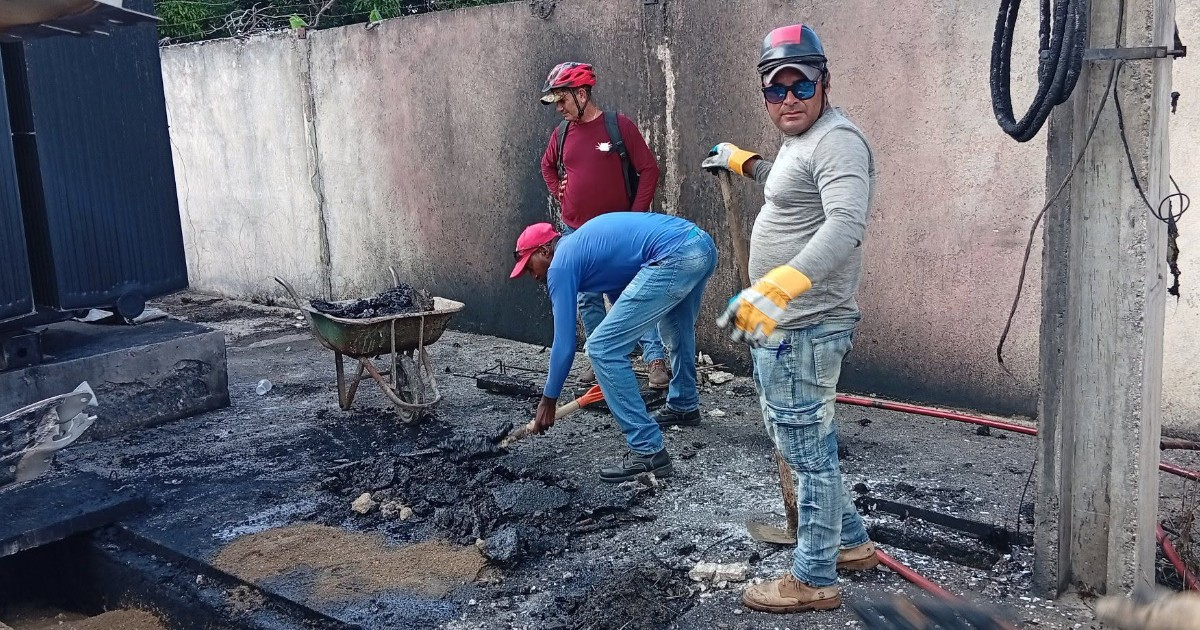
A fire occurred this Tuesday at the electrical substation in the Van Troi 2 neighborhood, in Caibarién, a coastal municipality in the Villa Clara province, causing damage to the transformer and other electrical installations of the substation, and leaving 15 districts in the area without service.
According to the state media Cubadebate citing the Cuban News Agency, the incident occurred around 11:00 a.m. and the Fire Department of the town successfully extinguished the flames.
The municipal mayor Rogelio Ruiz Rodríguez declared to ACN that the fire "was caused by overheating due to the combination of high temperatures and peak consumption after a period without service."
That pattern—extended blackouts followed by abrupt reconnections that spike consumption and overload the infrastructure—is precisely what has been degrading the electrical system in Cuba across the island.
Of the 15 affected districts, two belong to the popular councils 4 and 5, while the remaining 13 are part of popular council number 3.
Since the fire occurred, a specialized team from the Electric Company has been working on-site to remove damaged equipment, replace burned cables, and prepare conditions for restoring service tests.
Local authorities also organized efforts to mitigate the impact on residents, including the distribution of water and the supply of food to the community.
Ruiz Rodríguez reported that, during the duration of the emergency, a command post of the Defense Council will remain active at the José Martí Primary School, where residents in need will be attended to.
On social media, the post from Telecentro CNTV generated dozens of reactions from residents who expressed both concern over the new outage and exhaustion from the prolonged blackouts affecting the municipality. Several users felt that the overheating of the substation was a predictable consequence after long hours without service and the sudden increase in demand when electricity returns. "Of course, I'm not saying it won't blow up if they only turn it on for one or two hours and the town runs to catch up," commented one user, while another noted that "in one hour you need to have ten hands to cook and do homework at home."
While some expressed gratitude for the efforts of the workers at the Electric Company and hoped for a quick recovery, the prevailing sentiment was frustration over the service interruptions. Several residents reported being without electricity for more than 24 and even up to 48 hours, which has complicated access to water and the preservation of food. "We can't take this anymore; this is our daily reality," wrote one user, while another comment echoed the feelings of many: "What a sad reality we are living in." There were also warnings that, unless the structural problems of the local electrical grid are resolved, similar incidents could happen again in the future.
On the same Wednesday, in Santa Clara —the capital of Villa Clara—, an electrical overload following a blackout caused explosions and damage to 14 homes, as well as an injury with minor burns.
Both events reflect the critical state of the Cuban energy system in 2026. The Electric Union has reported generation deficits of between 1,630 and over 2,000 MW daily, with blackouts that at times have left 65% of the country without electricity simultaneously.
Villa Clara has been one of the provinces most affected by this crisis: power outages have reached up to 20 hours a day, forcing communities to organize to cook outside the home and charge phones at community points.
The structural causes of the crisis include outdated thermal power plants—eight out of 16 units were out of service in June 2026—fuel shortages, and decades of underinvestment in infrastructure, a direct result of the management of the Cuban dictatorship.
For the peak hours on June 13, the Electric Union reported a capacity of only 1,270 MW against a demand of 3,050 MW, a deficit of 1,780 MW that illustrates the magnitude of the energy collapse the island is experiencing.
Filed under: