
Related videos:
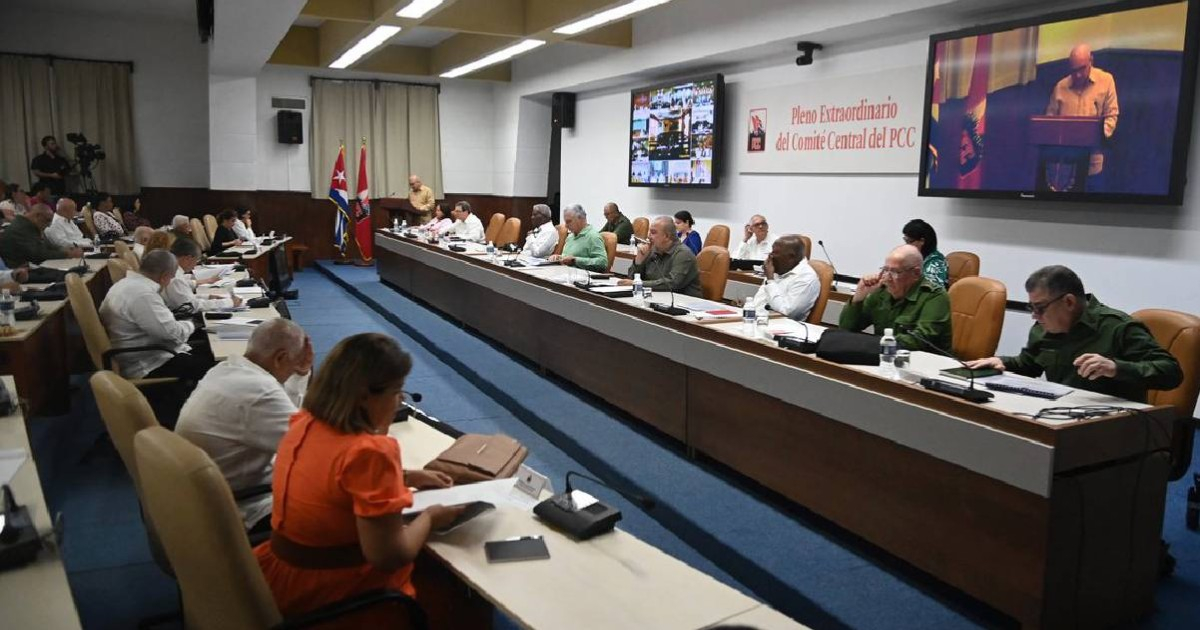
The Communist Party of Cuba (PCC) held an Extraordinary Plenary of its Central Committee this Wednesday, led by Miguel Díaz-Canel, with the stated aim of validating a package of economic reforms that, according to its proponents, seeks to "preserve the Revolution and its main achievements."
The session opened with the opening remarks from Roberto Morales Ojeda, member of the Political Bureau and Secretary of Organization of the Central Committee, who set the ideological tone for the meeting from the very beginning.
"The economic and social transformations we are analyzing here are to preserve the Revolution and its achievements," affirmed Morales Ojeda before the delegates gathered in the hall.
The official also took the opportunity during the inaugural speech to remember Generalísimo Máximo Gómez on the 121st anniversary of his passing, in a gesture appealing to the historical symbols that the regime tends to evoke when facing internal pressure.
Following the words of Morales Ojeda, Prime Minister Manuel Marrero Cruz presented proposals organized around several key areas of work and warned that the changes "can only be driven by our own efforts," thereby dismissing any expectations of external support.
Marrero Cruz also pointed out that the measures "will impact the improvement of the management system of the Cuban economy," without providing details on timelines or implementation mechanisms.
During the session, it was reaffirmed that the proposals do not represent a departure from the socialist model, but rather are "an expression of the logic inherent to development during the historical period of its construction, guided by the ideas of Fidel and Raúl, and under the direction of the First Secretary."
The reform package, announced by Díaz-Canel on June 12 in front of the press, includes reducing the number of ministries from 27 to 21, granting greater autonomy to municipalities and state-owned enterprises, opening investment opportunities for Cubans residing abroad, and promoting small and medium-sized enterprises.
The session is taking place while a Reuters ticker on the screens in the chamber was running a news alert summarizing the context: "The US will block the arrival of two tankers carrying Russian fuel."
The PCC meeting takes place amid cacerolazos in Santa Clara and new protests in Havana, with an electrical deficit that during peak hours has exceeded 1,900 MW and a record of 1,311 protests counted in May 2026 according to the Cuban Conflict Observatory.
The next step in the institutional process is already set: the regime has called an Extraordinary Session of the National Assembly for this Thursday, June 18, where the formal legislative approval of the same package of measures recently endorsed by the PCC is expected.
Filed under: