
Related videos:
Residents of the El Vedado neighborhood in the capital remained skeptical about a new waste collection and recycling project announced on Wednesday at the Rampa People's Council, aimed at transforming waste management in one of the most central areas of Havana, according to the announcement shared on social media by Pedro Lizardo Garcés Escalona.
Known as PDL "El Rampeño," the program spans 14 districts of the Plaza de la Revolución municipality and has, according to its promoters, a dual goal: "to create decent job opportunities within the community" and "to transform our surroundings into a pleasant, organized, and healthy space for everyone."
The project will feature 30 electric tricycles for door-to-door collection and a charging station with solar panels—referred to as a "solinera"—located at the intersection of 23 and J, in the heart of Vedado. This facility, inaugurated in May in Vedado, will also be available for residents to charge electric motorcycles, bicycles, mobile phones, and other devices.
The system will operate at two fixed times that are mandatory: 7:00 a.m. and 8:00 p.m., with direct delivery to the door of each home. "These times are not suggestions; they are mandatory," warns the official announcement.
Street containers will be removed and four strategic points will be established in the local council for disposing of bulky waste such as rubble, furniture, and unused appliances, they emphasized
The service will have a cost of 100 Cuban pesos per month per household, with differentiated rates for the state and non-state sectors based on the volume of waste generated.
Families in vulnerable situations —elderly individuals without income, people with disabilities— may be exempt from payment after a community assessment.
The project also includes a team of inspectors with the authority to impose fines and even escalate cases to criminal prosecution. According to the announcement, anyone who repeatedly throws garbage in public spaces could face charges for disobedience, damage, or spreading an epidemic. "It's not about intimidating people, but about taking care of each other," the official text justifies.
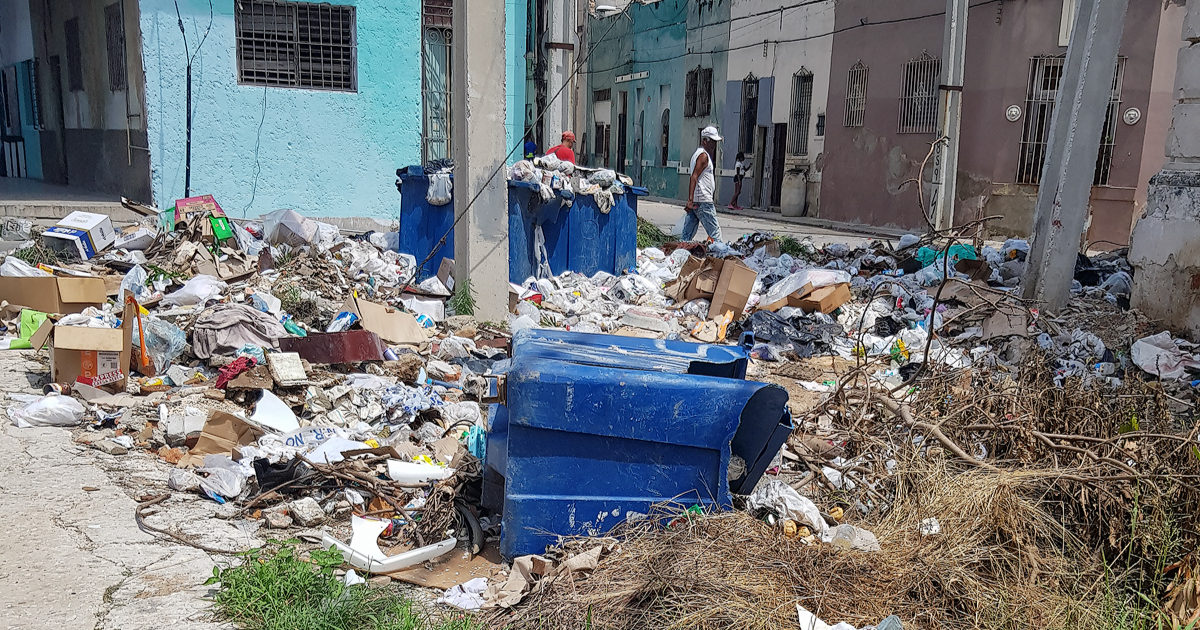
The announcement comes in the context of a structural crisis in waste management in the capital. In February of this year, only 44 out of 106 trucks collecting waste in Havana were operational—just 41.5%—due to fuel shortages.
The crisis caused the waste collection in Old Havana to come to a standstill for ten days, according to RTVE. The New York Times en Español noted on May 31 that piles of garbage have become a common sight in Havana, bringing associated health risks such as dengue and chikungunya.
Due to the inability of the State to maintain its fleet of vehicles, some residents have taken the initiative on their own: residents of Casino Deportivo organized their own waste collection in the absence of state service.
The citizen reaction to the PDL "El Rampeño" has been one of cautious skepticism, summarized in expressions like "hopefully, it's true", which reflect the distrust built up over years of unfulfilled promises in urban hygiene.
The official announcement itself acknowledges that the start date for the service has not yet been defined: "We will notify in due course the day on which this service will commence as well as when these measures will be implemented."
Filed under: