
Related videos:
From the roots of the Congo and the Lucumí song, with Carabalí blood, with Mandinga fire within, pure-bred Cuban, Santiago-born, who, in every scene she graces, brings more joy to the soul.
An actress of race and spirit, theater made heart, moving from theater to whisper, from story to brilliance, from song to wound, from laughter to tremor; versatile like life, like the wind and its murmur, she transforms each character into truth and radiance.
Heir to the drum, to memory and the river, she blends music and poetry in an ancestral rite; when she performs, she does not act… it becomes ritual: it beats, it vibrates, it becomes a world, it becomes a universal voice.
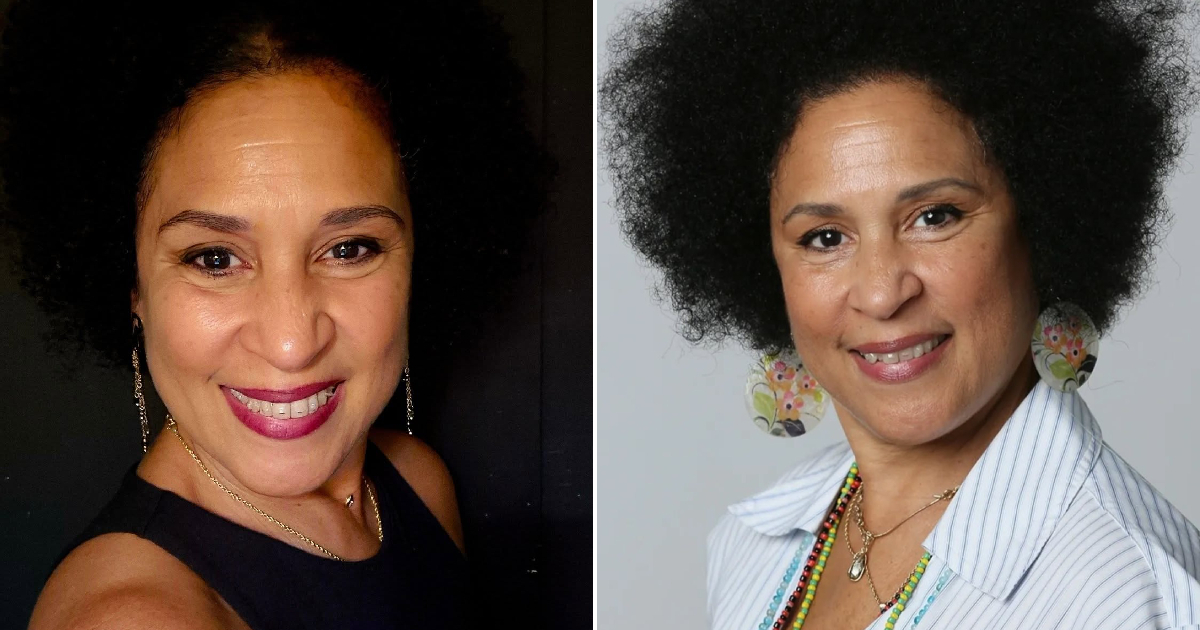
And in Catalonia, her light of identity shines: mulatto of a thousand paths, of roots and freedom… in Catalonia, actress Marieta Sánchez… she is truly the voice of Cuba!
I am extremely pleased to chat with this Cuban talent who has made her mark in Spanish film and theater. Welcome to CiberCuba!…
What are you doing right now? Are you working on something specific: a series, a movie, a play...?
Now I am teaching camera acting classes at a film school, waiting to rehearse a play, Aguas grises, by a Cuban writer, and doing storytelling for children.
How do theater, oral storytelling, and music coexist within you? What is the difference between interpreting a character and truly embodying it?
They inhabit me coherently; I flow between different proposals and ways of creating.
To me, interpreting is like inhabiting a character, carrying it with me, and lending my body and emotions to tell its story. One thing is connected to another; otherwise, the interpretation feels empty. Inhabiting also means being aware that you are performing. I may not know how to explain it better, but for me, from the moment I begin to study a character, I start to inhabit it, to fill it up.
What does theater have that no camera can replace?
The audience. Theatre holds the magic of a unique and unrepeatable moment where the communion with the audience makes the performance possible. Here and now.
The camera is a technique; it’s another way of storytelling, allowing for the alteration of the narrative timeline and the ability to repeat it many times. It’s a different way of creating.
Take me to Santiago de Cuba, to your parents, siblings, your grandmother. What memories from that time continue to accompany the woman and actress you are today?
My mom was a generous and hardworking woman, strong-willed. My dad was someone who enjoyed life. I have a bit of both, haha.
I adore my city; getting lost among its hills brings me back to my essence. I am very family-oriented; it’s a feeling instilled with love.
Today, as the mother of a teenage son whom you speak of with so much love and pride, what have you learned about motherhood that no scenario could ever teach you?
Girl, what can I say about my little gentleman? He is my sunshine, the strength that drives me. Motherhood and parenting have taught me so much. They have taught me to give love and the best of myself, to learn from the mothers around me, to unlearn ways of teaching, to listen, and to follow my instinct and my way of thinking.
I always question whether I'm doing it right or wrong. In the end, raising and educating is the hardest thing.
I have talked a lot with my son since he was in my womb. We have always talked a lot. He has been by my side through all the moments and everywhere: theaters, festivals, shoots, trips...
I am a single mother, and it hasn't been easy, but my Marcel is happy, and that is what matters. There is no stage for that play. It's the magic of life.
What place does Cuba occupy in each story you tell? By the way, as a Cuban living between memory and distance, what feelings does the current reality of Cuba awaken in you?
Hey, there are a lot of questions here...!
A look, a Cuban takes a piece of the Island with them when they leave. It is very difficult to detach from that feeling, and for me, it is important to convey it in my creative work. I feel Cuban, and I share my culture.
Distance exists physically, but you are always connected to Cuba. Memory, over the years, can play tricks on you because the instinct is to start anew and survive the nostalgia, yet the memories are always stored there. They are part of your life. Memory knows this and cherishes it.
What people are experiencing in Cuba right now fills me with sadness and helplessness. I feel deeply for those who are suffering. I think of the mothers, the elderly, the needs, and it overwhelms me.
Sometimes I have to take a step back from the information because you can't live with that feeling all the time—of sadness and anger as well—because of what is happening and because the international community says nothing.
It is a forgotten country, destroyed in many ways, lost in a time that can no longer be recovered. How many broken families, scattered. So much suffering for many. It is tremendous. The story needs to be told truthfully.
How do your Afro roots manifest in your art?
I have always felt Black, and I reaffirm my roots and my Afro-Cuban culture. In every creation, in each character, in every show that I imagine, there are my egguns, my ancestors.
Whether in text, music, dance, or prayer, it somehow comes out: a handkerchief, a way of moving... It is always present in everything I do.
What has been the most difficult silence for you to interpret?
The most challenging silence was in a play titled The Fence, where I played Naome, an African woman who crossed the desert while pregnant to reach Europe and reunite with her husband.
That work marked my life, and Naome's silences were profound and challenging. We spent a year with that piece. It was incredible. A scenic gift from Pere Peiró, its author and director.
Which teachers have influenced your artistic and personal journey?
I was a student of Raquel Revuelta, the great teacher. I cherish beautiful memories of her classes and a unique learning experience. I remain in touch with my classmates from the group; we were Raquel's kids.
I also had the genius Vicente Revuelta. From them, I learned a lot. From Eugenio Hernández Espinosa, I learned about Afro-Cuban culture, the scene from another perspective, the black, the Afro.
I have had great teachers, and I believe that every colleague I have worked with has taught me something. You always learn something. I am very curious, and I enjoy observing and listening. You can learn from everything, and at a human level as well.
My mother and my Ñañi, my other mother, were my best example of humanity because of their generosity and kindness.
Does an actress change when she lives between two shores: Cuba and Spain?
I would have to ask myself if the person changes. I believe you adapt to a different way of seeing things, of living; your perception changes, but not your essence, whether you are an actress or something else.
The fact that migrating is already a dramatic change in your life. Barcelona is my host city; Santiago, my beloved city.
In the end, we are more than that.
What character do you still dream of portraying? Generally speaking, what do you still want to achieve professionally?
I hope I still have a lot to accomplish. I would love to portray a character from Federico Lorca or a classic like Medea. There are so many that I wouldn't know how to choose.
I am happy to portray any character. I hope to be surprised by many more still.
I believe in art as a function of life. I love teaching; sharing my experiences and imparting what I have learned is one of the things that fulfills me the most.
Another interpretation that I now embrace, which I really enjoy, is playing simulated patients in master's programs for health professionals. I feel like I contribute my part to something so important.
I don't know... I have been fortunate to have worked in all mediums: dubbing, radio, film, television, theater, musicals. And there is always something left to do, as long as there is life and health for it.
When the curtain falls and the applause ends, who is the woman that remains behind the actress?
A happy woman who enjoys what she does despite the circumstances she faces. Curious, cheerful, positive, and eager to move on to the next performance.
Life is a wonderful miracle. I am the woman who thinks that and is grateful for it.
You have worked with many prominent figures in Spanish art. With whom have you felt most comfortable? Include artists and directors.
Well...! That might raise a few eyebrows.
Look, theater directors: Pere Peiró, Manuel Dueso. From television and film: Joel Joan, Alex de la Iglesia. I also love Leticia Dolera.
And it's probably best not to mention any actors because we are quite sensitive, but I have felt happy and fortunate to share moments with great Spanish actors.
My admiration for Carmen Maura. Soon, a movie will be released where I share a scene with her. She is a legend of Spanish cinema and was extremely kind to me. It was a pleasure to chat with you and the readers of CiberCuba. Although I'm not an athlete, we understood each other very well, like theater on a football field. Hahahaha
Marieta speaks as she lives: with the memory of Santiago de Cuba in her skin, the strength of her ancestors in her art, and the certainty that every story deserves to be genuinely inhabited. Through theater, film, teaching, and motherhood, she has built a path where emotion, discipline, and gratitude coexist naturally.
Her gaze reflects familial joy, a commitment to culture, and sensitivity to the pain of her people. An actress, storyteller, teacher, and mother, she continues to move toward her next performance, convinced that life, as she herself says, is a wonderful miracle.
Filed under: