
Related videos:
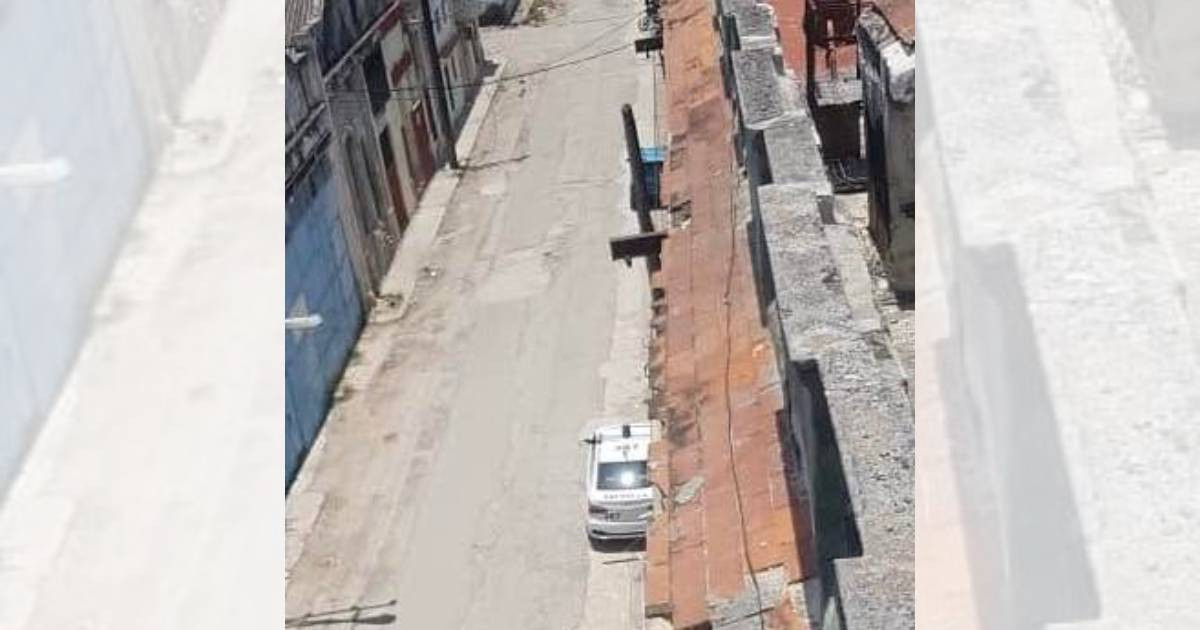
The Cuban State Security besieged the home of activist María Mercedes Benítez in Havana on Friday, where opposition member Manuel Cuesta Morúa was also present, demanding from the street that they both leave the house to proceed with their arrest, reported through its Facebook page the Council for the Transition in Cuba (CTDC).
Police agents stationed next to a patrol car physically blocked the exit of the building in an operation that the opposition organization described as "completely arbitrary and lacking any legal justification."
In a subsequent development, State Security knocked on Benítez's door and delivered a formal summons for Cuesta Morúa. According to the report published by the CTDC itself, the opposition member must appear this Saturday, June 20, at 9:00 AM at the Zanja police station, in the Centro Habana municipality.
Cuesta Morúa informed the organization that he will not attend that summons.
At first, the opposition member believed he was speaking solely with a police officer, which influenced his initial response. Later, both he and Benítez realized that the agent was accompanied by a State Security officer.
The CTDC linked the action to the "growing nervousness of the authorities" in response to daily citizen protests occurring in various parts of the country, which include noise protests, demonstrations, and public expressions of discontent mainly driven by the electricity crisis, with outages lasting up to 22 hours a day.
"Every citizen should not be intimidated or threatened with arbitrary detention for exercising universally recognized rights," demanded the CTDC, concluding its statement with a straightforward assertion: "This is repression."
The operation this Friday is not an isolated incident. On February 24, the Cuban regime prevented journalists and activists from leaving their homes, including Cuesta Morúa himself, Yoani Sánchez, Reinaldo Escobar, and Boris González Arenas, during the anniversary of the downing of the Brothers to the Rescue planes.
In May, the police and State Security prevented journalist Camila Acosta from leaving her home for the third time in a week.
The tactic involves positioning patrols and officers in front of the homes of dissidents to block their movement without the need for a formal arrest, thereby avoiding the official record of an apprehension.
Cuesta Morúa has chaired the Council for Democratic Transition in Cuba since October 2025, when he took over from José Daniel Ferrer following his exile in Miami. He has been detained multiple times: in September 2021, in January 2022, and in July 2022.
Benítez, for her part, is the coordinator of Citizens Observers of Electoral Processes and a member of the Ladies in White, with a documented history of state harassment that includes arrests since 2020.
The context of repression intensifies as protests continue unabated. The Cuban Conflict Observatory recorded 1,311 protests in May 2026, a number close to the historical record of 1,333 from December 2025.
Filed under: