
Related videos:
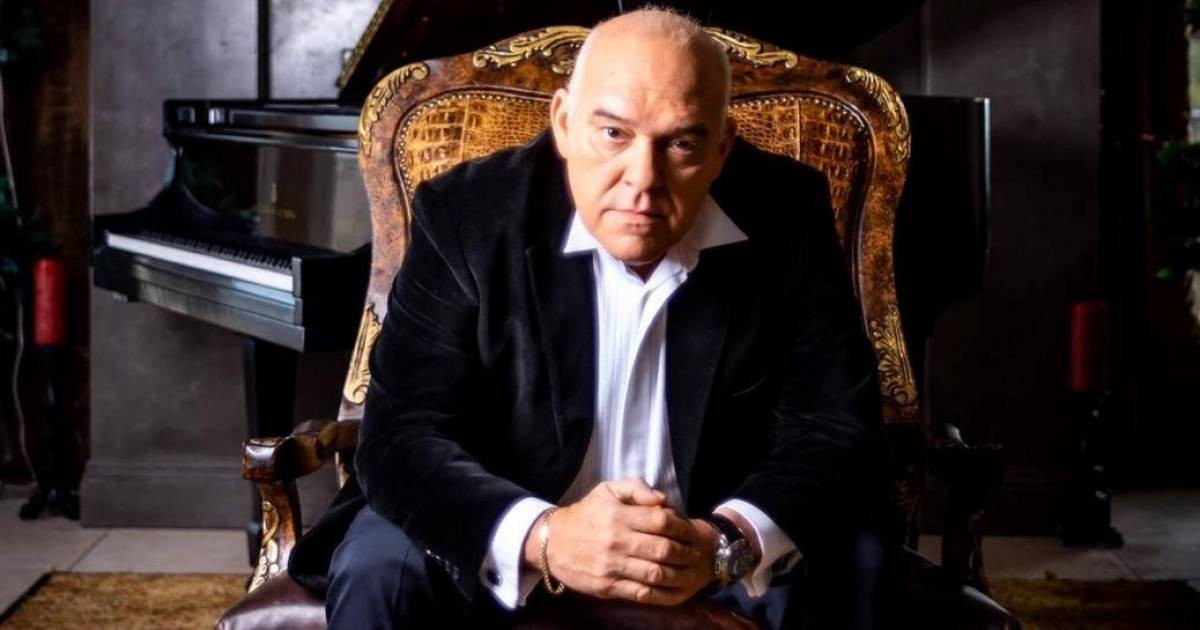
The Cuban baritone and cultural promoter Ulises Aquino Guerra responded on Facebook to a statement made by Miguel Díaz-Canel during the Extraordinary Plenary of the Central Committee of the Communist Party of Cuba: “What depends on us must be changed by us, and we need to change it now.”
Aquino's response was direct and devastating.
“And if it depended on us, why didn't they change it? Many people, everyone told them for years, did they have to take us to this calvary to realize it?” wrote the artist, questioning the credibility of the announcement and the regime’s delay in acting.
Aquino acknowledged that the reforms represent a step forward, but he deemed them insufficient: "Many things are still missing for the above to happen. What are the guarantees? Will there be a separation of powers?"
Díaz-Canel admitted to the PCC that the crisis has internal causes and announced a package of reforms that the National Assembly formalized in 176 measures, organized into 23 strategic axes.
But for Aquino, the delay has a cost that demands concrete political consequences: "If there were so many obstacles and you did not remove them even knowing the consequences we have suffered, the most honorable, dignified, and logical thing is for you to resign."
The artist also rejected the notion that the reforms are a response to external pressures—directly referring to Díaz-Canel's statement that “we are not doing this because of pressure from the Yankees”—and made it clear that the Cuban people should not accept that the exile dictates the rules either.
"It wasn't about pleasing Trump or Rubio; it was about listening to ourselves. It’s also not about accepting that the exile imposes rules, whether yours or anyone else's, but rather about everyone's right to create those rules and conditions," he emphasized.
One of Aquino's most emphatic statements pointed directly at Raúl Castro, who participated via videoconference in the Plenary and signed the proposal document: «These changes depended on the signature of the one who truly holds power, and you approve the type of Socialism that suits you».
For Aquino, that dependence reveals the incompleteness of the project: "These same openings and freedoms that are now needed to think, to express, and to live are essential. Therefore, it cannot function well; many things are still missing."
The singer also questioned the regime's priorities with a phrase that encapsulates the demands of millions of Cubans: "It is very sad that they care more about what they call Socialism than about the people."
And he closed his publication with three words that sum up his verdict on decades of inaction: "They started backward."
Aquino has a documented history of criticizing the regime.
In 2012, the government shut down its community project Ópera de la Calle - founded in 2006, with over 200 artists and 130 dependent families - under the accusation of "enrichment." He attributed the closure to the Ideological Department of the PCC.
Last week, he published a text titled "The Cuba I Want", in which he demanded an end to political exclusion, a popular consultation, and a government that coexists with all political viewpoints.
His skepticism is not isolated.
The economist Pedro Monreal described the reforms as "late pragmatism" and warned that Cuba has missed the opportunity for gradual reforms akin to those in China or Vietnam.
While the Plenary was in session, reports of pot-banging protests emerged in Santiago de Cuba, Santa Clara, and several neighborhoods in Havana.
Filed under: