
Related videos:
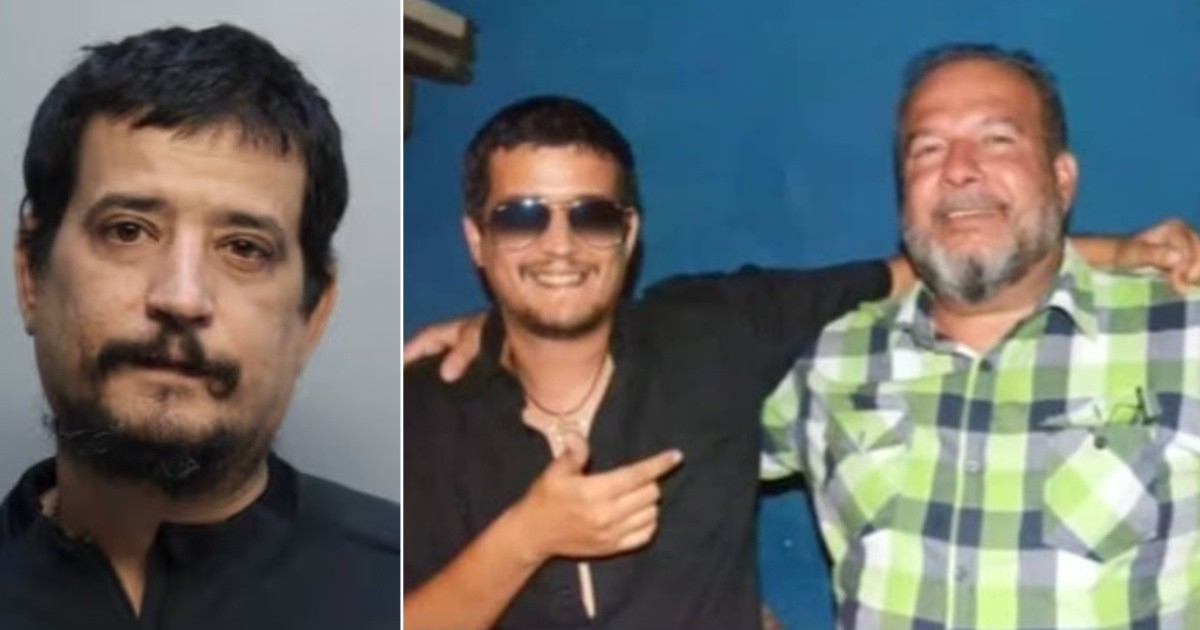
Rogelio Enrique Bolufé Izquierdo, former major of the Ministry of Interior of Cuba (MININT) and former member of Fidel Castro's personal security team, was deported by the Immigration and Customs Enforcement (ICE) to Ecuador in early June, after nearly ten months in immigration custody in the United States, according to an investigation by The American Prospect.
Bolufé, 44 years old, was transferred abruptly to Guayaquil, one of the most dangerous cities in Ecuador, without any documentation, money, or extra clothing—only the gray detention uniform—and without knowing anyone in that city.
"I was left in Ecuador through an expedited deportation that I consider a retaliation," Bolufé stated to the U.S. media. "They took me out of the country without prior notice, without having signed any documents, and without properly explaining to me what was happening."
Bolufé himself described the action as illegal and unconstitutional: "I was expelled from the United States without due process being respected, despite having an active immigration procedure and a pending appeal."
ICE had arrested him in August 2025 during a traffic checkpoint in Miami-Dade, accused of cocaine possession, charges that the county prosecutor's office later dropped. Despite this, the agency kept him in custody due to his irregular immigration status: he had arrived in the United States in 2020 without ever regularizing his status.
During the ten months of detention, ICE transferred him seven times between different facilities: he went through "Alligator Alcatraz" in Florida, Camp East Montana in Texas, the Torrance County Detention Facility in New Mexico, Etowah County Jail in Alabama, and finally the Northwest Detention Center in Washington.
In that last center, he organized "The Union of Those Kidnapped by ICE," bringing together 140 detainees who reported inhumane conditions and described the system as "a business built on human suffering."
As retaliation for his activism, the guards confiscated legal documents, notes, his phone book, and religious items, including the Quran, prayer beads, and a prayer mat.
He had also filed civil suits against ICE and written letters to members of Congress and the media.
Bolufé also had an active residency process under the Cuban Adjustment Act of 1966: he had completed biometrics and the interview, and was only waiting for the green card when he was arrested.
The Cuban regime, paradoxically, included him in its National List of Individuals Linked to Terrorism, alleging supposed sabotage plans against infrastructures, which closed the door to his direct deportation to the island and opened the way for him to be sent to Ecuador, a country with which Bolufé has ties and apparently nationality.
The U.S. State Department warns its citizens against traveling to Ecuador, particularly to Guayaquil, due to terrorism and crime.
The case of Bolufé fits into a broader strategy that activists and lawyers attribute to ICE: to relocate or deport detainees who organize collective protests in order to dismantle internal resistance.
In June, the agency transferred 90 people from the Delaney Hall center in Newark to break a hunger strike that had been ongoing for 20 days. So far in 2026, 19 people have died within ICE detention centers, according to The American Prospect.
From Guayaquil, Bolufé communicated that he is still evaluating his next steps. "The Union of Those Kidnapped by ICE builds solidarity and mutual aid in the face of constitutional violations and abuses committed against immigrants," he wrote.
"In the face of injustice, the separation of families, and the violation of fundamental rights, our response is clear: unity, dignity, and defense of the Constitution."
Filed under: