
Related videos:
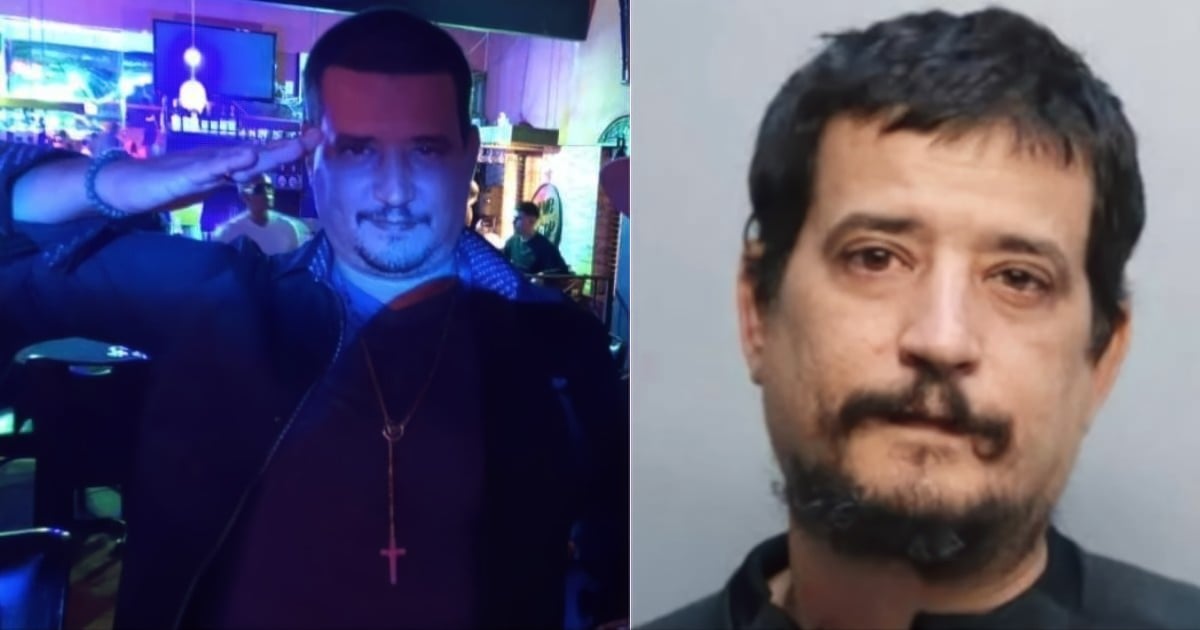
Rogelio Enrique Bolufé Izquierdo, a former major of the MININT, a former member of Fidel Castro's security detail, and a controversial figure both inside and outside of Cuba, faces a critical deportation hearing in the United States this Thursday without being able to access, as he claims, the legal documents that could save him from being sent back to the island.
The report was revealed by Source New Mexico, an independent, nonprofit news organization specialized in investigative journalism focused on state government, public policy, and officials in New Mexico. The outlet interviewed Bolufé by phone, who is currently detained at the Torrance County Detention Facility, a center managed by the U.S. Immigration and Customs Enforcement (ICE) and operated by the private company CoreCivic.
If I return to Cuba, my life will be in danger, said the Cuban in the interview conducted in Spanish. He claims that in his country, prison, torture, and reprisals await him for having declared himself a dissident and openly supporting Donald Trump.
A center in crisis: without a contract and with reports of abuse
The facility where Bolufé is held has been operating without a valid contract since October 31, due to the partial shutdown of the federal government. Nevertheless, ICE continues to hold approximately 550 detainees there.
The conditions have even alarmed U.S. authorities. Democratic Senator Martin Heinrich called on ICE to immediately remove immigrants from the facility as long as there is no valid contract regulating its operation.
But Bolufé asserts that the crisis at the center is not new. He claims that for weeks, he and other migrants have faced constant obstacles in contacting lawyers, accessing the legal library, or receiving legal materials, including books that his ex-partner, Haymel de la Vega, unsuccessfully sent to the prison.
In a letter sent to Source New Mexico and signed by six other detainees, Bolufé describes a pattern of rights denial and deliberate obstacles affecting their defense, such as poor-quality phone calls, interruptions by officials during consultations with lawyers, and more than 30 unanswered requests to use the legal library.
"In practice, it is impossible to access the library," he wrote.
Bolufé also claims that before arriving at the center in New Mexico, he was held at the facility known as “Alligator Alcatraz,” where, he asserts, he was chained for between 24 and 36 hours, subjected to freezing temperatures, with lights permanently on and guards shouting racist insults at him.
He says he lost mobility in one hand and still suffers from pain and numbness.
Among the documents that ICE does not allow him to receive, as reported, are testimonies from others who went through that center and could help him demonstrate the abusive conditions before Immigration Judge Brock E. Taylor.
A past steeped in power, shadows, and controversy
The public history of Rogelio Bolufé has always been marked by contradictions, power, and doubts.
According to previous reports, Bolufé was a former senior official of the Ministry of the Interior and worked for over 15 years on Fidel Castro's personal security team, even spending time living in the dictator's own house. Various sources have described him as part of the inner circle of the Castro regime.
However, when he arrived in the United States in 2020, his speech was as erratic as it was controversial: in interviews, he stated that he came to “make Cuba free,” but also mentioned feeling “proud of what he was” within the regime. Some analysts even suggested that he could be a double agent.
His life in Miami was no less confusing. He never obtained residency, work permits, or stable immigration status. Nevertheless, he moved in exile circles, posted photos with Sandro Castro and figures from the family clan, and presented himself as an opponent.
The arrest that plunged him into a migratory limbo
His arrest occurred on August 17, 2025, in Miami-Dade for possession of cocaine following a police check. Although Bolufé denied the drug and claimed it was not his, the arrest was enough for ICE to take him into custody.
Days later, it became known that his situation was even more precarious: he had no residency, visa, or work permit in the U.S., which made him deportable at any time.
To complicate his situation further, the Cuban regime included him on its National List of Individuals Linked to Terrorism, alleging supposed plans for sabotage against infrastructures. This label places him in a gray area where Cuba labels him as a "terrorist," but ICE has considered deporting him not to the island, but to Mexico or Ecuador, countries he passed through before arriving in the United States.
A few hours before the hearing that will determine his fate, Bolufé says that all he can do is wait for a miracle.
"I ask for prayers, because God is with us all the time," he said to the American media.
Filed under: