
Related videos:
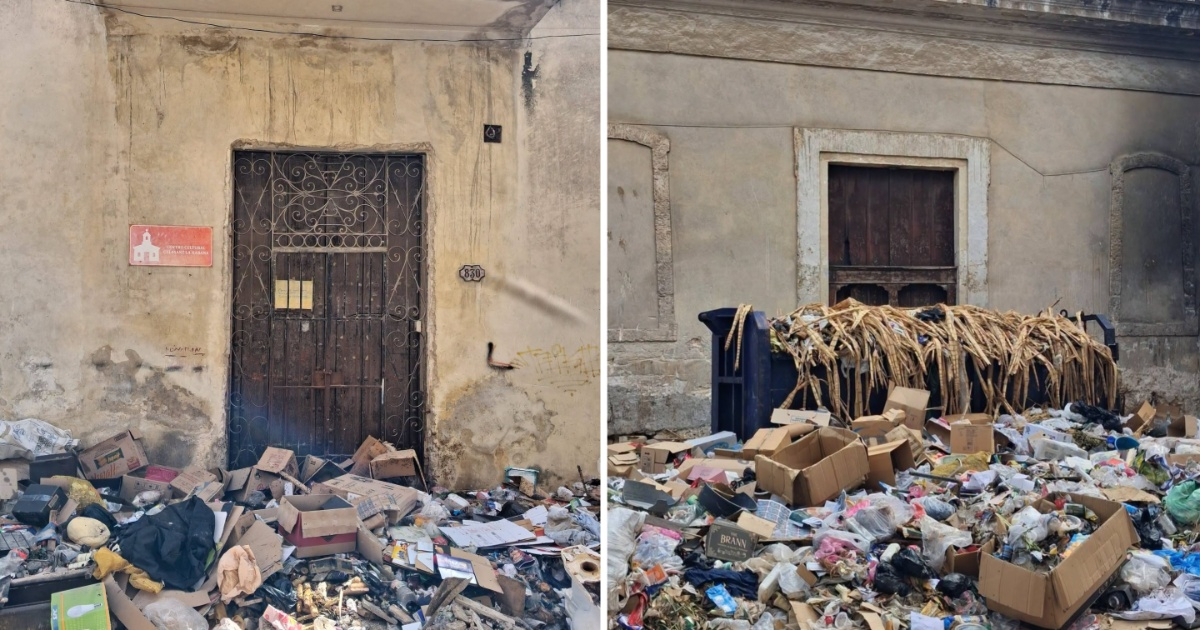
A new fire destroyed the side door of the Parish of San Judas Tadeo and San Nicolás de Bari, of the Calasanz Fathers in Central Havana, during the early hours of Friday, June 19, caused by the burning of trash accumulated in front of the temple located at San Nicolás Street 830.
The congregation itself reported the incident on Facebook, describing it as something that "has become commonplace" and noting that they have reported the situation "countless times" to the authorities of the Communist Party of Cuba and the Government of Centro Habana without receiving an effective response.
“This time, the flames have caused the loss of the side door of our temple, a material damage that deeply hurts our entire community,” wrote the Escolapios in their statement.
This is not the first blow that this parish has suffered this year. On April 9, a garbage fire on the same San Nicolás street had already charred and destroyed the main door of the temple.
On April 23, the makeshift garbage dump next to the church caught fire again, and the firefighters did not respond to the call for help, as was documented in a new complaint from the congregation.
The next day, on April 24, the Calasanz Order noticed that the temple had been on the verge of catching fire for the third time in less than two months.
On June 7, the situation remained unresolved: trash accumulated around the temple and efforts exhausted before municipal, provincial, and national authorities without concrete results.
The background of this series of fires is the waste collection crisis in Havana, which has reached critical levels in 2026. In February of this year, only 44 out of 106 collection trucks in the capital were operational due to a lack of fuel and mechanical deterioration, while the city generates between 24,000 and 30,000 cubic meters of solid waste daily.
In the face of desperation due to the accumulation of waste, some residents have chosen to burn it, resulting in fires that threaten historic and religious buildings.
The Escolapios acknowledge this context but firmly caution: "The lack of electricity, water, food, and the stolen rest affects everyone, and no one can be indifferent to that suffering. However, we want to be clear: need and exhaustion do not justify the deterioration and mistreatment of the house of God and of all."
The congregation also faces another ongoing issue: in May 2026, the Escolapios formally demanded from the regime the return of their cloister and school in Guanabacoa, expropriated in 1961 and handed over to the Ministry of Education, claiming state abandonment of the property.
"We trust that, with God's help, this situation will come to an end soon and that definitive solutions will be found for the hygiene and safety of the area," concludes the statement from the Escolapios, which invites its congregation to "judge for yourselves what you see and feel as you pass by our front."
Filed under: