
Related videos:
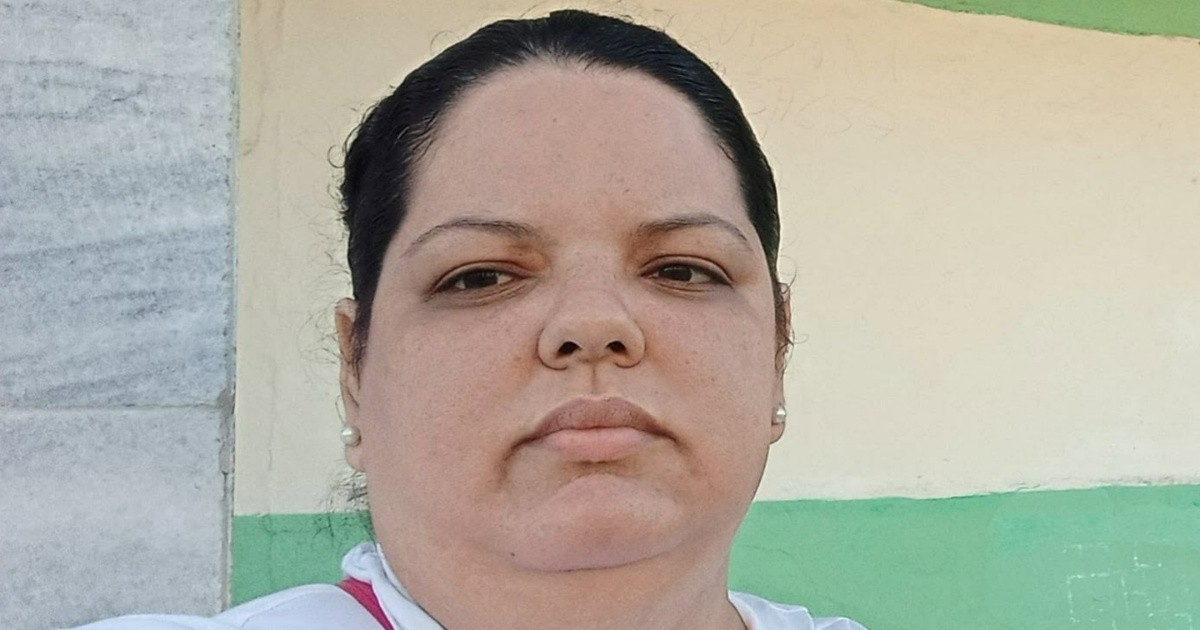
Aidelis Arencibia, a Cuban mother with three autistic children and suffering from a heart condition, recounted this Saturday on Facebook how she was nearly assaulted while searching in the informal market for the Carvedilol that her cardiologist prescribed and that is unavailable in any state pharmacy.
Arencibia traveled by tricycle to a remote place where a private seller offered medication. While the driver got out to ask for directions, a man emerged from the underbrush. "From the underbrush, a man with a scrutinizing gaze appeared. He questioned me with nonsensical phrases: he spoke of inmates, sales, proposals. In his eyes, I read the assault," he wrote.
Before the situation escalated, the woman reacted with a calculated lie: "I became a character, just as when I write, and I lied with borrowed calm: 'I'm here with my brother-in-law and two more young people.'" The driver returned at that moment, understood the danger without saying a word, and drove off.
As he moved away, Arencibia was able to see the man alongside his accomplices: "When they fled, we saw them: him and two boys who were nearly children. They couldn't have been more than twenty years old; one looked about fifteen."
During the journey back, with his soul shaken, his thoughts went directly to his children. "I imagined their orphaned eyes not understanding, their cries without the only voice that calms them by singing. Only I know how to stitch the broken doll, glue the wheel of the broken cart, stand in those endless lines for a treat that gives them a moment of peace," he wrote.
Arencibia returned home without the medication, but unharmed. "Today I was reborn. I write this while watching them sleep beside me and give thanks to God with every fiber of my being," she concluded her story.
The case illustrates the dual crisis faced by thousands of Cuban families in 2026: the extreme shortage of medications and the sustained increase in crime. In April of this year, only 190 out of 651 medications from the basic list were available in the country, according to reported data. A survey conducted between February and March with 1,788 Cubans revealed that only 4.8% were able to obtain medications without difficulty, while 95.6% faced barriers in acquiring them.
This scarcity pushes chronic patients like Arencibia — a heart patient and the sole caregiver of three children with Autism Spectrum Disorder — to venture into unknown places and expose themselves to risks that the state neither acknowledges nor addresses. "Better not to talk about pharmacies: they don’t have them," she summarized in her post.
The increase in crime in Cuba further aggravates this situation. The Cuban Observatory for Citizen Audit recorded 2,833 verified crimes in 2025, a 115% increase compared to 2024, with 1,536 thefts as the dominant category and 99 assaults and attacks in just the first half of the year. Seniors and those traveling alone are among the most vulnerable profiles.
This Saturday, another Cuban mother in Ciego de Ávila was asking for help for her two seriously ill children, one of whom has severe autism, cerebral palsy, and hydrocephalus, worsened by power outages lasting over 22 hours a day, a scene that recurs in various corners of the island.
Arencibia concluded his testimony with a phrase that encapsulates both relief and determination: "Although in the end we returned without medicine... Today more than ever, I choose to stay."
Filed under: