
Related videos:
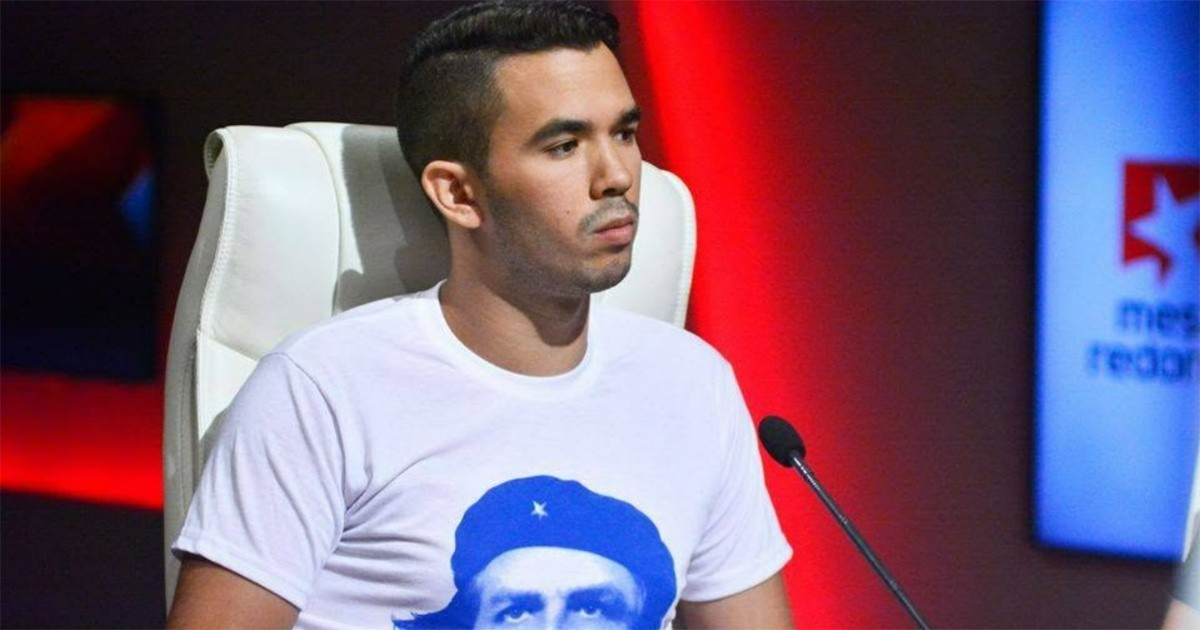
The Union of Young Communists (UJC) replaced Raúl Alejandro Palmero Fernández as the First Secretary of its Provincial Committee in Havana on Friday, exactly one year after the official aligned himself with the repressive discourse of the regime during the largest university protests in Cuba in decades.
The change was approved in an Extraordinary Plenary of the Provincial Committee of the UJC held on Friday in the capital. The official statement, true to the euphemistic language of the apparatus, described Palmero's departure as a "release from his duties," and announced that he will take on "new responsibilities" in the Communist Party of Cuba (PCC), the usual phrasing for shifting officials who have fallen out of political favor without publicly acknowledging their decline.
Instead, Danhiz Díaz Pereira, who was previously the president of the Martiano Youth Movement, was appointed. She has built her career entirely within the structures of the regime: she held positions as First Secretary of the UJC in the municipalities of Marianao and Plaza de la Revolución, and has been involved in student organizations affiliated with the PCC.
The political significance of the leadership change cannot be separated from what occurred in June 2025, when university students joined the strike against ETECSA in protest of the new tariff scheme that limited national top-ups to 360 Cuban pesos per month and pushed additional consumption towards packages in dollars.
Instead of defending the Havana students, Palmero disseminated the statement from the leadership of the FEU that accused "enemies of the Revolution" of trying to manipulate the discontent, thus supporting the regime's repressive narrative instead of representing its youth base.
The strike, which began on June 4, 2025, at the Faculty of Mathematics and Computing at the University of Havana, spread to at least 25 faculties across various provinces. At its peak, less than 5% of the enrolled students attended classes at the University of Havana.
The response from the apparatus was twofold: on one hand, the State Security threatened the students who were organizing the movement with summonses, threats of expulsion, and home visits; on the other hand, the FEU and the UJC blamed external factors for inciting the conflict.
The official student organization submitted 40 proposals to ETECSA without achieving immediate rate reductions, and silent repression gradually stifled the movement, as documented by El País.
The appointment of Díaz Pereira, proposed by the National Bureau of the UJC, follows the pattern of rotating loyal cadres within the communist youth apparatus. Nothing in his profile suggests a change in political orientation: under his leadership, the UJC will continue to be the political control mechanism over Cuban youth that the PCC needs to contain any future dissent.
Palmero, a deputy for Arroyo Naranjo in the National Assembly and a member of the National Bureau of the UJC, has built a meteoric career within the apparatus since the age of 23.
Filed under: